
The 77th meeting of the CITES Standing Committee is in full swing
The Standing Committee of the Convention on International Trade in Endangered Species of Wild Fauna and Flora (CITES) is once again meeting in Geneva, Switzerland, between 6-10 November 2023. The meeting will pave the way to the next Conference of the Parties (CoP) which will take place in the second half of 2025. The host will be determined in early 2024. Dr Nikolas Sellheim is present as part of the delegation of IWMC—World Conservation Trust.
According to the CITES Secretariat, the meeting is the largest meeting of the Standing Committee thus far, holding more than 700 delegates who are present. With 77 agenda items, the agenda is less packed than at the 74th meeting in March 2022 in Lyon, which held 89 agenda items.
This notwithstanding, several agenda items will cause disagreement amongst the Parties (representing the different regions or being Observer Parties to the Standing Committee) and present organisations. For instance, the trade in live Asian elephants between Lao PDR and China will be discussed as a compliance matter under Article XIII of the Convention. However, since these elephants are captive bred, they arguably do not cause conservation concerns. This, however, is a matter of perspective and a matter of interpretation of the Convention, in all likelihood spawning lively discussions.
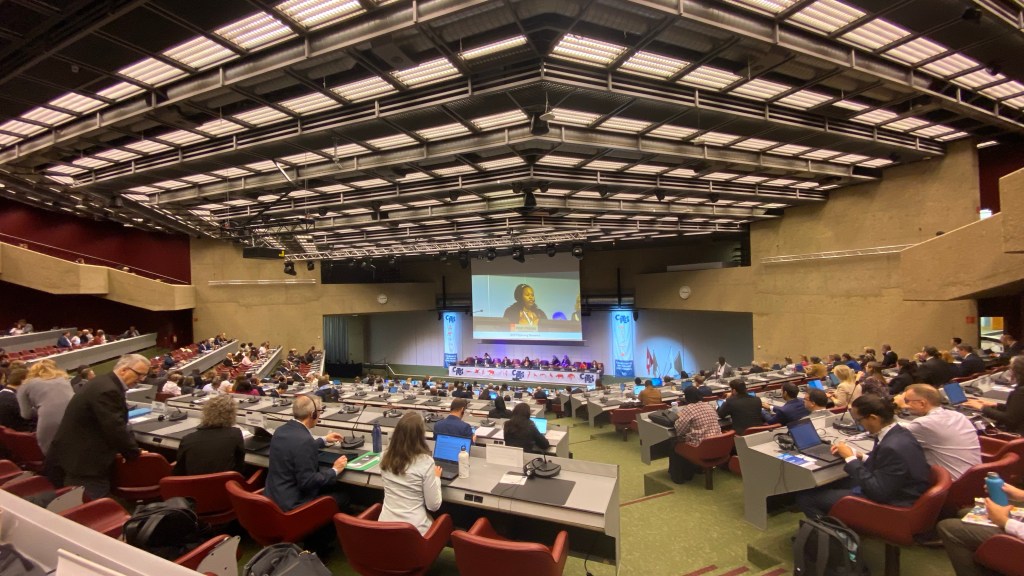
For Sellheim Environmental, particularly important are agenda items relating to people. As such, Dr Nikolas Sellheim provided an intervention concerning the establishment of a CITES Global Youth Network (CGYN). The CGYN would follow initiatives from other conventions, such as the Convention on Biological Diversity (CBD), which already several years ago established the Global Youth Biodiversity Network. While laudable, the establishment of the CGYN has appeared very late on the agenda, given that CITES has been in existence for 50 years. The full intervention reads as follows:
“Thank you very much, Madame chair. Since this is the first time, we take the floor, we would like to congratulate you on the chairwomanship and thank the Swiss government for the organisation of this meeting.
IWMC-World Conservation Trust, supported by the International Fur Federation, the Sustainable Use Coalition of South Africa, the South African Taxidermy and Tannery Association, the Parrot Breeders Association of South Africa, the Professional Hunters’ Association of South Africa and the International Council for Game and Wildlife Conservation, is very much in favour of this initiative as the engagement of youth is crucial to achieve the Sustainable Development Goals as well as to achieve effective biodiversity conservation in the future. Unfortunately, and I know this from personal experience, it is sometimes difficult to motivate youth to engage actively in matters related to environmental protection, especially on a communal level, so every initiative that moves youth engagement forward is much appreciated. Therefore, we thank Singapore for her efforts for the establishment of a youth network, which after 50 years, two generations, of CITES is long overdue.
After all, youth are the decision-makers of the future and also this Convention lies in their hands, making one of the Rio Principles, namely intergenerational equity, ever more tangible within a CITES context. We would also like to point to the fact, however, that it is also especially indigenous youth who play a crucial role for indigenous peoples. Therefore, we hope, that in future and once the network is well established, special regard is paid to the needs, perspectives and concerns of indigenous youth within CITES. Thank you.”
Other relevant items that might warrant interventions refer to the link between CITES and zoonotic diseases, the CITES gender action plan, the role of indigenous peoples and local communities as well as the concerns for livelihoods.
A livestream of the meeting can be found here.
 sellheimenvironmental.org