The Scientific Committee’s achievements and challenges
The report of the Scientific Committee (SC) at IWC69 showcases a year of significant achievements in cetacean research, further cementing its role as the primary body for whale and cetacean science within the International Whaling Commission (IWC). Despite financial pressures and budget cuts, the SC has continued its vital work, covering everything from whale stock assessments to bycatch mitigation and environmental concerns like pollution and climate change. The Committee’s contributions are crucial, as they provide the data and analysis necessary for informed decision-making by the IWC, particularly in relation to sustainable whaling practices and the protection of endangered species.
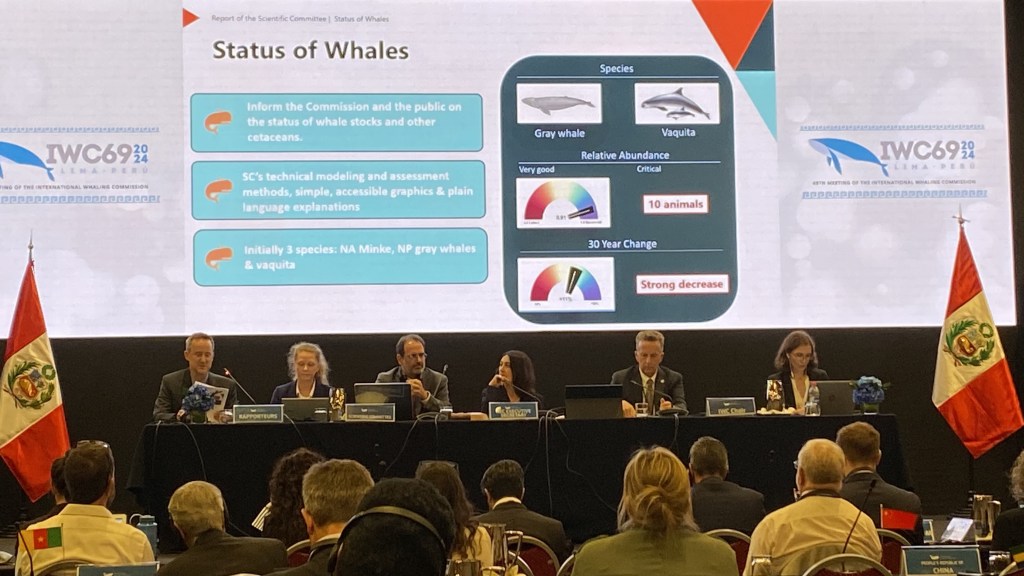
One of the highlights of the report is the continued assessment of whale stocks, both those subject to Aboriginal Subsistence Whaling and those not directed by Contracting Governments. These in-depth assessments have shown positive trends in several whale populations, particularly in areas where robust management frameworks have been in place. For example, the SC presented encouraging data on the recovery of North Pacific humpback whales, as well as the steady health of Bering-Chukchi-Beaufort (BCB) bowhead whales, despite the environmental challenges posed by a rapidly changing Arctic.
The Committee also delved into the ongoing efforts to mitigate human-induced cetacean mortality, such as bycatch and ship strikes, presenting new methodologies and collaborative efforts with international organisations. The Committee’s work in these areas not only contributes to whale conservation but also helps balance the needs of coastal communities and fisheries.
However, budget cuts have posed a serious challenge to the SC’s ability to carry out its ambitious workplan. The Committee’s capacity to organise intersessional workshops, conduct essential field research, and develop long-term conservation strategies has been severely impacted. Without adequate funding, the SC warns that its ability to provide timely and accurate management advice could be compromised, particularly in relation to critical stock assessments and conservation management plans.
The discussion following the presentation of the SC report at IWC69 revealed underlying tensions within the Commission. Palau raised concerns about the lack of focus on whaling impacts in the report, to which the SC Chair responded that all hunting quotas currently in place do not harm whale stocks and are accounted for in the assessments. Antigua & Barbuda echoed concerns, pointing out that countries supporting sustainable use felt the SC had not sufficiently addressed issues related to sustainable catch limits, focusing instead on matters outside the ICRW’s remit. This debate highlights the diverging priorities within the IWC, as countries advocating for whaling feel the SC’s work is too heavily weighted towards conservation.
Despite these concerns, the SC’s role remains indispensable. Several member states, including Colombia and the Cetacean Conservation Centre, praised the report for its comprehensive approach to understanding whales’ role in ecosystems, urging the IWC to prioritise these insights for future decision-making. The SC Chair reiterated the Committee’s importance as the IWC’s leading body for cetacean research, as supported by the 2018 IWC Review and a paper published in Marine Policy by Nick Gales.
While the SC’s achievements were widely applauded, the discussions also made it clear that financial sustainability and a balanced focus on both conservation and sustainable use will be key challenges for the Committee moving forward. As IWC69 progresses, the work of the SC continues to provide the scientific backbone for the Commission’s decisions, but its future effectiveness depends on resolving these funding and focus issues.
The report also shows that a significant portion of the Scientific Committee’s work is dedicated to small cetaceans, such as dolphins and porpoises, which are not part of the IWC’s original mandate focused on great whales. While this focus on small cetaceans is certainly a laudable and necessary endeavour, given the threats they face from bycatch, pollution, and habitat destruction, it does raise questions about the IWC’s shifting priorities. A considerable amount of the SC’s resources and budget is now allocated to small cetaceans, drawing attention to how far the Commission has moved away from its original purpose. Some delegations have expressed concerns that this shift may divert attention from the IWC’s core mandate of managing and conserving whale populations, particularly when the funding for vital whale-related research is already under strain.
This observation further fuels the ongoing debate about the role of the IWC and whether it should refocus its efforts on its original mission or continue to broaden its scope to address the growing environmental and conservation challenges facing all cetaceans.
 sellheimenvironmental.org