A milestone for indigenous rights at the IWC: Consensus on subsistence whaling
The Aboriginal Subsistence Whaling (ASW) Sub-Committee at IWC69 presented its report that underscored the importance of managing whale populations in a way that balances cultural traditions and the sustainable use of whale stocks by indigenous communities. The discussions reaffirmed the IWC’s commitment to ensuring that Aboriginal Subsistence Whaling continues within agreed limits that protect whale populations, while supporting the nutritional and cultural needs of the communities involved.
The report outlined the progress made by the Scientific Committee (SC) in managing these hunts using the Strike Limit Algorithms (SLAs), which are designed to ensure that the whale populations hunted by indigenous groups are maintained at sustainable levels. The SC’s assessment concluded that the current strike/catch limits for all ASW hunts do not pose a threat to whale stocks, providing the necessary scientific backing for the continuation of these practices. This recommendation was widely supported, with the ASW Sub-Committee agreeing that extending the strike/catch limits for an additional six years (2026-2031) was appropriate.
One of the key discussions revolved around the Eastern North Pacific gray whale population, which has experienced an Unusual Mortality Event (UME) in recent years. Despite this, the SC reassured the Commission that the population had stabilised and that current SLAs account for such uncertainties. This precautionary approach was emphasised as a critical part of managing ASW quotas, with the SC’s advice ensuring that even in cases of population stress, the hunts can proceed without endangering the long-term viability of whale stocks.
Throughout the report, the ASW Sub-Committee noted the compliance of the ASW countries with the timeline for providing data and meeting the conditions for extending strike/catch limits. The USA, in particular, highlighted the thorough process for reviewing the extension and assured the Commission that no requests for changes in catch limits were made by the ASW countries, supporting a status quo continuation of the hunt.
Australia, a key supporter of the process, commended the IWC for balancing the needs of indigenous communities with the conservation of whale populations. They, along with other nations such as St Vincent and the Grenadines and Denmark, expressed their strong approval of the automatic extension process for ASW limits, noting that this new system simplifies the renewal process and provides long-term stability for communities reliant on subsistence whaling.
In addition to the technical aspects of the hunt, the report also touched upon the terminology used within the Commission, particularly the term “aboriginal.” Some delegations, including Antigua & Barbuda, raised concerns that the term may be outdated or discriminatory, advocating for more inclusive language. However, other nations, including Brazil, expressed reservations about changing the term, stressing that it holds special recognition for indigenous peoples under international law. The USA echoed these concerns, noting that the term “aboriginal” carries significant legal implications under US federal law.
Despite these discussions, the focus remained on the sustainability of whale stocks and the importance of continuing the ASW practices within the agreed frameworks. The ASW Sub-Committee therefore “recommended to the Commission that the conditions of Schedule paragraph 13(a)(6)1 have been met and the ASW catch/strike limits be extended for 6 years.”
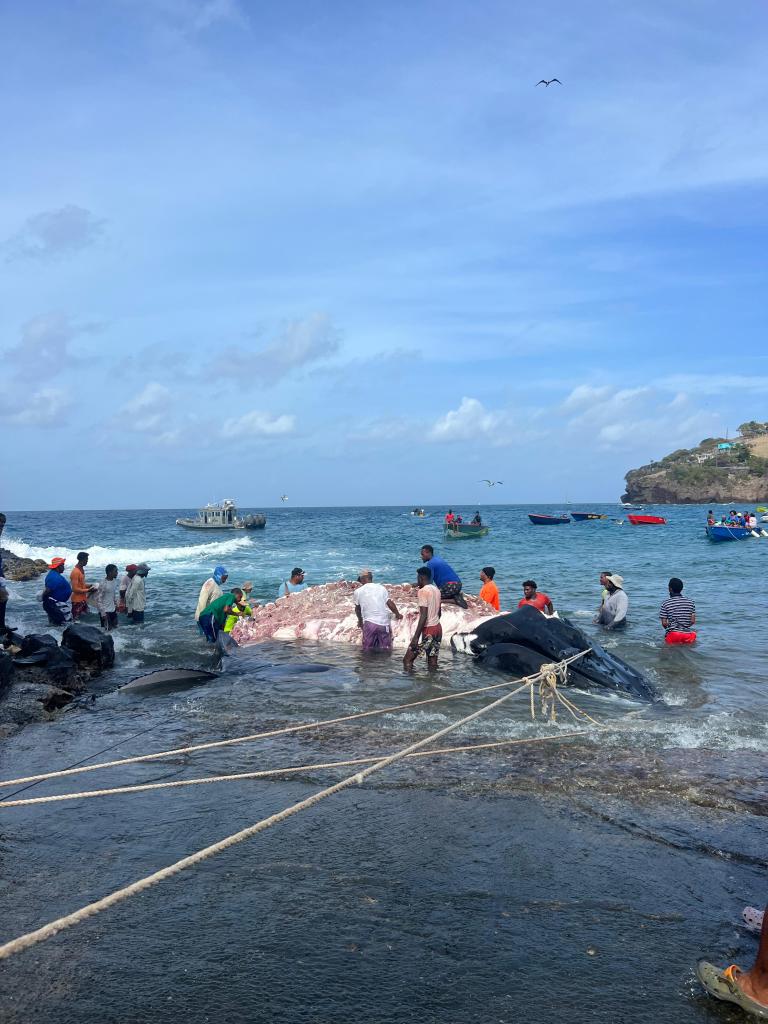
As an historic and somewhat surprising move, the Chair’s remark after having opened the floor – “I take silence as consent. I see no one take the floor and I take that as consensus” – meant that the Commission agreed by consensus that these conditions have indeed been met.
The Alaska Eskimo Whaling Commission (AEWC) responded with a deeply emotional statement, expressing profound relief. For the Iñupiat and Yup’ik communities of Northern Alaska, this decision was a culmination of decades of struggle and collaboration with the IWC. They emphasised how crucial this was for their way of life, with the bowhead whale central to their culture. The outcome restored their confidence in the IWC, providing reassurance that they could continue their subsistence hunting in peace and without the stress of potential restrictions.
St Vincent and the Grenadines also reflected on the long-standing challenges faced by their own communities in securing subsistence whaling rights. They described the decision as a crucial recognition of the human right to food, culture, and livelihood. The elimination of the requirement to submit a “Need Statement” this time was a source of great relief, as they had long seen this process as an unnecessary and humiliating justification for their basic needs. The consensus reached at IWC69 was seen as a significant step forward.
A Greenlandic representative, offered gratitude for the decision, noting that many in their communities would be pleased with the outcome. They highlighted the importance of this consensus in recognising their cultural practices, reflecting on the long journey to secure these rights since the Maniitsoq workshop. Denmark also touched on the sensitive issue of terminology used to describe indigenous peoples, emphasising that while the debate around labels will continue, what truly matters is how communities feel and identify within their own cultures.
Opes Oceani Foundation welcomed the decision, calling it a recognition of indigenous rights rather than a privilege granted by the IWC. They emphasised that this decision underscored the importance of preserving cultural practices and respecting the autonomy of these communities.
In his closing remarks, the Chair hailed the day as a historic one for the IWC, noting that the consensus had helped rebuild trust within the Commission. While acknowledging that challenges remain, particularly around the language and labels used for indigenous groups, the Chair underscored that this moment of agreement was a clear sign of progress.
- “Commencing in 2026, and provided the appropriate Strike Limit Algorithm has been developed by then, strike/catch limits (including any carry forward provisions) for each stock identified in sub-paragraph 13(b) shall be extended every six years, provided: (a) the Scientific Committee advises in 2024, and every six years thereafter, that such limits will not harm that stock; (b) the Commission does not receive a request from an ASW country relying on the stock (‘relevant ASW country’), for a change in the relevant catch limits based on need; and (c) the Commission determines that the relevant ASW country has complied with the approved timeline and that the information provided represents a status quo continuation of the hunt.” ↩︎
 sellheimenvironmental.org