Hungary and the EU Member States table Resolution on Legal Obligations in Commercial Whaling
Hungary, on behalf of the EU member states, tabled a third resolution addressing the legal obligations surrounding commercial whaling activities. This proposal seeks to remind nations of their responsibilities under international law, particularly within the framework of the United Nations Convention on the Law of the Sea (UNCLOS), and reinforces the IWC’s role as the primary body responsible for the conservation and management of whales globally.
A proposal to uphold legal commitments
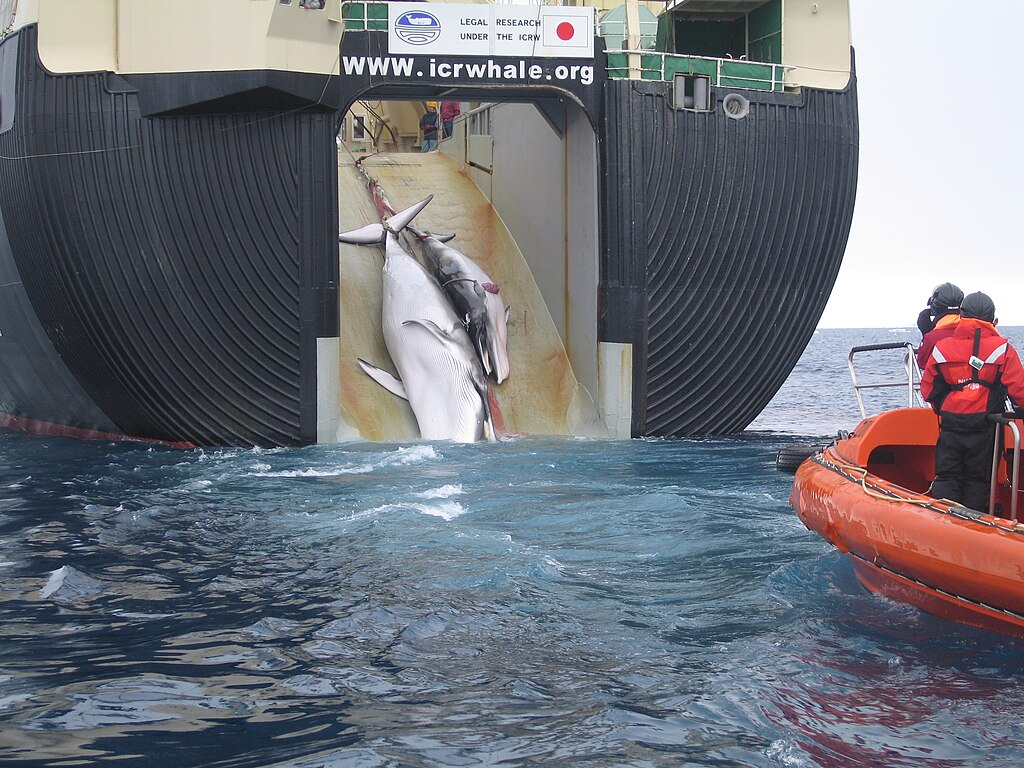
The resolution, presented by Hungary, aims to remind all nations of their obligations under UNCLOS and customary international law to cooperate with the IWC on matters related to the conservation, management, and study of whales. The resolution highlights that, despite the global moratorium on commercial whaling, certain countries continue to engage in whaling activities under various legal mechanisms, such as objections, reservations, or under Article VIII of the International Convention for the Regulation of Whaling (ICRW).
The resolution stresses that the IWC is the only appropriate global body for overseeing the management of cetaceans and calls on countries engaging in whaling to report their activities and consult with the IWC’s Scientific Committee on proposed catch limits. It also reiterates that the moratorium remains necessary to allow whale populations to recover and to support the health of marine ecosystems in the face of growing threats such as climate change, bycatch, and pollution.
Mostly support from member states
The resolution was met with broad support from several countries, but also raised questions from some delegates.
Antigua & Barbuda challenged the notion that the IWC is the sole authority on the management of cetaceans, pointing out that UNCLOS refers to a plurality of international bodies.1 This raised a fundamental question about the resolution’s premise, sparking a broader discussion on international governance concerning marine life.
Despite this, the United Kingdom, Argentina, and Panama backed the resolution, with the UK noting that it serves as a timely reminder for countries to cooperate with the IWC. The UK suggested minor revisions but was overall supportive of reinforcing the IWC’s primary role in whale conservation. Korea also expressed its support, emphasising that states should work together within the IWC framework, and unilateral actions outside of this cooperation could have harmful consequences for cetacean populations.
South Africa also voiced its support, reaffirming its stance that the moratorium on commercial whaling should remain in place unless scientific evidence overwhelmingly supports the sustainability of such activities.
Japan’s challenge to the resolution
Japan, which is no longer a member of the IWC but continues to engage in commercial whaling, offered a robust response to the resolution. The Japanese delegation noted that its whaling activities are based on the Revised Management Procedure (RMP), which is recognised by the IWC. They also noted that the quotas were also conveyed to the chair of the Scientific Committee with the intention to have them distributed to all IWC members. Japan expressed concern over the legal implications of the resolution, pointing out that its commercial whaling is conducted based on scientific assessments available through its Fisheries Agency. Japan challenged the assertion that its whaling activities are unsustainable, pointing to its catch quotas, which are grounded in scientific methods, approved by the IWC.
Environmental NGOs strongly support the resolution
Environmental organisations, including the Environmental Investigation Agency (EIA), were vocal in their support for the resolution. The EIA, alongside 21 other conservation NGOs, delivered a statement highlighting the continued commercial whaling activities of Japan, Norway, and Iceland, which have collectively killed more than 44,000 whales since the moratorium was established in 1986.
The EIA expressed alarm at recent developments, including Japan’s new quota for fin whales in the North Pacific, which the agency claims is unsustainable and risks depleting local populations. The EIA also raised concerns about Norway’s increased catch quotas and its introduction of a factory ship designed to process whale meat for export to Japan. Iceland’s whaling practices were also condemned, particularly the granting of licences for the hunting of fin and minke whales, despite failing to meet animal welfare standards.
The EIA called on IWC member states to support the resolution and to take stronger action to enforce the moratorium. The organisation emphasised the suffering caused by commercial whaling in the 21st century and urged nations engaged in such practices to cease their activities immediately.
The way forward
While the resolution received broad support, some minor drafting revisions were suggested by countries like the United States and the United Kingdom. The final text will likely undergo further refinement before being adopted, but the general consensus is that the resolution reinforces the IWC’s position as the primary global body responsible for the management of whales.
The decision on the resolution will be taken within the next two days.
- With own emphasis, Article 65 of the UNCLOS reads: “[…] States shall cooperate with a view to the conservation of marine mammals and in the case of cetaceans shall in particular work through the appropriate international organizations for their conservation, management and study.” ↩︎
 sellheimenvironmental.org