VOLUME 3, ISSUE 3, September 2024
CONTENTS
EDITORIAL
Science, ethics and human livelihoods or the tale of rethinking conservation
ARTICLE
Decoding whale communication through AI might be the new frontier of marine conservation
VIEW
The significance of limited documentation in the lead-up to IWC69
OPINION
The International Whaling Commission cannot duck the human right to adequate food
SUMMARY
“Dismantle ‘zombie’ wildlife protection conventions once their work is done”, published in Nature
ARTICLE
What is legal personhood of parts of the natural environment?
ARTICLE
The impact of the rise of the far right in Europe on environmental protection
ARTICLE
Biodiversity or climate change: what to protect first?
IN THE MEDIA
– Sweden allows nearly 500 bears to be shot in a short period of time
– When forests migrate
– Namibia: How wildlife conservation and tourism are interconnected
EDITORIAL
Science, ethics, and human livelihoods or the tale of rethinking conservation
This issue of The Conservation & Livelihoods Digest immerses us in a world where high-stakes international diplomacy, cutting-edge technology, and traditional wisdom converge in the ongoing struggle to safeguard our planet. As we prepare for the 69th meeting of the International Whaling Commission (IWC), this issue sets out the pressing challenges that lie ahead.
We begin with an exploration that pushes the boundaries of marine science and ethics in Decoding whale communication through AI might be the new frontier of marine conservation. The prospect of understanding whale communication is no longer confined to fantasy. With the rapid advancement of AI, decoding the complex language of whales is becoming a reality. However, the article raises ethical concerns—can we truly comprehend such intricate beings without imposing human interpretations onto their world? As we stand on the brink of this breakthrough, AI’s potential for conservation is vast, but so too is the risk of misinterpretation and unintended consequences.
Moving forward, The significance of limited documentation in the lead-Up to IWC69 draws attention to an administrative challenge that threatens to undermine meaningful discussions at the IWC’s 69th meeting in Lima. The scarcity of preparatory documentation highlights a broader issue: transparency and inclusivity in international decision-making. Without access to essential reports, member states and NGOs are left scrambling to prepare informed interventions. This lack of openness is particularly troubling as the meeting could shape the future of whale conservation, including the establishment of new whale sanctuaries or even a possible rollback of the commercial whaling moratorium.
In The International Whaling Commission cannot duck the human right to adequate food, the focus shifts to a deeply sensitive issue. As some nations continue to advocate for the recognition of the human right to food, the debate about whaling as a potential food source resurfaces. Written by a consortium of scholars and practitioners and co-published by Sellheim Environmental and IWMC—World Conservation Trust,this piece delves into the moral and legal tensions between conservation priorities and the right to adequate food. Developing nations are calling for whale resources to be used to address hunger, leaving the IWC to navigate the delicate balance between human rights and environmental protection.
Meanwhile, the summary of the article published in Nature entitled Dismantle ‘zombie’ wildlife protection conventions once their work is done, shows how the article challenges the continued relevance of outdated international agreements like the Whaling Convention. With some arguing that the IWC has achieved its original mandate and should be dissolved, this provocative article questions whether new, more adaptable governance structures are needed to meet modern conservation challenges.
Turning to the legal recognition of nature’s rights, What is legal personhood of parts of the natural environment? examines the bold concept of granting parts of nature—rivers, forests, and even whales—legal rights. The idea that ecosystems could hold legal personhood offers an innovative, albeit radical, avenue for environmental protection. The article investigates both the ethical considerations and the legal frameworks that could transform this into a powerful conservation tool.
This notion of personhood is fully realised in The Māori Declaration on Legal Personhood for Whales: Bridging ancestral wisdom and modern conservation. Here, indigenous leaders from Aotearoa New Zealand and across the Pacific combine their cultural and spiritual heritage with cutting-edge conservation by granting legal personhood to whales. This declaration not only revolutionises the approach to marine protection but also highlights the vital importance of integrating Indigenous knowledge into modern conservation strategies.
Next, the issue turns to the political sphere with The impact of the rise of the far right in Europe on environmental protection. As far-right movements gain influence across Europe, this article examines how their policies—ranging from climate scepticism to eco-nationalism—are reshaping the future of environmental protection. The complex blend of nationalism and selective environmentalism presents both challenges and opportunities, as these movements often prioritise national interests over global conservation efforts.
On the practical side of environmental protection, Electric vehicles (EVs), hybrids, and internal combustion engine (ICE) vehicles—which is best for the environment? provides a detailed comparison of the environmental impacts of different vehicle types. Spoiler alert: EVs are not always the cleanest option, and a thorough assessment requires considering the entire lifecycle—from raw material extraction to disposal.
Finally, this issue features a review of Michael Paul’s Der Kampf um den Nordpol. Die Arktis, der Klimawandel und die Rivalität der Großmächte”. The Arctic is rapidly becoming a hotspot for geopolitical tension, and Paul’s book offers a sobering look at the intersection of climate change, superpower rivalry, and environmental protection in this vulnerable region.
As IWC69 approaches and we face ever-evolving environmental and political landscapes, this issue of The Conservation & Livelihoods Digest urges us to reconsider our strategies, ethics, and responsibilities. From recognising the rights of whales to questioning the future of international conservation bodies, it’s clear that the fight for our planet is far from over—it’s just entering a new phase.
If you wish to contribute to The Digest, please reach out to info@sellheimenvironmental.org to present your idea.
– Dr Nikolas Sellheim
September 2024
ARTICLE
Decoding whale communication through AI might be the new frontier of marine conservation
The idea of communicating with whales, long relegated to the realm of science fiction and childhood imagination, is inching closer to reality thanks to the advent of artificial intelligence (AI). In recent years, AI has been increasingly deployed in conservation efforts, providing unprecedented insights into animal behaviour and communication. Whales, with their complex vocalisations and social structures, have become a focal point of this technological revolution. As we stand on the cusp of potentially understanding and even conversing with these majestic creatures, it is crucial to consider both the scientific possibilities and the ethical dilemmas that come with such advances.
Revisiting the legacy of whale communication studies
The fascination with whale communication is not new. In the 1960s, Roger Payne’s groundbreaking work on humpback whale songs catalysed the global “Save the Whales” movement. Payne’s 1970 album, Songs of the Humpback Whale, brought the eerie, haunting calls of these marine giants into homes around the world, imbuing whales with an almost mythic status as intelligent and sentient beings. This early work highlighted the structured, song-like patterns in humpback vocalisations, leading to the idea that these sounds might constitute a form of language.
However, it is not just humpback whales that communicate in sophisticated ways. Sperm whales, known for their distinctive clicking sounds used for echolocation, have also intrigued researchers. These clicks, or “codas,” are believed to function as a complex communication system. As noted in The Conservation and Livelihoods Digest (Volume 2, Issue 4, December 2023), different sperm whale clans use distinct dialects of codas, which may even serve to maintain social cohesion or convey specific information within and between groups. This complex system of clicks, combined with the enormous brain size of sperm whales, has led some scientists to speculate that their communication could be as intricate as human language.
AI: A new tool in the quest to understand whales
With the advent of AI, the study of whale communication has entered a new phase. Projects like the Cetacean Translation Initiative (CETI) and the Earth Species Project are leveraging AI’s ability to process and analyse vast amounts of data to decode the vocalisations of whales. These efforts are not merely academic; they have significant implications for conservation. By understanding what whales are “saying,” scientists hope to mitigate the risks posed by human activities, such as ship strikes, noise pollution, and bycatch.
AI’s role in this context is multifaceted. It can identify patterns in whale sounds that might elude human researchers, sort through millions of vocalisation samples to detect meaningful sequences, and even generate synthetic whale calls to test hypotheses about communication. For example, CETI’s work with sperm whales involves using underwater drones and hydrophone arrays to capture and analyse these creatures’ clicks, aiming to correlate specific sounds with behaviours or environmental factors.
The promise of AI in this field is immense. Imagine being able to warn whales of approaching dangers by understanding and mimicking their distress calls or creating marine zones that are safe from human interference based on the real-time communication of whales. Such applications could revolutionise the way we protect these animals, making conservation efforts more targeted and effective.
Ethical considerations: The cost of communication
While the scientific and conservation potential of decoding whale communication through AI is vast, it also raises significant ethical questions. As discussed in the Biological Conservation article by Mark Ryan and Leonie N. Bossert, one of the primary ethical concerns is anthropomorphism—the risk of misinterpreting whale vocalisations by imposing human concepts of language and communication onto them. Whales experience the world in fundamentally different ways than humans, and their communication systems are likely to reflect these differences. Applying a human framework to interpret these systems could lead to misunderstandings that do more harm than good.
Another pressing issue is the potential for emotional and cultural harm to whales. As highlighted in The Conservation and Livelihoods Digest, different sperm whale clans use unique dialects of codas, which may be crucial for their social organisation and cultural identity. If AI-generated sounds were to be introduced into these communities, there is a risk that these artificial signals could disrupt the natural evolution of whale communication, leading to confusion or even distress among the whales. This interference could have cascading effects on whale behaviour, migration patterns, and social structures, ultimately threatening the very populations that conservationists seek to protect.
Moreover, the concept of privacy for non-human animals is an emerging ethical issue. While the idea of privacy is well-established in human societies, its application to animals, particularly in the context of AI-driven research, is less clear. Listening in on whale communication without their consent raises questions about our right to intrude into the lives of these creatures. As Ryan and Bossert argue, respecting the autonomy and well-being of whales should be a priority, especially as our technological capabilities continue to expand.
The balance between technology and conservation
The deployment of AI in whale communication research also brings into focus the broader issue of technological solutionism—the belief that technology can solve all of our environmental and conservation challenges. While AI offers powerful tools for understanding and protecting whales, it is not a panacea. The threats facing whales today, from climate change to industrial fishing, are deeply rooted in human economic and social systems. Addressing these threats will require more than just technological interventions; it will demand a fundamental shift in how we interact with the natural world.
The example of Roger Payne’s humpback whale recordings provides a cautionary tale. While Payne’s work helped to galvanise the “Save the Whales” movement and led to important conservation victories, it was not enough to end whaling altogether. Today, despite decades of activism and legislation, whaling continues in some parts of the world, and new threats have emerged. Similarly, while AI may help us understand whale communication better, it is unlikely to be a silver bullet for whale conservation.
However, AI can play a critical role in raising public awareness and empathy for whales. By revealing the complexity and richness of whale communication, AI has the potential to change how we view these animals, leading to greater support for conservation efforts. This, in turn, could inspire new policies and initiatives that better protect whales and their habitats.
Towards a responsible approach to whale communication research
As we move forward in our quest to decode whale communication through AI, it is essential to adopt a responsible and ethical approach. This means being mindful of the potential harms that could arise from our actions, whether through misinterpretation, cultural disruption, or unintended consequences. It also means recognising the limits of technology and the need for a broader, more holistic approach to conservation.
One way to achieve this is by developing a code of ethics for AI-driven animal communication research, as suggested in The Conservation and Livelihoods Digest. Such a code could provide guidelines for ensuring that our interactions with whales and other animals are respectful, non-invasive, and aligned with broader conservation goals. It could also help to address the ethical dilemmas posed by new technologies, ensuring that they are used in ways that benefit both animals and ecosystems.
Furthermore, it is crucial to involve a diverse range of stakeholders in this conversation, including conservationists, ethicists, marine biologists, and Indigenous communities who have long-standing relationships with whales. By bringing together different perspectives and expertise, we can ensure that our approach to whale communication research is both scientifically rigorous and ethically sound.
Conclusion: A hopeful yet cautious future
The prospect of decoding whale communication through AI is both exciting and fraught with challenges. While the technology offers new opportunities to understand and protect these magnificent creatures, it also raises important ethical questions that must be carefully considered. As we continue to explore this new frontier, it is essential to balance the promise of AI with a deep respect for the autonomy and well-being of whales and other non-human animals.
By adopting a responsible and ethical approach, we can harness the power of AI to enhance our understanding of whales while ensuring that our actions contribute to their long-term survival and the health of marine ecosystems. Ultimately, the goal should not be just to “speak whale” but to listen and learn from these incredible beings, fostering a deeper connection with the natural world and a greater commitment to its preservation.
VIEW
The significance of limited documentation in the lead-up to IWC69
As the 69th Meeting of the International Whaling Commission (IWC) draws nearer, scheduled for 23-27 September 2024 in Lima, Peru, concerns are mounting over the glaring lack of transparency surrounding the preparations for the event. With less than a month to go before the meeting commences, the only documentation available to stakeholders and the public is the provisional annotated agenda. This scant information symbolises a broader issue of opacity within the IWC, which severely hampers effective participation and meaningful preparation by member states, NGOs, and other interested parties.
The significance of limited documentation
The IWC is a crucial international body tasked with the conservation of whales and the regulation of whaling. Given its global importance, one would expect comprehensive documentation to be made available well in advance, allowing thorough analysis and preparation by all involved. However, the current situation paints a different picture. The agenda, circulated only on 25 July 2024, outlines the broad topics to be discussed but lacks the detailed reports, scientific assessments, and position papers that typically inform the decision-making process.
This lack of transparency has several implications. Firstly, it restricts the ability of member countries and observers to prepare adequately for the discussions and negotiations that will take place. Without access to detailed documents, it is challenging for delegations to formulate informed positions on the issues at hand. This could lead to poorly informed decisions that may not reflect the best available science or the interests of the global community.
Moreover, this approach undermines the principles of openness and inclusivity that should govern international organisations like the IWC. Stakeholders, including civil society and indigenous groups who are significantly impacted by IWC decisions, are left in the dark, unable to contribute effectively to the discourse. This not only diminishes the credibility of the IWC but also raises questions about the legitimacy of any decisions made under these opaque conditions.
The direction of the IWC: Conflicting resolutions
As we examine the agenda, it becomes clear that the IWC is at a crossroads. Several proposals for resolutions indicate a stark divide in the direction that member states wish to take. On one side, there are proposals aimed at strengthening conservation efforts, while on the other, there are moves that could potentially weaken the moratorium on commercial whaling.
One of the key proposals on the table is the creation of a South Atlantic whale sanctuary, presented by Argentina, Brazil, and Uruguay. This proposal aligns with the broader conservation goals of protecting whale populations in one of the most biologically rich marine areas in the world. Sanctuaries play a critical role in the conservation of marine biodiversity by providing safe havens where species can thrive without the threat of exploitation.
In stark contrast, there is a resolution submitted by Antigua and Barbuda and St Lucia, which seeks to implement a Conservation and Management Programme for Whale Stocks. The resolution ostensibly aims at the orderly development of the whaling industry, with a view towards lifting the moratorium on commercial whaling. This proposal has sparked controversy as it seems to contradict the very essence of the IWC’s conservation mandate.
Other resolutions on the agenda include those focused on international cooperation and legal obligations concerning commercial whaling, reflecting the complex interplay of conservation and economic interests that the IWC must navigate. The outcome of these discussions will likely set the tone for the IWC’s future, determining whether it will continue to prioritise whale conservation or shift towards accommodating commercial interests.
The impact of unpaid contributions
Another significant issue facing the upcoming IWC meeting is the voting rights of member countries. According to the rules, countries that have not paid their contributions for more than three years are not allowed to vote. Currently, 15 out of 88 member countries fall into this category, raising concerns about the legitimacy and representativeness of any decisions made at the meeting.
The loss of voting rights for these countries could have far-reaching implications. Many of these countries represent regions with critical whale populations or have cultural ties to whaling practices. Their inability to vote means that their perspectives and interests may not be adequately represented in the final decisions. This is particularly concerning in the context of proposals that could significantly alter the direction of global whaling policy.
Moreover, the exclusion of these countries from the voting process could exacerbate divisions within the IWC. Countries that are unable to participate fully may feel marginalised, leading to a further erosion of trust and cooperation within the organisation. This could ultimately weaken the IWC’s ability to function effectively as a global governance body for whaling.
Conclusion
As the 69th IWC meeting approaches, the lack of transparency and the exclusion of key member states from the decision-making process are critical issues that need to be addressed. The limited availability of documentation less than a month before the meeting not only hampers effective preparation but also raises serious questions about the IWC’s commitment to openness and accountability.
The divergent proposals for resolutions further highlight the need for a clear and unified direction for the IWC. Whether the organisation will prioritise conservation or move towards accommodating commercial whaling interests remains to be seen. However, any decisions made at this meeting will have lasting implications for global whale populations and the future of whaling.
To ensure the legitimacy and effectiveness of its decisions, the IWC must strive for greater transparency, inclusivity, and fairness in its processes. This includes providing comprehensive documentation well in advance of meetings, ensuring that all member states can participate fully in the decision-making process, and fostering open dialogue among all stakeholders. Only by doing so can the IWC hope to fulfil its mandate of conserving whale populations for future generations.
OPINION
The International Whaling Commission cannot duck the human right to adequate food
(For the originally published version, please click here)
In September 2024, the International Whaling Commission (IWC) will hold its 69th meeting in Lima, Peru (IWC69). As during previous meetings, controversial issues will be discussed, highlighting once again the deep divides that have grown within this organisation since its 1982 imposition of a moratorium on commercial whaling. While the IWC is to be lauded for its contributions to the recovery of some whale populations, it continues to fail those human communities and cultures for whom whales constitute an important, in some cases essential, source of food. And this is a breach of a fundamental human right, the right to adequate food, which the IWC can no longer ignore.
The proposed Resolution on Food Security
For the fourth time in a row, several developing countries will table a resolution on food security at the upcoming meeting. In 2016, 2018 and 2022 respectively, Guinea, along with Antigua & Barbuda, Ghana and others have proffered resolutions on food security, none of which, however, has ever been adopted. Opponents of the resolutions, including Chile, the European Union, Australia, and New Zealand, argue that food security concerns must not be addressed through whaling, but should be approached through other fora. Moreover, they argue, the only whaling for which the IWC currently grants quotas, Aboriginal Subsistence Whaling (ASW) in Alaska, Greenland, Chukotka and Bequia, already touches those food security issues that are regulated under the IWC. This position begs the question of the hardship borne by ASW hunters forced to face the political chaos of the IWC. It also sidesteps the frank look that is needed for evaluation of the impacts to local, especially artisanal, communities as the IWC’s Conservation Committee pursues its provisional and unrestrained agenda.
As preparations are underway for the submission of another resolution on food security at IWC69 in Lima, there clearly is ongoing pressure to promote discussion at the IWC of whales as a nutritional resource. While countries offering the resolution are not currently active in whale harvesting, they are forward looking in their support for the principle of sustainable utilisation, recognising that pressures on food security may one day render the consumption of whales necessary.
As with its predecessors, the proposed resolution makes extensive reference to the FAO as well as several other international bodies and meetings that have consistently stressed the need for food security, and the goal to eliminate hunger. We argue, this is not enough.
There is a human right to adequate food that cannot be ignored
While the initiative to bring focus at the IWC to the critical importance of food security is indeed important, its proponents would be well served in highlighting the role of the right to food and food security within the framework of international human rights law and policy. Most IWC members have the legal duty to respect the right to adequate food, because they have signed on to legally-binding human rights instruments that guarantee the right to adequate food and standards of living. Most prominently in this regard stand the International Covenant on Economic, Social and Cultural Rights (ICESCR), the Convention on the Rights of the Child (CRC) or the Convention on the Elimination of All Forms of Discrimination against Women (CEDAW), all of which require state parties to provide for adequate and nutritious food. Moreover, the right to adequate, nutritious food is a prerequisite to the universally guaranteed right to life. Food security is the policy objective through which states ensure that all citizens have access to sufficient, safe, and nutritious food.
Indeed, the IWC has its own legal personality and not all IWC Members have ratified above-mentioned human rights treaties, which would create legal obligations for States not having ratified these. At the same time, however, States cannot circumvent international human rights obligations by creating an international organisation and assigning it tasks that, if carried out by the states themselves, would breach human rights standards. As a consequence, there are at least two compelling arguments supporting the view the IWC is obligated to consider human rights in its activities.
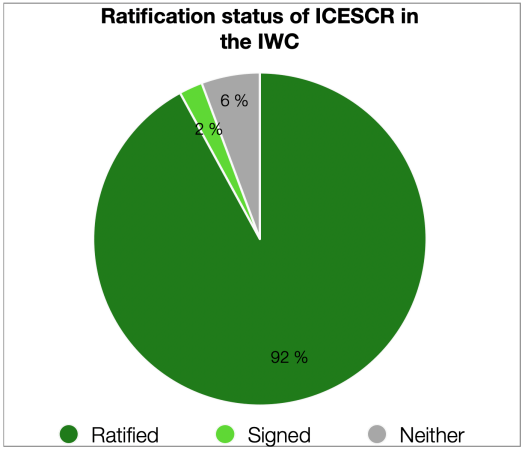
First, the Vienna Convention on the Law of Treaties (VCLT) mandates that the IWC interpret the terms of its founding treaty, the International Convention for the Regulation of Whaling (ICRW), in accordance with ‘any relevant rules of international law applicable in the relations between the parties.’ This includes international human rights law. Second, the right to food and thus the right to be free from hunger can be considered customary international law. Customary international human rights law binds the IWC either directly, due to its international legal personality, or indirectly, as all its member states are bound by such customary rules of international law.
As such, every human right is considered universal, indivisible, interdependent, interconnected, and inalienable. This means that human rights apply to everyone regardless of their background, all rights are equally important and must be upheld together, and they cannot be taken away or surrendered. Additionally, the fulfilment of one right often depends on the realisation of others, highlighting their interconnected nature. This consequently means that those state parties that have signed on to human rights conventions cannot ignore these human rights in fora where other matters play a role. In other words, human rights inevitably rise to the surface within the International Whaling Commission even though the organisation now promotes the conservation of whales, despite lack of such a mandate in the text of its parent convention.
Some will argue that the IWC is a conservation organisation and bound to its mission to conserve whale stocks as its foremost responsibility. This is why the past and future discussions on the establishment of a South Atlantic Whale Sanctuary (SAWS), proposed by a number of Latin American states, does not take into account potential impacts on fishers and associated livelihood implications. After all, any new regulations must be implemented on the ground. If the SAWS is ever established, governments must make sure also small-scale fishing operators are able to implement the new rules whilst maintaining their livelihoods. Indeed, the IWC’s mandate to conserve “whale stocks and thus make possible the orderly development of the whaling industry” does not excuse the organisation from its obligations to human rights. The United Nations has addressed this argument in the 2018 Report of the Special Rapporteur on the issue of human rights obligations relating to the enjoyment of a safe, clean, healthy and sustainable environment. That report unequivocally states in Framework Principle 16, Commentary 54 that actions taken by States “to prevent, reduce or remedy environmental harm […] or […] actions in response to climate change” do not excuse them from compliance with their human rights obligations.
Further, the founding document of the IWC, the ICRW, itself a legally-binding document that all 88 members of the Commission must adhere to, requires the Commission to “take into consideration the interests of the consumers of whale products and the whaling industry” when changes to the Schedule, the operative part of the Convention, are made. That is, if a country like Guinea decided to actively hunt whales that migrate along its shores, the Schedule must be amended in a way that takes Guinea’s interests into account.
Before this ever happens, however, the vast majority of IWC members who have also ratified the ICESCR and other human rights treaties have the duty to respect, protect, and fulfil the rights enshrined therein. This means refraining from actions that obstruct existing access to adequate food, intervening to prevent businesses or individuals from depriving people of sufficient food, and proactively enhancing access to resources and livelihoods.
It might be argued, for example, that it is Guinea’s responsibility to ensure that her populace has access to sufficient food (through initiatives that promote food security) and that she therefore fulfils its responsibility to provide adequate food. This, however, would ignore the role of international cooperation in the realisation of the right to food. The ICESCR as well as the Charter of the United Nations both urge state parties to take collective action to ensure the full realisation of the right to adequate food by respecting and protecting this right in other countries, by facilitating food access and by providing aid where this aid is needed. Indeed, a further stipulation in these documents is that the right to adequate food is also paid due attention to in other fora. And this would ultimately also include the IWC.
The concept of ‘adequate’ in the right to adequate food goes beyond mere sustenance, demanding a holistic approach to ensure every individual’s well-being. According to General Comment 12 of the Committee on Economic, Social, and Cultural Rights (CESCR), ‘adequate’ food must be sufficient, safe, nutritious, and culturally appropriate. This means that food should not only meet the caloric needs necessary for an active and healthy life but also be free from harmful substances and provide essential nutrients to prevent malnutrition. Moreover, it must respect cultural dietary practices, acknowledging that food is intertwined with identity and tradition. Therefore, adequacy is a comprehensive standard that protects individuals from hunger and promotes overall health, dignity, and cultural integrity. This robust definition underscores that true food security and the fully implemented right to food encompass quality, safety, and cultural relevance, making it an indispensable component of human rights. No human rights instrument stipulates that whaling cultures are to be treated differently in this context. There is consequently no reason to do so.
What if the IWC keeps on ignoring the right to adequate food?
If the IWC continues to ignore the right to adequate food, it risks failing to meet its legal obligations under international human rights treaties, such as the ICESCR. This deliberate oversight could lead to persistent food insecurity in member states, especially those advocating for the recognition of whales as a potential food source. Ignoring these obligations not only undermines the credibility of the IWC but also compromises the well-being of individuals who rely on sufficient, safe, and culturally appropriate food. Additionally, it could exacerbate tensions within the IWC, as member states advocating for food security through whaling may feel their concerns are not being adequately addressed. Ultimately, this could lead to a breach of international cooperation principles that emphasise collective action to ensure the right to adequate food is respected and protected globally.
The legitimacy of the IWC as an international organisation hinges on its ability to balance its mandate with the diverse interests of its member states — an ability that has not surfaced prominently since the adoption of the moratorium. In fact, the deadlock the organisation has reached is a dark example of how international organisations should not work. Notwithstanding, the IWC operates under the legally binding framework of the ICRW, which provides a clear mandate and set of principles for its operations. This legal basis reinforces its authority and obligations, including considerations for the interests of consumers and the whaling industry. The IWC has demonstrated adaptability by evolving its focus from merely regulating whaling to encompassing broader marine conservation goals. This is best demonstrated by the fact that the IWC is becoming increasingly aware of its human and indigenous rights obligations as the human and indigenous rights survey relating to ASW demonstrates. This evolution reflects its responsiveness to changing global priorities and environmental concerns — an evolution that also potential whaling countries must be able to benefit from.
Sidelining or ignoring the right to food can erode trust and support among member states advocating for the inclusion of food security considerations even further. The perception that the IWC is biased towards conservationist agendas can alienate member states that rely on marine resources for food security and economic development. Ensuring a balanced approach that respects both conservation and sustainable use is crucial for maintaining its legitimacy. It is therefore imperative that each IWC member state recognise and implement its obligations under those human rights treaties it has ratified. Otherwise, an opportunistic interpretation and application of fundamental human rights is an undesirable consequence, rendering the entire concept of human rights obsolete.
Authors and affiliations in alphabetical order:
Peter Bridgewater: Centre for Heritage and Museum Studies, the Australian National University, Australia; IWC Chair 1994—1997.
Endalew L. Enyew: Researcher, UiT—the Arctic University of Norway, Norway.
Eugene Lapointe: President, IWMC World Conservation Trust, Switzerland; Secretary-General of CITES 1982—1990.
Jessica Lefevre: Attorney-at-Law, United States.
Carlos Mazal: Consultant, Uruguay.
Mia Schulz: Student, Germany.
Nikolas Sellheim: Director, Sellheim Environmental, Germany.
SUMMARY
“Dismantle ‘zombie’ wildlife protection conventions once their work is done”, published in Nature
The Nature comment titled “Dismantle ‘zombie’ wildlife protection conventions once their work is done” argues that the International Whaling Commission (IWC) has outlived its usefulness and should be disbanded. The authors—Peter Bridgewater, Rakhyun E. Kim, Robert Blasiak, and Nikolas Sellheim—assert that while the IWC was instrumental in its early years, particularly with the implementation of the 1985 moratorium on commercial whaling, its relevance has significantly diminished in recent decades.
Peter Bridgewater is an honorary professor at the Australian National University and a researcher at Utrecht University, with experience as a former chair of the IWC. Rakhyun E. Kim is an associate professor at Utrecht University, specialising in sustainable development. Robert Blasiak is an associate professor at the Stockholm Resilience Centre, and Nikolas Sellheim is the director of Environmental Research in Germany.
The authors argue that the IWC, established in 1946 under the International Convention for the Regulation of Whaling (ICRW), was initially successful in managing whale populations and curbing unsustainable whaling practices. However, since the 1985 moratorium, the IWC has been bogged down by continuous, unresolved debates among its members. The number of member nations has grown, yet many have no historical connection to whaling and are reluctant to revisit the moratorium, leading to stagnation in meaningful progress.
The article suggests that the IWC’s current role is redundant, especially since its original mandate has been largely fulfilled. The authors propose that the IWC should devolve its remaining responsibilities to other international conventions and national governments, thereby closing its operations. They argue that doing so would not only recognise the IWC’s achievements but also set a valuable precedent for other international organisations that have completed their missions.
The comment also touches on broader issues of efficiency within international environmental governance, noting that there are over 3,000 international environmental agreements and organisations, many of which have outlived their purpose. The authors call for consolidation of these organisations to increase efficiency and effectiveness, urging world leaders to address this issue at upcoming international summits.
In conclusion, the authors of “Dismantle ‘zombie’ wildlife protection conventions once their work is done” argue for a dignified end to the IWC, emphasising that the commission’s continued existence is no longer necessary and that its remaining functions can be better managed by other organisations.
The Comment can be accessed here.
ARTICLE
What is legal personhood of parts of the natural environment?
Introduction
The concept of legal personhood has traditionally been confined to human beings and, in more recent legal history, to corporations and other artificial entities. However, there is a growing movement advocating for the extension of legal personhood to parts of the natural environment, such as rivers, forests, species, and entire ecosystems. This idea, while radical, is rooted in the belief that elements of nature should be recognised as legal entities with rights that must be protected. Such a shift would not only transform legal systems but also fundamentally alter humanity’s relationship with the natural world.
This article explores the concept of legal personhood for parts of the natural environment, tracing its origins, key arguments, and the challenges it presents. Central to this discussion are the influential works of Christopher Stone, particularly his essay “Do Trees Have Standing?”, and Sudhir Chopra’s “Whales – Their Emerging Right to Life,” both of which have played a pivotal role in shaping this discourse.
The origins of legal personhood for nature
The idea of extending legal personhood to parts of the natural environment gained significant attention in the early 1970s with Christopher Stone’s landmark essay, “Do Trees Have Standing?” In this essay, Stone challenged the prevailing legal doctrine that only humans and entities created by humans, such as corporations, could be granted legal rights. He proposed that natural objects, including trees, rivers, and animals, should be recognised as legal persons capable of holding rights and being represented in court. Stone’s argument was revolutionary, suggesting a profound shift in legal thought by advocating that nature should no longer be treated merely as property but rather as an entity with intrinsic value and rights that deserve protection.
Stone’s thesis was not just a theoretical exercise; it had practical implications. By recognising nature as a legal person, courts would be compelled to take environmental concerns more seriously, enabling legal actions to be brought on behalf of the environment. This approach would require the appointment of guardians or trustees who could represent the interests of natural entities in legal proceedings, much like how guardians represent the interests of minors or individuals who cannot represent themselves. Stone’s essay sparked considerable debate, laying the groundwork for the contemporary movement toward recognising the legal personhood of nature.
Key arguments for legal personhood of nature
The arguments in favour of extending legal personhood to parts of the natural environment are deeply rooted in both ethical considerations and practical necessities. At the core of this movement is the belief that the natural environment should be protected not merely for its utility to humans but because it possesses intrinsic value. Recognising this value within the legal system requires a fundamental rethinking of how rights are assigned and protected.
One of the primary arguments for legal personhood is the recognition of the intrinsic value of nature. Advocates argue that natural entities, such as rivers and forests, have inherent worth that exists independently of their usefulness to humans. This intrinsic value merits recognition and protection, and granting legal personhood is a means of acknowledging that these entities have their own interests, which can and should be defended in legal contexts.
Another significant argument centres on the concept of guardianship and representation. By granting legal personhood to natural entities, it becomes possible to appoint legal guardians who can act on their behalf. These guardians would be empowered to bring legal actions to protect the environment, ensuring that the rights of nature are upheld. This mechanism could lead to more robust environmental protection, as it provides a legal avenue for addressing environmental harm that might otherwise go unchallenged.
Legal personhood for nature also has the potential to enhance environmental protection by creating a stronger legal framework within which environmental issues can be addressed. This framework could serve as a powerful tool in tackling challenges such as pollution, deforestation, and species extinction, as it would enable direct legal actions to be taken in defence of natural entities.
The push for legal personhood of nature is also motivated by the desire to redress power imbalances within legal systems. Corporations and governments often have substantial resources at their disposal to exploit natural resources, while the environment, in its current legal status, has little to no protection. Legal personhood could help to level the playing field by giving nature a voice and a means of defending itself in legal matters.
Additionally, there is an ethical dimension to this movement that draws on cultural perspectives, particularly those of indigenous communities. Many indigenous cultures have long recognised the natural environment as a living entity with its own rights. The movement towards legal personhood for nature can be seen as an attempt to align modern legal systems with these traditional ethical and cultural views, acknowledging the deep interconnectedness between humans and the natural world.
Case studies and legal developments
The theoretical discussions surrounding legal personhood for nature have, in some instances, moved from theory to practice. There are several notable examples where parts of the natural environment have been granted legal personhood, leading to significant legal and cultural shifts.
One of the most prominent examples is the Whanganui River in New Zealand. In 2017, the New Zealand government passed the Te Awa Tupua Act, which granted legal personhood to the Whanganui River. The river is now recognised as a living entity with its own rights and interests, represented by two guardians—one appointed by the Whanganui iwi, the local Maori tribe, and the other by the government. This legislation reflects the Maori worldview, which sees the river as an ancestor, and represents a significant step towards integrating indigenous perspectives into modern legal frameworks.
Another significant case occurred in India, where the High Court of Uttarakhand in 2017 declared the Ganges and Yamuna rivers as legal persons. This decision was intended to protect these sacred and vital waterways from pollution and degradation. However, the ruling was later overturned by the Indian Supreme Court, highlighting the legal complexities and challenges associated with granting personhood to nature. The Indian case underscores the difficulties in implementing such rights within existing legal structures, particularly in balancing them against competing human interests.
In 2008, Ecuador became the first country to recognise the rights of nature in its constitution. The Ecuadorian constitution grants nature the right to exist, persist, maintain, and regenerate its vital cycles. This legal recognition allows citizens to file lawsuits on behalf of nature to enforce these rights, leading to several landmark cases aimed at protecting ecosystems from exploitation and degradation. Ecuador’s constitutional recognition of nature’s rights represents a pioneering approach, embedding environmental protection directly into the fabric of national law.
Colombia offers another example with the recognition of the Atrato River as a legal person in 2016. The Colombian Constitutional Court ruled that the Atrato River possessed rights to protection, conservation, maintenance, and restoration. The court’s decision was influenced by the need to protect both the river and the indigenous communities that depend on it. This ruling has led to significant government action to restore and protect the river’s ecosystem, demonstrating the practical implications of recognising legal personhood for natural entities.
These case studies illustrate the growing acceptance and implementation of legal personhood for nature in various parts of the world. However, they also reveal the significant challenges and complexities involved in translating this concept into actionable legal frameworks.
Challenges and criticisms
While the concept of legal personhood for nature has garnered increasing support, it is not without its challenges and criticisms. One of the primary challenges lies in the legal complexity that this concept introduces. Granting legal personhood to natural entities raises numerous difficult questions, such as how to define the exact rights of these entities, how to balance those rights against human interests, and who should act as guardians. These issues require careful consideration and present significant challenges for legal systems that are not traditionally equipped to handle such matters.
Enforcement is another major issue. Even in cases where legal personhood has been granted to parts of the natural environment, enforcing these rights can be challenging. For example, while Ecuador’s constitution recognises the rights of nature, ensuring that these rights are respected and upheld in practice has proven difficult. Legal actions on behalf of nature often face significant obstacles, including resistance from powerful economic interests and the complexities of proving environmental harm in court.
Critics also argue that the concept of legal personhood for nature may be impractical or even counterproductive. Some suggest that it could lead to an overburdening of the legal system, with an influx of lawsuits filed on behalf of natural entities. Others worry that granting legal personhood to nature could create conflicts with existing property rights, leading to legal uncertainty and potential economic disruption.
Moreover, there is a philosophical debate about whether nature truly needs legal personhood to be protected effectively. Some argue that existing environmental laws, if properly enforced, are sufficient to protect the environment without the need for such a radical shift in legal thinking. They contend that the focus should be on strengthening and enforcing existing regulations rather than introducing a new and potentially problematic legal category.
Despite these challenges and criticisms, the movement for legal personhood for nature continues to gain momentum. Proponents argue that the existing legal frameworks have failed to adequately protect the environment and that a more radical approach is necessary to address the pressing environmental crises facing the world today.
Conclusion
The concept of legal personhood for parts of the natural environment represents a significant and potentially transformative shift in legal thought. Rooted in the recognition of the intrinsic value of nature, this movement seeks to grant legal rights to natural entities, enabling them to be represented in court and protected under the law. The idea, while still relatively new and controversial, has already begun to take hold in various legal systems around the world, with significant implications for environmental protection and legal philosophy.
Christopher Stone’s pioneering essay “Do Trees Have Standing?” and Sudhir Chopra’s “Whales – Their Emerging Right to Life” have played crucial roles in advancing the idea of legal personhood for nature. These works, along with real-world case studies from countries like New Zealand, India, Ecuador, and Colombia, demonstrate both the potential and the challenges of this concept.
As the environmental crises facing the world continue to escalate, the debate over legal personhood for nature is likely to become even more relevant. Whether or not this concept becomes widely adopted, it has already begun to change the way we think about the relationship between law, humanity, and the natural world. It challenges us to reconsider the boundaries of legal rights and to explore new ways of protecting the environment that go beyond traditional legal frameworks.
ARTICLE
The Māori Declaration on Legal Personhood for Whales: Bridging ancestral wisdom and modern conservation
In a remarkable and transformative declaration, Indigenous leaders from across the Pacific have united to grant legal personhood to whales through the He Whakaputanga Moana treaty. This groundbreaking document, signed by leaders from Aotearoa (New Zealand), the Cook Islands, and other Pacific nations, reflects a deep respect for the cultural and spiritual significance of whales within Indigenous traditions, particularly those of the Māori people. It also represents a significant shift in how the world might approach marine conservation in the future.
A deep connection: Whales in Māori culture
For the Māori, whales, or “tohorā,” are far more than just marine animals; they are revered as ancestors and taonga (treasures). The stories of Te Ao Māori (the Māori worldview) are intricately woven with the natural world, with the ocean playing a central role in their history, spirituality, and identity. The connection between the Māori people and whales is not merely symbolic; it is deeply embedded in their whakapapa (genealogy) and guided by mātauranga Māori, the traditional knowledge that has been passed down through generations.
As one Māori conservationist eloquently described, the ocean, Te Moana nui a Kiwa, is a living ancestor, and its health is intimately tied to the well-being of the Māori people. The songs of the whales, once vibrant and full of life, have become a fading echo, a reflection of the growing environmental degradation that threatens both the ocean and the creatures that inhabit it. This decline in whale populations and the deteriorating state of the ocean are seen not just as environmental crises but as a spiritual and cultural loss.
The significance of He Whakaputanga Moana
The He Whakaputanga Moana declaration is a powerful response to these challenges. It goes beyond traditional conservation measures by recognising whales as legal persons with inherent rights, including the right to migrate freely, live in a healthy environment, and thrive alongside humanity. This recognition is not just a legal formality; it is a profound statement of the Māori and Pacific peoples’ enduring relationship with the ocean and their commitment to protecting it.
This declaration is unique because it is rooted in tikanga Māori, or Māori customary law, rather than the Crown law of New Zealand. This distinction is significant because it places Indigenous knowledge and values at the heart of the legal framework for environmental protection. By doing so, it challenges the dominant legal systems that have historically viewed nature as property to be owned and exploited, advocating instead for a more holistic and interconnected approach to conservation.

The concept of legal personhood has been gaining traction worldwide, with rivers, forests, and mountains being granted similar status in various countries. However, the He Whakaputanga Moana declaration is particularly revolutionary because it extends this concept to marine life, recognising the profound ecological and cultural importance of whales. It reflects a growing respect for Indigenous knowledge systems and their role in shaping global environmental policies.
The role of the Hinemoana Halo Ocean Initiative
Central to the success of this declaration is the work of the Hinemoana Halo Ocean Initiative, a movement founded in 2022 to protect the whales and the broader ocean environment. Named after Hinemoana, the Māori goddess of the ocean, the initiative seeks to create a protective “halo” around whales, shielding them from the many threats they face, such as ship strikes, pollution, and climate change.
The Hinemoana Halo Initiative represents a fusion of mātauranga Māori and modern scientific approaches. By combining traditional knowledge with cutting-edge scientific data, the initiative aims to gain a deeper understanding of whale behaviour, migration patterns, and habitat needs. This holistic approach forms the foundation of the conservation strategies being implemented to ensure that whales can continue to thrive in their natural habitats.
One of the core components of the initiative is the establishment of rāhui, or customary marine protected areas. These areas are designed to work in collaboration with industries to reduce harmful impacts on the marine environment. Within these sanctuaries, whales can breed, feed, and migrate without fear, ensuring their populations remain healthy and resilient.
Empowering coastal communities as kaitiaki, or guardians, is another vital element of the Hinemoana Halo Initiative. The Māori, as the descendants of the first navigators of the Pacific, possess an intimate understanding of their local ecosystems. Their knowledge of ocean currents, breeding grounds, and seasonal patterns is invaluable in the effort to protect whales and the broader marine environment. By providing these communities with the resources and authority to manage their ancestral waters, the initiative strengthens their role as protectors of the moana and its inhabitants.
Legal personhood and the potential for legal action
One of the most intriguing aspects of the He Whakaputanga Moana declaration is the potential for legal personhood to serve as a tool for environmental protection. With legal personhood, whales could, through human representatives, bring legal actions against those who harm their habitats or violate their rights. This could include suing companies that pollute the oceans, challenging destructive fishing practices, or even holding governments accountable for failing to protect marine environments.
This legal innovation is not just theoretical; it builds on a growing body of case law in New Zealand that recognises the rights of nature. The Supreme Court’s decision to allow climate change litigation to proceed in the Smith v Fonterra case, which involved claims based on tikanga Māori, suggests that New Zealand’s legal system is increasingly open to considering the rights of natural entities. If the courts recognise He Whakaputanga Moana in the same way, it could pave the way for groundbreaking legal actions on behalf of whales.
The declaration has already sparked a global conversation about the legal and ethical status of whales. At COP28, Pacific Indigenous leaders, supported by the Māori King and other prominent figures, called for global recognition of whale legal personhood. There is even a growing movement to appoint whales as ocean ambassadors to the United Nations, a role that would symbolise their importance to the health of the planet and the interconnectedness of all life.
The broader implications for global conservation
The Māori Declaration on Legal Personhood for Whales is part of a broader global movement that seeks to redefine humanity’s relationship with the natural world. By recognising the rights of whales, the declaration challenges the traditional view that nature exists solely for human use and exploitation. Instead, it advocates for a more balanced and respectful relationship, one that acknowledges the intrinsic value of all living beings and the ecosystems they inhabit.
This movement is not limited to New Zealand. Similar initiatives are emerging around the world, from the recognition of the rights of rivers in India and Colombia to the constitutional protection of nature in Ecuador and Bolivia. These efforts reflect a growing recognition that our current legal and economic systems are inadequate to address the environmental crises we face. By granting legal rights to natural entities, these initiatives aim to create a more just and sustainable world.
For the Māori and other Indigenous peoples, the recognition of legal personhood for whales is also a reaffirmation of their sovereignty and their role as guardians of the land and sea. It is a powerful statement of their enduring connection to the natural world and their commitment to protecting it for future generations.
Conclusion: A new era of environmental protection
The Māori Declaration on Legal Personhood for Whales represents a bold and visionary approach to conservation. By recognising whales as legal persons, the Māori are not only asserting their rights as Indigenous peoples but also offering a new model for how we can protect the natural world. This model is rooted in a deep respect for the interconnectedness of all life and a recognition that our well-being is inextricably linked to the health of the planet.
As the world grapples with the challenges of climate change, biodiversity loss, and environmental degradation, the He Whakaputanga Moana declaration offers a hopeful and inspiring vision for the future. It calls on us to move from a paradigm of exploitation to one of coexistence and kinship, to recognise the rights of nature and to work together to protect the delicate balance of life on Earth.
In the words of the Māori conservationist who helped lead this movement, the songs of the whales are more than just melodies; they are a call to action, a reminder of our shared responsibility to care for the ocean and all its inhabitants. As we stand at the edge of a new era in environmental protection, let us heed that call and work together to create a world where whales—and all life—can thrive.
ARTICLE
The impact of the rise of the far right in Europe on environmental protection
In recent years, the far-right political movement has made significant electoral gains across Europe, fundamentally altering the political landscape in numerous countries. Parties that once occupied the fringes are now major players, shaping policies on immigration, national identity, and increasingly, environmental protection. Driven by nationalism, anti-immigration sentiment, Euroscepticism, and a rejection of globalisation, these parties have started influencing climate and environmental policies, with complex and often contradictory results.
While some far-right parties are staunch climate change sceptics, others have embraced eco-nationalism — a blend of environmental protection with nationalist and xenophobic rhetoric. This new ideological framework allows them to claim environmental credentials while pushing anti-immigration and anti-globalist agendas. The rise of far-right parties thus raises profound questions about the future of environmental protection in Europe, from Germany to France, Scandinavia, and beyond. This shift poses challenges not only to national environmental policies but also to Europe’s leadership on the global stage in fighting climate change.
Far-right success in Germany: The case of Thuringia and Saxony
Recent state elections in Thuringia and Saxony have highlighted the growing influence of Germany’s far-right Alternative für Deutschland (AfD; Alternative for Germany). In both states, the AfD won over 30% of the vote, positioning itself as a significant political force, especially in economically challenged regions of eastern Germany, where voters express dissatisfaction with the federal government’s policies.
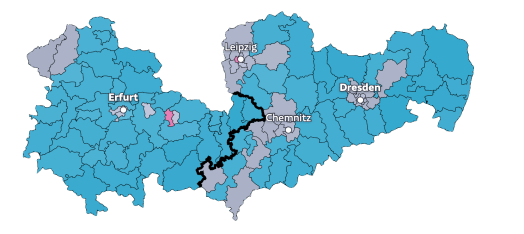
Germany has historically been a global leader in environmental policy, most notably through its energy transition, a long-term project to move away from nuclear and fossil fuels toward renewable energy. However, the rise of the AfD signals a potential shift away from Germany’s progressive climate agenda. The party opposes many of the country’s environmental policies, criticising them as elitist and claiming they disproportionately harm German industry and lower-income citizens. The AfD is particularly hostile to the European Green Deal, which aims to make the EU climate-neutral by 2050, arguing that it would result in job losses and economic instability, especially in coal-dependent regions like Saxony.
Moreover, the AfD frames environmental policies as instruments of globalisation, which it views as infringing on national sovereignty. The party uses this narrative to argue against international climate agreements, such as the Paris Agreement, portraying them as threats to national interests. This rhetoric has proven effective in Germany’s eastern regions, where economic hardship and unemployment are high. Voters in these areas have responded to the AfD’s critique of Berlin’s climate policies, which they perceive as out of touch with their economic realities.
The AfD’s rise in these regions reflects a broader rejection of the federal government’s climate agenda, which could have long-term implications for Germany’s ability to meet its ambitious climate goals. If the AfD’s influence continues to grow, particularly in national politics, Germany’s role as a leader in European climate policy could be weakened, potentially derailing progress on key initiatives such as the European Green Deal.
Eco-nationalism: Protecting nature while rejecting immigration
A growing trend within far-right environmental thinking is the rise of eco-nationalism. This ideology blends traditional environmental concerns with nationalist and anti-immigration rhetoric. Eco-nationalists argue that immigration increases pressure on national resources, such as water, land, and infrastructure, which in turn exacerbates environmental degradation. By linking environmental protection with xenophobia, far-right parties seek to attract voters who care about environmental issues but are also wary of immigration and multiculturalism.
Eco-nationalism is particularly evident in Germany and France. In Germany, the AfD uses eco-nationalist rhetoric to appeal to rural voters, emphasising the need to protect German forests, farmlands, and wildlife from overexploitation. The party argues that immigration leads to overpopulation, which causes urban sprawl and places unsustainable pressure on natural resources. In rural areas, where concerns about immigration and environmental degradation intersect, this message has gained significant traction.
In France, Rassemblement National (National Rally), led by Marine Le Pen, has also adopted eco-nationalist themes. Le Pen has argued that environmental protection should begin at the national level, with policies that prioritise the preservation of France’s landscapes, biodiversity, and resources. However, she also frames immigration as a direct threat to these environmental priorities, claiming that population growth driven by migrants places unsustainable demands on France’s natural resources, land, and water supplies. By linking immigration to environmental strain, Rassemblement National uses selective environmentalism to appeal to voters who are both concerned about ecological issues and supportive of nationalist policies.
This form of eco-nationalism allows far-right parties to present themselves as defenders of national nature while promoting xenophobic policies. However, it is inherently selective, focusing on preserving rural landscapes and local ecosystems while ignoring global environmental challenges such as climate change. Far-right eco-nationalism tends to be more about protecting national resources for the native population than about addressing broader environmental concerns in a globally interconnected world.
Scandinavian far-right movements: Balancing environmentalism and nationalism
In Scandinavian countries, far-right parties have taken a somewhat different approach to environmentalism. Countries like Sweden, Finland, and Denmark have strong environmental traditions, which makes outright climate denial less politically viable for far-right parties. Instead, Scandinavian far-right movements have tried to balance environmentalism with nationalism, integrating environmental protection into their broader nationalist agendas.
The Sverigedemokraterna (Sweden Democrats) exemplify this balancing act. While the party opposes international climate agreements like the Paris Agreement, arguing that Sweden should prioritise national solutions, it has also embraced aspects of environmentalism. The Sweden Democrats advocate for protecting Sweden’s forests, wildlife, and rural landscapes, positioning themselves as defenders of Sweden’s natural heritage. However, they frame environmental degradation as partly driven by immigration and urbanisation, positioning themselves as protectors of Swedish nature against the pressures of globalisation and immigration.
Similarly, in Finland, the Perussuomalaiset (Finns Party) has adopted eco-nationalist rhetoric, arguing for the protection of Finland’s natural resources, while opposing EU environmental regulations. The party claims that international climate policies unfairly burden Finland’s rural communities and industries, particularly those reliant on logging and traditional land use. The Finns Party argues that Finland should focus on protecting its own environment rather than adhering to global climate initiatives. This approach blends environmentalism with a nationalist agenda that prioritises Finland’s economic and cultural independence.
In Denmark, the Dansk Folkeparti (Danish People’s Party) has taken a similar stance, advocating for the protection of Denmark’s landscapes and farming traditions while opposing EU climate policies that they argue undermine national sovereignty. These Scandinavian far-right parties attempt to reconcile environmentalism with nationalism, but their focus on national solutions often prevents them from fully addressing the global nature of the climate crisis.
Far-right opposition to climate change policies
One of the defining characteristics of far-right parties across Europe is their opposition to international climate agreements and environmental regulations, particularly those set by the EU. They argue that these agreements infringe on national sovereignty and place an undue economic burden on domestic industries and workers.
In Poland, the Prawo i Sprawiedliwość (PiS; Law and Justice) party has been one of the most vocal opponents of EU climate initiatives. Poland’s reliance on coal makes the country particularly vulnerable to EU efforts to phase out fossil fuels. PiS has consistently pushed back against EU climate targets, arguing that they unfairly target coal-dependent regions and threaten jobs. The party’s focus on energy security and economic stability has led it to resist many of the EU’s most ambitious climate proposals.
In Italy, Fratelli d’Italia (Brothers of Italy), led by Giorgia Meloni, has expressed similar scepticism towards the European Green Deal. Meloni argues that the EU’s climate policies impose excessive financial burdens on Italian industries, particularly in manufacturing and agriculture. She also frames the European Green Deal as an elitist project that favours wealthy, industrialised nations at the expense of southern European countries like Italy.
Far-right parties across Europe often prioritise short-term economic gains over long-term environmental sustainability. They argue that climate policies, such as carbon taxes, renewable energy mandates, and emissions reduction targets, disproportionately affect working-class citizens by raising energy costs and threatening jobs in traditional industries. By positioning themselves as defenders of the national economy, far-right parties have been able to gain electoral support, particularly in regions that rely on industries vulnerable to environmental regulation, such as coal mining and manufacturing.
Undermining international environmental cooperation
One of the most significant risks posed by the rise of far-right parties in Europe is their potential to undermine international environmental cooperation. The European Union has long been a leader in global climate efforts, playing a key role in the Paris Agreement and pushing ambitious climate targets for its member states. However, as far-right parties gain influence, both at the national and European levels, they threaten to fracture the unity needed to achieve these goals.
Far-right parties are typically Eurosceptic and oppose EU-led climate initiatives. They frame international agreements as foreign impositions that infringe on national sovereignty and disproportionately burden their economies. Hungary’s Fidesz party, led by Viktor Orbán, has frequently clashed with the EU over environmental policies, arguing that the bloc’s climate targets are too ambitious and disproportionately impact poorer Eastern European nations.
As parties like the AfD in Germany, PiS in Poland, and Fidesz in Hungary gain more influence, the EU’s ability to act as a unified force on climate policy becomes increasingly strained. Far-right resistance to EU climate initiatives could delay or block progress on critical projects like the European Green Deal, which aims to make the EU climate-neutral by 2050.
Moreover, far-right parties often align themselves with populist, climate-sceptical leaders outside of Europe, such as Donald Trump in the United States and Jair Bolsonaro in Brazil. These alliances weaken Europe’s leadership in global climate action and threaten multilateral cooperation on environmental issues.
Conclusion: A threat to environmental progress?
The rise of far-right movements across Europe poses a significant threat to environmental progress and climate action. While some far-right parties, particularly in Scandinavia, have embraced aspects of eco-nationalism and environmental protection, their focus on nationalism, anti-immigration policies, and opposition to international cooperation undermines any genuine commitment to addressing the global climate crisis.
The electoral successes of far-right parties, as seen in Germany’s recent state elections in Thuringia and Saxony, as well as in countries like France, Hungary, and Poland, could lead to a rollback of progressive environmental policies in key European states. Their opposition to the European Green Deal, scepticism of international climate agreements, and prioritisation of national economic interests over global environmental goals threaten to slow or reverse progress on critical climate issues.
Furthermore, the rise of far-right parties at the national and European levels could fracture the EU’s ability to act as a unified force on climate policy. Without strong international cooperation and political will, Europe’s leadership role in global climate action may weaken, undermining efforts to combat the climate crisis at a time when bold action is urgently needed.
Ultimately, Europe’s ability to meet its climate targets will depend on its capacity to counter the influence of far-right movements and address the underlying social and economic grievances that fuel their rise. If these challenges are not addressed, Europe risks losing its status as a global leader in environmental protection—just as the world faces unprecedented climate challenges.
ARTICLE
Electric vehicles (EVs), hybrids, and internal combustion engine (ICE) vehicles — Which is best for the environment?
Introduction
As governments and consumers increasingly focus on reducing carbon emissions and transitioning to cleaner transportation, three main vehicle types dominate the market: electric vehicles (EVs), hybrids, and internal combustion engine (ICE) vehicles. While EVs are often hailed as the future of transport, hybrids offer a middle ground between traditional fuel-powered cars and full electrification. On the other hand, ICE vehicles remain the most common globally. To assess their environmental impacts, we must consider the entire life cycle of these vehicles—from raw material extraction to production, use, and end-of-life.
This article provides a comparative analysis of EVs, hybrids, and ICE vehicles using a life cycle assessment (LCA) approach. We will examine the environmental impacts of each vehicle type in terms of raw material extraction, manufacturing, use phase, and end-of-life processes, along with a critical discussion on the broader implications for sustainability.
Raw material extraction
The raw material extraction phase is crucial in understanding the environmental impact differences among EVs, hybrids, and ICE vehicles. EVs and hybrids both require lithium-ion batteries, which necessitate the extraction of materials such as lithium, cobalt, and nickel. The extraction of these materials, particularly lithium, is associated with high water consumption and environmental degradation, especially in South America’s Lithium Triangle.
For an EV with a 60 kWh battery, the emissions from battery production are estimated at 100 kg CO₂ per kWh, resulting in a total of:
Hybrids, which use smaller batteries (typically 1.5 kWh to 9 kWh), require fewer raw materials. For a hybrid with a 9 kWh battery, the emissions from battery production are:
ICE vehicles, by contrast, do not require large batteries and rely primarily on materials like steel and aluminium for engine production. The estimated emissions for raw material extraction in an ICE vehicle are around 2 tonnes of CO₂, largely from mining and processing metals like steel.


Manufacturing
The manufacturing phase includes the emissions from producing the vehicle body, engine, and, in the case of EVs and hybrids, the battery. EVs generally have higher manufacturing emissions due to the energy-intensive process of battery production.
For an EV, the total manufacturing emissions, including the battery, can be calculated as:
For a hybrid, the smaller battery results in lower emissions:
For an ICE vehicle, the absence of a large battery reduces overall manufacturing emissions to:
Thus, while EVs have higher manufacturing emissions due to their larger batteries, hybrids fall somewhere between EVs and ICE vehicles in terms of their environmental impact at this stage.


Use phase
The use phase is where the differences between these vehicle types become most apparent, especially when considering carbon emissions. EVs, hybrids, and ICE vehicles each consume different types of energy, and their environmental impact during this phase depends on energy efficiency and the carbon intensity of the energy or fuel used.
EVs
Electric vehicles produce zero tailpipe emissions, but their environmental impact during the use phase depends on how the electricity they consume is generated. For this example, we assume an electricity consumption of 18 kWh per 100 km and an electricity grid carbon intensity of 200 g CO₂/kWh. Over a lifetime distance of 200,000 km, the total emissions for the use phase are:
Hybrids
Hybrids combine an internal combustion engine with a battery, allowing them to use less fuel than a typical ICE vehicle. For this analysis, we assume a fuel efficiency of 4.5 litres per 100 km and the same carbon emissions per litre of fuel as an ICE vehicle (2.31 kg CO₂/litre). Additionally, we assume the hybrid operates in electric mode for 40% of its lifetime distance, using electricity at the same rate as an EV.
For the fuel-powered portion of the hybrid’s lifetime (60% of 200,000 km), the emissions are:
For the electric portion (40% of 200,000 km):
Thus, the total use phase emissions for the hybrid are:
ICE vehicles
For ICE vehicles, the entire lifetime emissions during the use phase come from burning fuel. Assuming fuel efficiency of 6 litres per 100 km, the emissions over 200,000 km are:


End-of-life
The end-of-life phase includes vehicle disposal and recycling. EVs and hybrids present greater challenges due to the recycling of lithium-ion batteries, while ICE vehicles involve simpler material recycling processes for metals like steel and aluminium.
For EVs, battery recycling is energy-intensive and still underdeveloped. The estimated end-of-life emissions are around 1 tonne of CO₂ due to battery and vehicle disposal. For hybrids, with smaller batteries, the end-of-life impact is slightly lower, at 0.8 tonnes of CO₂. For ICE vehicles, simpler recycling processes result in an estimated 0.5 tonnes of CO₂ emissions during disposal.
Comparative carbon footprint
Having thoroughly evaluated each phase of the vehicle life cycle, we will now proceed to calculate the total carbon footprint for each vehicle type over its entire lifespan.
Electric vehicles
Hybrids
ICE vehicles


Results and discussion
Based on this analysis, both EVs and hybrids offer significant reductions in carbon emissions over their lifetime compared to ICE vehicles. EVs perform particularly well during the use phase, where they produce far fewer emissions due to their reliance on electricity. However, their higher manufacturing emissions, particularly from battery production, are an important consideration. Hybrids offer a compromise, with lower manufacturing emissions than EVs and slightly higher emissions during the use phase. They present a more immediate solution for those who cannot fully switch to electric vehicles but still wish to reduce emissions.

While EVs and hybrids have clear environmental advantages, the global shift to these technologies comes with challenges. The extraction of raw materials such as lithium and cobalt can lead to water depletion and environmental degradation, particularly in regions like South America’s Lithium Triangle and the Democratic Republic of Congo. These impacts must be addressed through better resource management, ethical mining practices, and advancements in battery recycling technology.
If Germany, with its 48 million vehicles, were to transition entirely to EVs, the environmental impact would be profound. Currently, the average ICE vehicle emits around 35.2 tonnes of CO₂ over its lifetime. Replacing each ICE vehicle with an EV, which has an average lifetime emission of 25.2 tonnes of CO₂, would save 10 tonnes of CO₂ per vehicle. This means a total savings of approximately 480 million tonnes of CO₂ over the lifetimes of these vehicles.
To put this in perspective, Germany’s total annual CO₂ emissions are around 760 million tonnes. A complete switch to EVs could thus eliminate nearly 63% of the country’s current annual emissions over the lifetime of the vehicles, providing a significant contribution to Germany’s ambitious carbon reduction targets.
However, such a shift would also place immense pressure on the global supply of critical raw materials like lithium and cobalt. Germany would need to import vast quantities of these materials to meet the demand for EV batteries. Additionally, this shift would strain the country’s energy infrastructure, necessitating an increase in renewable energy capacity to ensure that EVs are charged with clean energy. Without a parallel investment in green energy, the carbon savings from EV adoption could be undermined by reliance on fossil-fuel-based electricity.
Globally, there are more than 1.4 billion vehicles in use today. If all of these vehicles were replaced with EVs, the potential emissions reduction would be staggering. With a 10-tonne reduction in CO₂ emissions per vehicle, a global shift could result in 14 billion tonnes of CO₂ saved over the lifetimes of the new EV fleet. This figure represents a significant portion of the world’s total annual CO₂ emissions, which are approximately 36.6 billion tonnes. A global transition to EVs could thus save close to 38% of current global emissions, making a critical impact on efforts to limit global warming.
However, the global implications of such a shift go beyond just carbon savings. The increased demand for lithium, cobalt, nickel, and other materials used in battery production would have a major impact on the regions where these resources are extracted. For example:
- Lithium mining, primarily concentrated in South America, requires large amounts of water. In Chile’s Atacama Desert, 500,000 gallons of water are needed to extract just one tonne of lithium. A global surge in demand for lithium could exacerbate water scarcity and lead to conflicts over resources in these regions.
- Cobalt, primarily sourced from the Democratic Republic of Congo, is mined under conditions that are often associated with human rights violations, including child labour. A massive increase in cobalt demand could worsen these conditions unless there is a concerted effort to enforce ethical mining practices and develop alternative sources or recycling systems for cobalt.
Moreover, a global shift to EVs would place extraordinary pressure on recycling infrastructure. Currently, battery recycling is still in its early stages, and most lithium-ion batteries are not recycled at the end of their life. If billions of EVs are put on the road, the world will face a significant challenge in dealing with the disposal and recycling of used batteries, potentially leading to new environmental hazards if these issues are not addressed.
Conclusion
In conclusion, both EVs and hybrids provide a viable pathway to reducing transport emissions, but the full environmental benefits will only be realised if clean energy is used for electricity generation and sustainable practices are adopted in raw material extraction and recycling. ICE vehicles, while simpler to produce, remain significantly more carbon-intensive over their lifecycle and represent an unsustainable choice in the long term.
A complete shift to EVs, whether in Germany or globally, would result in significant carbon savings, but it would also bring about substantial challenges, especially in terms of raw material extraction and energy infrastructure. To maximise the benefits of a global transition to EVs, it is essential to invest in renewable energy, develop sustainable mining practices, and build effective recycling systems for EV batteries. Only with these measures in place can EVs truly fulfil their potential as a cornerstone of sustainable transportation.
ARTICLE
Biodiversity or climate change: what to protect first?
Introduction
The debate over whether to prioritise biodiversity conservation or climate change mitigation has intensified as both crises worsen. With rising temperatures and declining species, there is a growing sense of urgency to act on both fronts. However, the false dichotomy between biodiversity and climate goals has led to a belief that prioritising one comes at the expense of the other. In reality, the two are closely interlinked, and protecting one often benefits the other. This article explores the relationship between biodiversity and climate protection, demonstrating that they are not mutually exclusive and how local communities play a crucial role in successful conservation efforts.
Drawing on the insights of Swiss conservation biologist Raphaël Arlettaz, featured in a Neue Zürcher Zeitung interview, this piece will also explore the nuanced conflicts that arise, such as the potential clash between renewable energy developments and wildlife conservation. Ultimately, a more holistic approach is necessary to resolve both crises in unison.
The current state of biodiversity and climate change
The global biodiversity crisis is characterised by rapid species loss and ecosystem degradation. The IPBES reports that up to one million species face extinction due to human activity, including habitat destruction, pollution, overexploitation, and climate change. Ecosystems such as wetlands, forests, and coral reefs—which provide crucial services like carbon storage, water filtration, and food security—are under increasing threat.
Similarly, the climate crisis is causing rising global temperatures, more frequent and severe weather events, and shifting precipitation patterns. These changes disrupt ecosystems, forcing species to either adapt, migrate, or face extinction. For example, coral reefs, which are highly sensitive to temperature changes, are being decimated by ocean warming and acidification. As reefs die, the marine biodiversity they support also collapses, leading to cascading effects throughout oceanic food chains.
In Switzerland, as Raphaël Arlettaz points out, a third of the country’s known species and half of its ecosystems are at risk. While some species have benefitted from conservation efforts or climate change—such as those that thrive in warmer conditions—the overall trend is towards a steep decline in biodiversity. Habitat fragmentation, land-use changes, and intensive agricultural practices have driven many specialist species, which require specific environmental conditions, to the brink.
Biodiversity and climate stability are thus tightly intertwined. Biodiverse ecosystems like forests, grasslands, and wetlands play essential roles in regulating the climate by sequestering carbon dioxide, mitigating floods, and stabilising weather patterns. At the same time, these ecosystems need a stable climate to thrive. If we fail to address one crisis, we risk exacerbating the other.
The false dichotomy: biodiversity vs climate
The idea that biodiversity and climate are separate and competing priorities is misleading. In reality, they are interconnected, and solutions that benefit one often help the other. This misconception has led to scenarios where policymakers are pressured to prioritise either climate action or biodiversity conservation, particularly when it comes to land use for renewable energy projects.
As Arlettaz noted, “Sacrificing biodiversity for the climate is crazy.” Biodiversity conservation and climate action should be seen as two sides of the same coin, both essential for the future of the planet. Prioritising one over the other could lead to unintended consequences. For instance, prioritising the rapid deployment of renewable energy without considering its impact on wildlife and habitats can harm biodiversity, which, in turn, can undermine climate resilience.

How biodiversity supports climate stability
Biodiversity plays a critical role in maintaining and regulating the Earth’s climate. Diverse ecosystems, such as rainforests, mangroves, and wetlands, act as carbon sinks, absorbing carbon dioxide from the atmosphere and storing it in biomass and soils. Forests, for example, are responsible for absorbing nearly a third of the carbon emissions from human activities annually.
The Amazon rainforest, often referred to as the “lungs of the Earth,” stores vast amounts of carbon. However, deforestation for agriculture, logging, and mining is severely threatening this carbon sink. When forests are destroyed, the stored carbon is released back into the atmosphere, contributing to climate change. Additionally, the loss of tree cover reduces the ability of these ecosystems to absorb future emissions. As species disappear from the forest due to habitat destruction, the intricate processes that maintain the forest’s health, such as seed dispersal and pollination, also begin to fail, leading to further ecosystem degradation.
Wetlands, too, are vital for climate regulation. These ecosystems, including marshes, peatlands, and mangroves, store large amounts of carbon in their waterlogged soils. When wetlands are drained or destroyed, as has been the case in many parts of the world due to agriculture and urbanisation, the stored carbon is released into the atmosphere. Protecting and restoring wetlands, therefore, plays a key role in both biodiversity conservation and climate mitigation.
Moreover, marine ecosystems, particularly coastal environments like mangroves and seagrass meadows, are highly effective at capturing and storing carbon, a process known as “blue carbon.” These ecosystems also protect shorelines from erosion and storm surges, which are becoming more frequent and severe due to climate change.
A less obvious but equally important aspect is the role that biodiversity plays in enhancing ecosystem resilience. Diverse ecosystems are more robust and better able to withstand environmental stressors such as droughts, floods, and pests, all of which are becoming more frequent with climate change. In this way, biodiversity not only helps mitigate climate change but also allows ecosystems to adapt to its impacts.
The risk of renewable energy harming biodiversity
While renewable energy is essential for mitigating climate change, it can sometimes conflict with biodiversity conservation. Wind farms, solar parks, and hydropower dams can all have negative impacts on wildlife and natural habitats if not properly planned and managed. Raphaël Arlettaz raised concerns about wind turbines in the Swiss Alps, where they pose a significant risk to birds of prey, such as the bearded vulture and the golden eagle. These species, already recovering from near extinction, are at risk of colliding with turbines, leading to increased mortality rates.
Similarly, hydropower dams, while providing clean energy, can disrupt river ecosystems and block the migration of fish species like salmon. The construction of dams often leads to the flooding of large areas, which destroys terrestrial habitats and displaces wildlife. Solar farms, if placed in sensitive areas such as desert ecosystems or grasslands, can also disturb habitats and harm species that rely on those environments.
However, this does not mean that renewable energy projects should be halted. Instead, they must be designed with biodiversity in mind. Arlettaz advocates for a more strategic approach to renewable energy deployment. For example, solar panels could be installed on rooftops, in urban areas, or on already degraded land rather than in biodiverse regions like alpine meadows. Similarly, wind farms should be placed away from important bird migration routes and critical habitats. These adjustments allow for the expansion of renewable energy without sacrificing biodiversity.
The importance of local communities in conservation
A key element in protecting both biodiversity and climate is the involvement of local communities. Historically, conservation efforts that excluded local populations often failed because they disregarded the knowledge and needs of the people most directly affected by environmental policies. Local communities, particularly indigenous groups, have a deep understanding of their ecosystems and often practise sustainable land management techniques that benefit both biodiversity and climate resilience.
One of the most successful examples of local involvement in conservation is the reintroduction of the hoopoe bird in Switzerland’s Rhone Valley. Conservationists, working closely with local farmers, installed 700 nesting boxes across agricultural lands. The result was a significant increase in the hoopoe population, which had been on the verge of extinction. This project not only restored a valuable species but also built strong partnerships with the farmers, who benefitted from the presence of the birds as natural pest controllers.
In another example, indigenous communities in the Amazon have long practised agroforestry, a farming technique that integrates trees and crops. This method preserves forest cover, sequesters carbon, and supports biodiversity while providing food and livelihoods for local people. Such practices are vital for maintaining biodiversity and carbon sequestration in one of the world’s most important ecosystems.
Engaging local communities in conservation efforts ensures that biodiversity protection is sustainable in the long term. It also helps to address the socio-economic needs of these communities, reducing the pressures that often lead to habitat destruction, such as poverty and the lack of alternative livelihoods. In this way, conservation becomes not only an environmental goal but also a tool for social equity and economic development.
The role of policy to ensure comprehensive environmental protection
The key to addressing both biodiversity loss and climate change lies in comprehensive environmental policies that recognise the interdependence of these issues. Policymakers must move away from framing climate action and biodiversity conservation as competing priorities and instead adopt strategies that address both simultaneously.
The European Union’s Green Deal is an example of such an integrated approach. It aims to make Europe the first carbon-neutral continent by 2050, and it includes biodiversity as a key component of this strategy. The deal emphasises the restoration of ecosystems, reforestation, and the protection of marine environments alongside efforts to reduce carbon emissions. By investing in nature-based solutions, such as restoring wetlands and planting trees, the EU recognises that biodiversity conservation is essential for achieving climate goals.
In Switzerland, the upcoming biodiversity initiative presents an opportunity to align biodiversity conservation with climate action. If passed, the initiative would ensure that biodiversity is considered in all future land-use and energy policies. This would help prevent situations where renewable energy projects threaten important habitats or species. However, as Raphaël Arlettaz points out, more work is needed to ensure that existing threats to biodiversity, such as power line electrocutions and habitat destruction, are addressed.
To succeed, environmental policies must be informed by science, sensitive to local contexts, and inclusive of the communities most affected. This means investing in research to understand the ecological impacts of renewable energy projects, supporting local conservation efforts, and ensuring that both biodiversity and climate goals are integrated into national and international policy frameworks.
Conclusion
In conclusion, the question of whether to prioritise biodiversity conservation or climate change mitigation is based on a false dichotomy. The two crises are deeply intertwined, and any effective environmental strategy must address both simultaneously. Sacrificing biodiversity for the sake of climate action, as Raphaël Arlettaz points out, is short-sighted when the two can be tackled together.
Biodiversity plays a vital role in stabilising the climate, while a stable climate allows ecosystems to thrive. Renewable energy development is essential, but it must be carefully planned to avoid harming biodiversity. Local communities, with their knowledge and sustainable practices, are key allies in conservation efforts. Furthermore, comprehensive policies that integrate both climate and biodiversity goals are essential for creating a sustainable and resilient future.
By adopting a holistic approach that recognises the interconnectedness of biodiversity and climate, we can protect the natural world while addressing the urgent challenge of climate change. Only through such an integrated strategy can we ensure a future that supports thriving ecosystems, a stable climate, and resilient communities for generations to come.
BOOK REVIEW
Michael Paul’s “Der Kampf um den Nordpol. Die Arktis, der Klimawandel und die Rivalität der Großmächte” (“The battle for the North Pole. The Arctic, climate change and the rivalry of superpowers”)
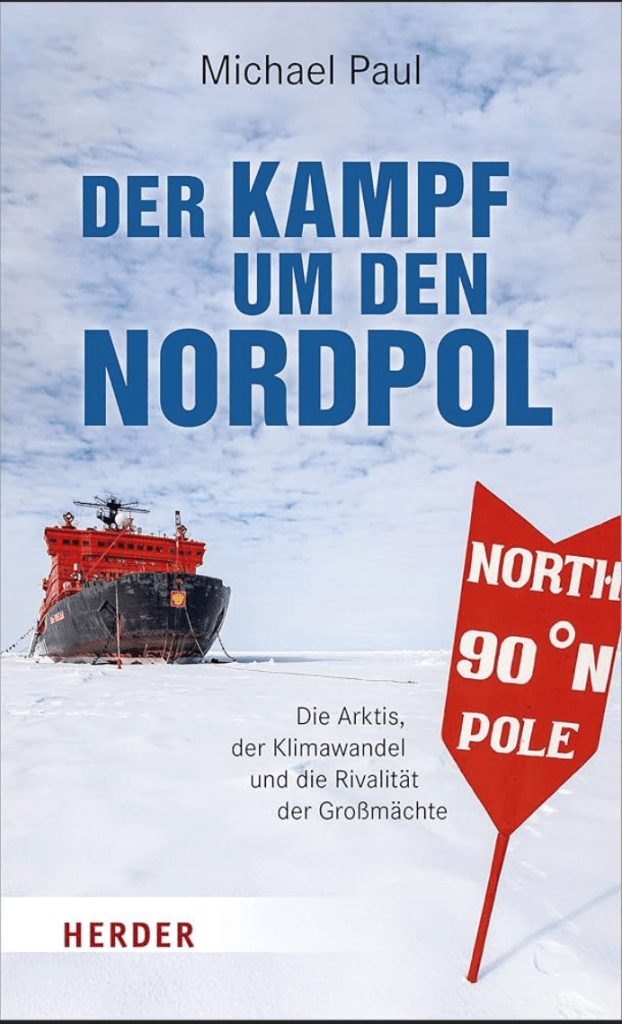
For many years, the Arctic has been the subject of much speculation, romanticised assumptions, and evidence of a changing climate. The latter point, in particular, has often brought the “Arctic,” this previously largely ice-covered ocean, into the focus of media attention. Unfortunately, it is often forgotten that the “Arctic” as such does not actually exist, as the area is not clearly defined. Rather, there are land and water areas north of the Arctic Circle (66°33’55”) or regions north of the 10°C July isotherm, i.e., areas where the average temperature in July does not exceed 10°C. Despite this, the “Arctic” is where extensive gas and oil reserves are suspected, leading to competition among the Arctic coastal states—Russia, Norway, Greenland (Denmark), Canada, and the United States—a narrative that has become firmly entrenched in media reporting
However, it is often forgotten that since the end of the Cold War, the Arctic Council has provided a forum where cooperation among the Arctic Eight (which also includes Sweden, Finland, and Iceland) has been strengthened since 1996. There are also numerous examples of interstate and regional cooperation that contradict the conflictual narrative.
Judging by its sensational title, Der Kampf um den Nordpol (The battle for the North Pole) seems to cater precisely to the narrative of conflict and confrontation, even though the book is written by Michael Paul, a Senior Fellow in the Security Policy Group of the Stiftung Wissenschaft und Politik (German Institute for International and Security Affairs). Readers might quickly conclude that it is a book contributing to media hype and sensationalism, particularly through documentaries and freely accessible newspaper articles. The subtitle, The Arctic, Climate Change, and the Rivalry of Great Powers, does not exactly contribute to a discourse on a “friendly,” cooperative Arctic either. Hence, I approached this book with some scepticism, fearing it might be a polarising work that does not necessarily contribute to an understanding of the complex Arctic governance. Unfortunately, there is a lot of that.
Fortunately, the content of a book matters more than its title. And here, it becomes clear how misleading a title-based assumption can be, as well as the expertise with which Michael Paul approaches the subject. Of course, one might criticise that the main actors in his book are nation-states and that the entire narrative is thus dominated by geopolitics. However, this is Paul’s starting point, which he consistently reaffirms throughout his work, inevitably leading to the marginalisation or omission of non-state cooperation, which constitutes a significant part of overall Arctic cooperation. For instance, the author mentions the Euro-Arctic Barents Council (BEAC), but the Euro-Arctic Barents Region (BEAR) goes unmentioned. Yet, BEAR has facilitated close cooperation in cultural, environmental, and visa matters between Russia, Norway, Finland, Sweden, and the EU since the early 1990s, even before the establishment of the Arctic Council. Further literature is needed here to clearly show that beyond nation-states, other actors are active in the Arctic, working to strengthen its cooperative capacity. Although this is not Paul’s approach, it would have been beneficial to highlight more clearly that there are other forms of cooperation in the Arctic.
The book is divided into three parts. The first part deals with the “Arctic” as a geographical and political region. It clearly and precisely describes how climate change is affecting the Arctic, what resources are available, how territorial claims are justified, and which sea routes are controlled and promoted by which states. It becomes evident that many states have different interests in the far north. However, Paul also makes it clear that, for example, through the United Nations Convention on the Law of the Sea (UNCLOS), a legal framework exists that does not identify the “Arctic,” meaning the Arctic Ocean, as a lawless area. Despite the differing and overlapping maritime claims, the rule of law prevails. Unfortunately, Paul does not emphasise this strongly enough, or it could have been more clearly highlighted that, ultimately, all states with territorial claims in the Arctic have so far adhered to the provisions of UNCLOS.
The Russian war of aggression against Ukraine and its impact on Arctic governance is briefly mentioned in the introduction but not further addressed. This is not surprising, as it is assumed that the manuscript was submitted before the war began. Although, as Paul repeatedly points out, the annexation of Crimea in 2014 and the subsequent Western sanctions affected cooperation with Russia, and the NATO-Russia Council ceased its work, at that time, cooperation in the Arctic was less affected than elsewhere. With the Russian war of aggression, this situation has fundamentally changed, and intra-Arctic cooperation in the Arctic Council or the Euro-Arctic Barents Council is currently frozen.
The geopolitical roles and interests of different states form the main focus of the book. Naturally, Russia’s position is thoroughly examined, for example, the role of the Northern Sea Route (NSR), which Paul argues is not an international trade route but rather serves Russia’s economic interests. Due to extremely complicated administration and the very high costs associated with passage, Paul repeatedly points out that the NSR is no alternative to the Suez Canal or the Strait of Malacca. Additionally, the as-yet undeveloped Search and Rescue (SAR) infrastructure, unpredictable weather, and resulting unstable ice conditions contribute to this.
The second part, “Actors and Ambitions,” is particularly insightful and can be considered the “core” of the book. It explores the history of the Arctic Council and examines why many states participate not only as members but also as observers. Paul particularly focuses on China’s role, which, despite not being an Arctic state, considers itself a near-Arctic state. Paul’s expertise is evident as he provides detailed background on China’s geopolitical developments and ambitions. This geopolitical knowledge, particularly in relation to Russia and the United States, significantly enhances the reader’s understanding of broader developments.
Although Paul touches on the role of indigenous peoples in the Arctic Council (the so-called “Permanent Participants”), this depiction is relatively sparse and could have been expanded. In addition to portraying historical injustices that have had traumatic effects on many indigenous peoples, Paul fails to show that indigenous peoples in the Arctic are also active agents. They have political agency and challenge existing state norms to assert or expand their interests. This is somewhat evident in the section “Greenland’s Independence Project,” but here, too, the geopolitical perspective dominates, overlooking the fact that within Greenland, there are various political approaches to identity.
The third part of the book, “Prospects: A New Cold War?” is very brief and underscores that while conflicts in the Arctic are not unrealistic, they are unlikely due to the challenging conditions in the region. Additionally, Arctic states cooperate in various forums, including in areas of hard security. Unfortunately, the author once again misses the opportunity to highlight the potential for dialogue and exchange of interests in other forums.
Despite these criticisms, I do not wish to diminish the value of this book. Of course, there is much information in the book that experienced Arctic readers will already know. However, it also contains a wealth of information that makes the reading experience extremely valuable. Alongside more academic books on the Arctic and its governance, Der Kampf um den Nordpol is a complementary work that, through its clear language and cleverly embedded narratives, makes a welcome contribution to Arctic literature. This volume is particularly recommended as an introduction to the topic of Arctic governance.
IN THE MEDIA
Sweden allows nearly 500 bears to be shot in a short period of time
– SpiegelOnline, 23 August 2023, here.
Sweden once again allows the culling of hundreds of brown bears. Environmentalists warn of the consequences for the ecosystem and criticise the hunt. However, the spectacle is increasingly attracting more hunters.
They call it “Brunbjörnsjakt,” the hunt for brown bears. And once again this year, hundreds of the predators in Sweden are being released for culling. The government in Stockholm has approved the killing of 486 brown bears, which represents about 20 percent of the entire population. With this decision, the number of bears could decrease from the current 2,450 to just under 2,000.
In 2008, there were still around 3,000 bears in the country. Animal and environmental activists are therefore warning against the hunt. “100 years of conservation are being undone at an alarming pace right now,” says Staffan Widstrand from the Wild Wonders Foundation, which works alongside other organisations to protect European predators. Widstrand criticises the government for yielding to pressure from hunting associations. These groups are calling for a reduction in the bear population to minimise conflicts with agriculture. “The government has adopted the hunting lobby’s narrative: the only solution to potential problems is to shoot the animals before they even cause any,” says Widstrand.
In Europe, brown bears are considered strictly protected. The EU Habitats Directive only allows the killing of these animals under very strict conditions. Young bears and mother bears are generally not allowed to be shot. Therefore, Sweden must align its high hunting quotas with European regulations; the extensive wolf hunt in recent years has already sparked criticism. Countries like Romania and Slovakia have stable bear populations that are secured through extensive conservation efforts.
However, in other parts of Europe, particularly in the Alpine regions and parts of Scandinavia, populations are declining. In the last 15 years, Sweden has experienced a significant decrease. Critics accuse the government of actively lobbying against conservation regulations to further facilitate hunting.
Environmentalists like Widstrand point out that there have been virtually no fatal encounters with bears in Sweden in recent decades. “I know of only two specific cases. And both were hunters who had lured the animal themselves.” From his perspective, the bears are primarily being hunted because they compete with hunters for elk and reindeer. Additionally, hunting brown bears has become a trophy sport. Other environmental organisations also criticise that the current numbers can no longer be justified as conservation.
When forests migrate
– ZeitOnline, 31 July 2024, here.
Native trees are suffering from the climate crisis. What must humans do now to help them survive? A conversation with forest ecologist Andreas Bolte.
Interview by Fritz Habekuß
ZEIT: Mr. Bolte, you are a co-author of a recent study that models how European forests are suffering due to the climate crisis. The study essentially states that forests can no longer cope with climate change on their own. Is that true?
BOLTE: Yes, I would say so. At least, they can’t adapt quickly enough without assistance. The study clearly shows that many local tree populations will experience increased mortality in the coming decades. This affects their ability to sequester carbon, which in turn threatens European climate goals. The higher the mortality, the lower the growth of wood, and the lower the capacity to store carbon.
ZEIT: Germany has experienced several very dry years. How has this affected the health of the forests?
BOLTE: Since 2018, we’ve seen increasing damage. Almost all tree species have shown a decline in productivity. But spruce, the backbone of the German forestry industry, has been hit particularly hard. Drought is dangerous for it because spruce needs water to produce resin, which helps it defend against bark beetles. In contrast, with beech trees, the die-off begins in the upper crown. They lose leaves and bark, allowing fungi to penetrate. This leads to a long struggle between the fungi and the tree, which tries to fend them off. Spruce dies quickly, while beech dies slowly.
ZEIT: Do coniferous and deciduous trees differ in how well they cope with the climate crisis?
BOLTE: Yes, that’s another finding from the study: We expect higher productivity losses in coniferous species compared to many deciduous trees. Conifers are less able to cope with the changing conditions. But even more important is this: Local trees often show less adaptability than those growing in areas that are already particularly warm or dry. A beech tree from Germany, for example, copes worse with low rainfall than one from the Balkans or Italy.
ZEIT: Why is that?
BOLTE: Those trees have experienced drought over several generations. Only those adapted to it were able to reproduce. We can take advantage of these traits by deliberately bringing seeds from these trees to places that will be impacted by climate change in a few decades. We call this “assisted migration.” You have to approach this differently for each species, but essentially we’re trying to help the trees migrate from south to north.
ZEIT: Wouldn’t that happen naturally?
BOLTE: Yes, but it would take too long. The question is how we can enrich our forests with trees from other regions. There’s already an app that forest owners can use to see which trees from which regions are suited to their local conditions. However, there are many counterproductive regulations that hinder large-scale assisted migration. In the Czech Republic, for example, no foreign seeds can be imported. Germany is a bit more liberal, but there are still restrictions on seed trade.
ZEIT: Are these regulations meant to protect native forests?
BOLTE: There are indeed quite a few risks. One concern is focusing only on one trait—drought or heat resistance, for example. Maybe the trees will withstand a drought but be much less frost-resistant. Bringing seeds across Europe on a large scale is challenging. But we must start trying it and gaining experience. I fear that we’re waiting too long and just watching the forest die.
ZEIT: Where do the difficulties lie?
BOLTE: Forestry professionals tend to think traditionally because their work involves establishing and maintaining forests for many decades, sometimes even centuries. You can’t just overturn decisions quickly—that’s understandable. But in European forests, things are getting critical: It’s not just productivity and timber yields that are threatened by climate change. It’s about preserving them as functioning ecosystems.
ZEIT: Are there examples of assisted migration?
BOLTE: In Canada, extensive programs for assisted migration have been launched. Trees from southern regions were selected and planted further north. Canada is about a decade ahead of Germany in assisted migration. In Switzerland, planting trials have also begun on 57 sites across the country.
ZEIT: Conservationists might not be thrilled about this.
BOLTE: Conservationists understandably want to stick to native flora, and forestry professionals, just as understandably, want to maintain highly productive forests. Some prefer to plant Douglas fir in pure stands instead of spruce, as it’s also a fast-growing conifer. But if the Douglas fir faces problems, we’ll end up in the same situation as with the spruce. Therefore, we need to manage forests much more actively in the form of mixed stands than we have so far, because that way, we can spread the risk of die-off across different tree species. This increases the forest’s chances of survival. And it doesn’t make sense to try to preserve certain tree species or populations at any specific location at all costs.
ZEIT: Anyone planting a tree today won’t be able to harvest it for at least a few decades. Yet the climate crisis is already hitting forests hard.
BOLTE: Yes, the damage is so immense that we need to drive a massive restructuring of forests by 2050. About a quarter of Germany’s forest area, around 600,000 hectares, would be affected. The costs are estimated to range between 14 and 43 billion euros.
ZEIT: But isn’t forest restructuring already well underway in many places?
BOLTE: Not to the extent that we need! In many areas where spruce trees are dying, new spruces are still growing. That will cause new problems in 15 or 20 years. If we don’t invest in the forest now, the damage will cost us many times more. We often see images from other countries of landslides burying entire villages. It’s also about preventing such dramatic consequences. Forests stabilise slopes and hold the soil together; they act as water reservoirs, store carbon, and protect against floods. We urgently depend on all these protective and regulatory functions, which require a healthy forest.
ZEIT: Will someone who has grown up in Germany today still recognise the native forest in 50 years?
BOLTE: I don’t think so. Higher mountain ranges like the Harz or the Bavarian Forest are currently undergoing significant changes. In 50 years, there will be hardly any spruces left there. There will be much more hardwood and more mixed forests. Forests are shifting from south to north and from lowlands to higher elevations. In some lowland or hilly areas where it becomes too dry for the trees, we will lose entire forests.
ZEIT: Can’t nature heal itself?
BOLTE: I just don’t believe it can. In many regions, our forests are overwhelmed by the intensity and speed of climate change. Without human assistance, they won’t be able to manage.
Namibia: How wildlife conservation and tourism are interconnected
– Süddeutsche Zeitung,11 September 2024, here.
In the drought-stricken African country, wildlife conservation organisations are fighting to preserve endangered species like black rhinoceroses. Paying guests are allowed to join their expeditions.
Fresh dung. Tracks in the Namib Desert sand. The black rhinoceros can’t be far. The wildlife rangers Stefanus Ganuseb (42) and Fritz Hoeb (45) are on foot, equipped with binoculars and a camera, usually accompanied by an armed police officer.
Then they spot the young male, known as “Arthur,” on a distant ridge. The team checks the wind direction to avoid being detected and quietly approaches. Normally, they stop at around a hundred metres, but today “Arthur” comes closer. Unaware, he continues to graze peacefully on juicy leaves of milkweed bushes. Later, the men document the sighting with photos and a report for their wildlife conservation organisation, Save the Rhino Trust.
“The primary goal of Save the Rhino Trust is to protect black rhinos from poachers,” explains Lesley Karutjaiva. The 47-year-old is the head of the base in Palmwag, a village in northwest Namibia. Rhino observation tours start from the local lodge.
What participants don’t realise: without Save the Rhino Trust, it’s possible that none of these rare animals would still exist in the wild here. Tourism benefits from the efforts of the organisation, which covers an area of 25,000 square kilometres. Karutjaiva estimates the rhino population at nearly 200 and regrets that there is no government funding for the work.
Controversial dehorning
“We receive nothing,” he says, adding, “We only have six vehicles. That’s not enough for such a vast area.” The state only provides police escorts for the patrols. All other costs, whether for rangers, training programmes, or dehorning the animals, are covered by donations.
Karutjaiva considers dehorning, which has also been done to “Arthur,” a double-edged sword. In principle, it is intended to make rhinos less attractive to poachers, as a 3.5-kilogram horn can fetch over 200,000 US dollars on the black market. “But it’s a disadvantage for the rhinos themselves because they can no longer defend themselves against predators,” Karutjaiva explains.
Moreover, dehorning doesn’t guarantee complete deterrence. “Poachers will take even the smallest parts, no matter how tiny,” says Karutjaiva, citing a grim statistic. Since 2012, 35 rhinos have fallen victim to poaching. “We need more donations to do a better job and hire more personnel.”
For him and his colleagues, the current drought in Namibia is a catastrophe – as the authorities have authorised a certain number of wild animals to be culled across the country. Whether the goal is really to provide meat for the hungry population is debated. Animal rights activists speculate that it might also be about issuing hunting licences to wealthy recreational hunters from abroad.
Human-elephant conflicts
Some 200 road and track kilometres southeast of Palmwag, the organisation Elephant-Human Relations Aid is working to protect so-called desert elephants. Here too, tourists benefit and can join the teams on outings. Again, there is no funding from the government.
The term “desert elephant,” admits wildlife ranger Taiwin Garöeb, is not entirely accurate: “They are elephants that have adapted to the desert climate. They can travel long distances to the next waterhole,” says the 30-year-old. However, in the past, this has led to many elephants being shot.
A thirsty elephant shows no mercy to farmers and settlers, who in turn defend themselves. So precautions must be taken: “We build protective walls at waterholes and separate dams away from village communities,” explains regional manager Charles Moloto – effectively to protect both animals and people from each other.
“When I encounter an elephant, I feel a sense of humility,” says ranger Garöeb, who actively participates in the protection efforts. Like him, his distant colleagues from Save the Rhino Trust fight for the survival of endangered species in the deserts and savannahs.
“For us, it’s a dangerous job, but I love being out in the bush,” says ranger Ganuseb, his eyes gleaming. He and all the others, who dedicate themselves unconditionally to wildlife conservation, are the unsung heroes of the wilderness.
 sellheimenvironmental.org