VOLUME 3, ISSUE 4, December 2024
CONTENTS
EDITORIAL
Conservation, culture and climate action
ARTICLE
Main outcomes of the 69th meeting of the International Whaling Commission
OPINION
Evaluating the outcomes of IWC69
REVIEW ARTICLE
Rather science than miracle: the Feeding of the 5,000
ARTICLE
Has precipitation in Europe increased?
ARTICLE
On the potential collapse of the Gulf Stream
ARTICLE
Communal climate action in Germany bridges the gap between local efforts and global goals
FILM REVIEW
Captain Paul Watson: the grand illusion
EDITORIAL
Conservation, culture and climate action
As we have entered 2025, this issue of The Conservation & Livelihoods Digest highlights the enduring challenges and dynamic opportunities in the nexus of conservation and livelihoods. From international negotiations to grassroots movements, this issue captures the spectrum of efforts to reconcile ecological integrity with human well-being.
The outcomes of the 69th meeting of the International Whaling Commission (IWC69) dominate the conversation, with its intricate interplay of conservation and sustainable use principles. The narrowly defeated proposal for the South Atlantic Whale Sanctuary exemplifies the delicate balance between ecological preservation and socio-economic realities. Equally, the discussions on Aboriginal Subsistence Whaling and food security underscore the complexities of integrating cultural, nutritional, and environmental priorities in global governance.
Complementing this focus is a thought-provoking opinion piece on how the IWC69 outcomes might influence the application of sustainable use at the upcoming CITES CoP20. The challenges faced by pro-use nations at IWC69 resonate across conservation forums, highlighting the necessity of science-based, equitable policies.
Broadening the scope, our feature article on environmental advocacy in the lyrics of Earth Crisis and Gojira invites reflection on the cultural dimensions of activism. From the militant calls of underground hardcore to the mainstream resonance of progressive metal, music emerges as a powerful medium for raising environmental consciousness.
Adding a historical and spiritual lens, the review article on the Feeding of the 5,000 bridges faith and science, offering insights into how natural phenomena might inform miraculous narratives. This piece enriches our understanding of the ways cultural and environmental contexts shape human belief systems.
This issue also includes two critical analyses of climate challenges: an exploration of changing precipitation patterns in Europe and an examination of the potential collapse of the Gulf Stream. Both articles highlight the pressing need for robust climate strategies that align local actions with global imperatives. On this note, the article on communal climate action in Germany offers a hopeful narrative of bridging the gap between local efforts and international goals.
Finally, Gil Thériault’s review of the film Paul Watson: A Life for the Oceans offers a personal portrayal of one of the most polarising figures in marine conservation, sparking important discussions about the methods and ethics of activism.
As this issue illustrates, the path forward requires not only bold action but also thoughtful dialogue. Whether through scientific rigor, cultural expression, or local innovation, the articles remind us that solutions to the planet’s challenges are as diverse as the problems themselves.
In light of increasing time constraints, we a considering turning The Digest from a quarterly into a bi-annual publication. However, if this change occurs, it will only take effect from the second half of 2025 onwards.
If you wish to contribute to The Digest, please reach out to info@sellheimenvironmental.org to present your idea.
Needless to say, however, guest contributions do not necessarily reflect the views of Sellheim Environmental.
Dr Nikolas Sellheim
January 2025
ARTICLE
Main outcomes of the 69th meeting of the International Whaling Commission
The 69th meeting of the International Whaling Commission (IWC69) was held from 23–27 September 2024, at Los Delfines Hotel in Lima, Peru. This meeting gathered 456 participants, including 61 member countries, several intergovernmental organisations (IGOs), and 27 non-governmental organisations (NGOs). As IWC69 concluded, the outcomes demonstrated how deeply divided the Commission remains on key issues concerning whale conservation, sustainable use, and global governance.
In this article, we take a detailed look at the main discussions and outcomes, analysing their implications for conservation, food security, and international collaboration. We also delve into the internal challenges the IWC faces, such as voting rights and quorum, and examine the future of the Commission’s decision-making processes.
The South Atlantic Whale Sanctuary: A long-standing battle
One of the central points of debate during IWC69 was the proposal to establish the South Atlantic Whale Sanctuary (SAWS), which has been tabled for over two decades. The SAWS, initially introduced by Brazil in 1998, seeks to create a no-whaling zone across the South Atlantic Ocean. The key aim of the sanctuary is to protect whales in breeding and feeding grounds, promote non-lethal uses such as eco-tourism, and further international biodiversity and climate goals.
Brazil, supported by co-sponsors Argentina, Uruguay, Ecuador, South Africa, and Gabon, pushed strongly for SAWS to gain approval at IWC69. Proponents emphasised that the sanctuary had the backing of both the IWC’s Scientific Committee and Conservation Committee. These committees argued that the scientific criteria for creating a sanctuary were met and that it would significantly contribute to global conservation efforts, particularly under the Kunming-Montreal Global Biodiversity Framework.
In their intervention, the Brazilian delegation stressed that the sanctuary would bring benefits beyond conservation. They highlighted the potential economic gains from eco-tourism, pointing to successful models in whale-watching operations worldwide. Additionally, they reassured member states that SAWS would not infringe on fishing rights or national sovereignty, a point that has been critical for opposition parties.
Divided opinions
Despite these assurances, opposition to the SAWS proposal remained strong. Countries such as Norway, Antigua & Barbuda, and St Kitts & Nevis argued that the global moratorium on commercial whaling, in place since 1986, already provides adequate protection for whale populations. They further questioned whether a sanctuary would address the most pressing threats to whales, such as ship strikes, entanglement in fishing gear, and pollution, which remain unmitigated by the creation of whaling-free zones. Norway specifically pointed out that sanctuaries focus only on preventing whaling, a practice already prohibited under the moratorium, making the proposal seem redundant.
Other countries voiced concerns that the creation of the sanctuary could deepen existing divisions within the IWC. Antigua & Barbuda warned that passing the SAWS proposal could lead to further disengagement by whaling nations, potentially sparking a “mass exodus” of countries from the IWC. Such a scenario, they argued, could weaken the Commission’s role in global marine governance.
Outcome and reactions
In the final vote, the SAWS proposal fell just short of the three-quarters majority (75%) needed for adoption. Despite receiving 40 votes in favour, 14 against, and 3 abstentions, the proposal garnered 74.08% approval—an agonisingly close result for proponents. Brazil and its co-sponsors expressed disappointment, emphasising that the rejection was a missed opportunity for global whale conservation. However, they remained committed to bringing the issue back to future IWC meetings.
On the other side, while Norway and Antigua & Barbuda were on the “winning” side, they did not celebrate the decision. Instead, they pointed to the vote as further evidence of the Commission’s dysfunction, underscoring the deep divisions between member states that prioritise conservation and those advocating for the sustainable use of marine resources.
Food security and whales: A complex relationship
Food security was another highly debated topic at IWC69, with a resolution proposed by Ghana and co-sponsored by Côte d’Ivoire, Togo, and Antigua & Barbuda. The resolution sought to include whales as part of global food security discussions, recognising their importance as a marine resource for developing nations that rely on them for nutrition and livelihoods.
Support and opposition
Countries that supported the resolution, such as Norway and several Caribbean nations, argued that food sovereignty must be a priority in international discussions about marine resources. These countries pointed out that while the IWC is tasked with conserving whale populations, the socio-economic realities of coastal communities in developing nations should not be overlooked. In particular, Norway highlighted that in some regions, small-scale whaling and consumption of marine resources are intertwined with cultural traditions and food security.
On the other hand, opponents, including the UK, USA, and Australia, contended that food security should be discussed in other forums, such as the Food and Agriculture Organization (FAO), rather than the IWC. They expressed concern that the resolution could blur the lines between Aboriginal Subsistence Whaling (ASW), which is permitted under strict quotas, and commercial whaling, which remains banned under the global moratorium. The UK noted that while food security is an important issue, it should not be used to justify or promote the commercial exploitation of whale populations.
Resolution withdrawn
Facing strong opposition and a lack of consensus, Ghana withdrew the resolution, indicating that further work would be needed during the intersessional period to refine the proposal. While the withdrawal prevented a contentious vote, it underscored the growing divide within the IWC over how to balance conservation objectives with the socio-economic needs of developing nations.
Aboriginal Subsistence Whaling: Cultural rights versus conservation
Aboriginal Subsistence Whaling (ASW) is a cornerstone of the IWC’s work and currently the only whaling the IWC effectively manages. It represents the Commission’s efforts to respect indigenous communities’ rights while ensuring the sustainability of whale populations. At IWC69, the ASW Sub-Committee presented its findings, concluding that the current strike and catch limits for ASW in the USA, Russia, and St Vincent & the Grenadines were sustainable and did not pose a threat to whale populations. Based on these findings, the Sub-Committee recommended extending the existing limits for another six years (2026–2031).
A debate on terminology
One of the more contentious aspects of the ASW discussions at IWC69 was the use of the term “aboriginal.” Some delegations, notably Antigua & Barbuda and St Vincent & the Grenadines, argued that the term was outdated and potentially discriminatory. They called for more inclusive language that recognises the cultural and social diversity of indigenous communities involved in subsistence whaling. This proposal sparked heated debate, as countries like the USA and Brazil opposed changing the terminology, arguing that the term carries significant legal implications under international law and provides essential protections for indigenous peoples.
Despite this controversy, the IWC adopted the ASW Sub-Committee’s recommendations, reaffirming the balance between respecting cultural traditions and ensuring the long-term sustainability of whale populations.
Revisiting the moratorium on commercial whaling
Another significant debate at IWC69 revolved around the global moratorium on commercial whaling. Antigua & Barbuda, co-sponsored by St Lucia, introduced a resolution calling for a review of the moratorium, arguing that certain whale populations had recovered sufficiently to warrant the resumption of sustainable commercial whaling under scientifically determined quotas.
Support and opposition
Proponents of the resolution pointed to the Revised Management Procedure (RMP) and the Revised Management Scheme (RMS), frameworks designed to regulate sustainable whaling through scientifically calculated quotas and rigorous inspection regimes. They argued that the moratorium, introduced in 1986, was intended to be temporary and that the time had come to revisit its necessity.
Opponents, led by Australia, the UK, and several EU member states, warned that lifting the moratorium could undermine decades of conservation efforts. They pointed out that while some whale populations had shown signs of recovery, others remained vulnerable to threats such as climate change, bycatch, and habitat degradation. The opposition argued that any discussion of resuming commercial whaling should be based on conclusive scientific evidence, not economic or political considerations.
Outcome
Faced with strong opposition and a lack of support, Antigua & Barbuda withdrew the resolution but signalled their intent to continue pushing for a review of the moratorium in future meetings. This debate highlighted the ongoing tensions within the IWC over how best to balance conservation with sustainable use, an issue that is likely to resurface at future meetings.
International cooperation: Strengthening links with CCAMLR
In a rare moment of consensus, the IWC adopted a resolution proposed by Hungary, on behalf of the EU member states, that aimed to formalise cooperation between the IWC and the Commission for the Conservation of Antarctic Marine Living Resources (CCAMLR). This resolution sought to improve scientific collaboration and data sharing between the two organisations, particularly in the Southern Ocean, where whale populations and krill fisheries overlap.
The resolution garnered broad support from member states, who acknowledged that coordinated efforts between the IWC and CCAMLR would be essential for protecting whale habitats, especially in light of climate change and increasing human activity in the region. By strengthening the links between these two bodies, the IWC signalled its commitment to more integrated marine resource management in the Southern Ocean.
Aligning with global biodiversity frameworks
Another significant outcome of IWC69 was the adoption of a resolution aligning the IWC’s work with two critical global biodiversity frameworks: the Kunming-Montreal Global Biodiversity Framework and the United Nations Agreement on Marine Biological Diversity of Areas Beyond National Jurisdiction (BBNJ). This resolution, proposed by Hungary on behalf of the EU member states, encouraged IWC members to integrate whale conservation objectives into their national biodiversity strategies and action plans.
The resolution further aimed to facilitate cooperation between the IWC and other international bodies involved in marine biodiversity protection, particularly by improving access to funding for projects related to whale conservation. The proposal received widespread support from the international community, with countries such as Costa Rica, India, and the UK emphasising the importance of global collaboration for marine conservation.
A notable aspect of the resolution was its focus on capacity-building, particularly for developing countries. Several nations, including Brazil and the USA, called for the inclusion of stronger language regarding funding mechanisms to help developing countries implement whale conservation measures in line with global biodiversity goals. This push for enhanced capacity-building is crucial for ensuring that conservation efforts are globally inclusive and reflect the needs of countries with limited resources.
Although some countries, like Iceland, expressed reservations regarding the integration of IWC work with other international frameworks, the resolution was adopted by consensus after incorporating minor revisions. The adoption of this resolution marked a positive step towards ensuring that the IWC’s work aligns with broader global efforts to protect marine biodiversity, especially in areas beyond national jurisdiction.
International legal obligations and commercial whaling
One resolution focused on reminding member states of their international legal obligations regarding commercial whaling activities. Proposed by Hungary on behalf of the EU member states, this resolution emphasised the importance of adhering to the United Nations Convention on the Law of the Sea (UNCLOS) and other international agreements that govern the conservation of marine species, including whales.
Support and dissent
The resolution received significant support from countries such as the United Kingdom, Argentina, and Panama, who underscored the IWC’s central role in regulating whale populations and preventing unsanctioned whaling activities. The UK, in particular, praised the resolution as a timely reminder of the global responsibilities that nations must uphold in managing cetacean populations.
However, not all member states were on board. Countries such as Japan, which left the IWC in 2019 but continues its commercial whaling activities, voiced strong objections. Japan argued that its national whaling policies were in full compliance with international regulations under the Revised Management Procedure (RMP) and challenged the premise that the IWC held exclusive authority over cetacean conservation. Norway and Palau also opposed the resolution, citing disagreements over its legal implications and the interpretation of international obligations.
NGO involvement
Environmental NGOs played a prominent role in supporting the resolution. Organisations like the Environmental Investigation Agency (EIA) and a coalition of 21 other groups pointed to ongoing commercial whaling by Japan, Norway, and Iceland, which, they claimed, had resulted in the deaths of over 44,000 whales since the moratorium’s inception in 1986. The EIA raised concerns over Japan’s expanded whaling quotas and called for stricter enforcement of the global moratorium on commercial whaling. The strong backing from environmental NGOs highlighted the growing influence of civil society in shaping the IWC’s agenda.
In the end, the resolution was put to a vote and adopted by a simple majority, despite opposition from Norway, Palau, and Japan. This outcome reaffirmed the IWC’s role as the primary international body for managing whale conservation, while also acknowledging the complexities surrounding commercial whaling activities outside the Commission’s jurisdiction.
Challenges of voting rights and quorum
IWC69 brought to light ongoing issues surrounding voting rights and quorum, which have been perennial challenges for the Commission. Visa delays and financial arrears were cited as major obstacles for several developing nations, particularly from Africa and the Caribbean, preventing their full participation in the meeting. Out of the IWC’s 88 member nations, only 47 had voting rights at IWC69, a significant drop attributed to financial difficulties exacerbated by the COVID-19 pandemic.
Countries like Antigua & Barbuda raised concerns that visa delays had disproportionately affected nations with limited resources, which they argued was an issue of fairness and inclusivity. Several delegations called for more transparency and flexibility in how the IWC handles voting rights, particularly in light of the post-pandemic financial struggles faced by many member states.
The debate over quorum, which had first emerged at IWC68, resurfaced at IWC69, with the Commission struggling to agree on how to improve its decision-making processes. The Working Group on Operational Effectiveness (WGOE) presented three options for revising quorum rules:
– A quorum based on a majority of member states,
– A quorum based on the registered delegates present at the meeting, or
– A rule excluding member states that had not participated for over 10 years from being counted toward quorum.
Despite extensive discussions, none of the options gained sufficient support. As a result, the existing quorum rules were retained, with the Chair announcing that votes would only take place once quorum was confirmed. This unresolved issue is expected to be revisited at IWC70, as the Commission continues to search for a more effective and inclusive approach to its decision-making processes.
Aboriginal Subsistence Whaling
The Aboriginal Subsistence Whaling (ASW) discussions at IWC69 revolved around ensuring that indigenous communities could continue their cultural traditions without compromising the sustainability of whale populations. The ASW Sub-Committee presented a comprehensive report confirming that current strike and catch limits in the USA, Russia, and St Vincent & the Grenadines were sustainable and did not threaten whale stocks. Based on these findings, the Sub-Committee recommended extending these quotas for an additional six years, from 2026 to 2031.
The term “aboriginal” became a point of contention during the meeting, with some countries arguing that it was outdated and potentially discriminatory. Antigua & Barbuda and St Vincent & the Grenadines called for the adoption of more inclusive language that recognises the diversity of indigenous peoples. However, countries like the USA and Brazil opposed changing the terminology, citing its established legal significance under international law, which provides critical protections for indigenous rights.
Despite this disagreement, the IWC approved the Sub-Committee’s recommendations, ensuring that indigenous communities can continue their whaling practices under regulated and sustainable conditions. This decision reflected the Commission’s commitment to balancing cultural traditions with conservation goals.
Report of the Executive Secretary
Martha Rojas Urrego, the newly appointed Executive Secretary, delivered a detailed report on the activities of the IWC Secretariat between IWC68 and IWC69. The report highlighted the Secretariat’s successful coordination of major meetings, including Scientific Committee sessions that attracted over 200 participants. Additionally, the Secretariat processed more than 568 documents during the intersessional period and continued its capacity-building efforts through initiatives like the Global Whale Entanglement Response Network and the Bycatch Mitigation Initiative.
The report received widespread praise from member states, with many expressing appreciation for the Secretariat’s transparency and efficiency. The Commission also congratulated Rojas Urrego on her leadership, recognising the challenges the Secretariat faces, particularly with ongoing budget constraints.
The reports of the Scientific and Conservation Committees
The reports from the Scientific and Conservation Committees provided insight into the IWC’s broader efforts to conserve whale populations and mitigate threats such as bycatch and climate change.
Scientific Committee
The Scientific Committee’s report showcased several positive trends in whale populations, including the recovery of North Pacific humpback whales and Bering-Chukchi-Beaufort bowhead whales. However, the Committee also raised concerns about the impact of budget cuts on its ability to conduct essential field research and conservation projects. Some member states, such as Palau and Antigua & Barbuda, criticised the Committee for focusing too heavily on conservation issues while neglecting the role of sustainable use in its assessments.
Conservation Committee
The Conservation Committee’s report focused on several key initiatives, including the Bycatch Mitigation Initiative (BMI) and the Strategic Plan for Whale Watching (2025–2034). The Committee reported progress in reducing vessel strikes through better data collection and partnerships with the maritime industry. However, the expanding role of the Conservation Committee in broader cetacean conservation efforts sparked controversy, with some countries questioning whether the IWC should prioritise regulating whaling over addressing other conservation issues like bycatch and the protection of small cetaceans.
A Commission divided
As IWC69 drew to a close, it became clear that the International Whaling Commission remains deeply divided on several critical issues. While there was progress in areas such as international cooperation and alignment with global biodiversity frameworks, the failure to pass the South Atlantic Whale Sanctuary and ongoing debates over the moratorium on commercial whaling highlighted the persistent rift between member states advocating for strict conservation measures and those promoting sustainable use.
The election of new officers—Dr Nick Gales of Australia as Chair and Dr Urbain Brito of Benin as Vice-Chair—provided a glimpse of the IWC’s potential future direction. However, with the 70th meeting of the IWC scheduled for 2026 in Australia, the road ahead remains uncertain. The Commission will need to navigate its internal divisions, improve its operational effectiveness, and find a way to reconcile the competing interests of conservation and sustainable use if it is to remain a relevant and effective body in the decades to come.
OPINION
Evaluating the outcomes of IWC69
The 69th meeting of the International Whaling Commission (IWC69) took place at the Los Delfines Hotel in Lima, Peru, from 23 to 27 September 2024. It attracted 456 participants, including 295 delegates representing member countries, 80 non-governmental organisations (NGOs), eight intergovernmental organisations (IGOs), six delegates from non-member countries, and 35 participants categorised as “other,” including rapporteurs, interpreters, and members of the Secretariat. The meeting’s agenda addressed 20 critical topics, such as the contentious South Atlantic Whale Sanctuary (SAWS) proposal, resolutions on food security, and the future of Aboriginal Subsistence Whaling (ASW). While the diversity of participation reflected the broad interest in cetacean conservation and management, systemic issues undermined inclusivity. Visa delays disproportionately affected delegates from African and Caribbean nations, and financial arrears further limited the participation of 34 member states. Of the 61 member countries represented, only 47 retained voting rights, underscoring structural inequities within the IWC. For Sellheim Environmental, these challenges highlight the need for meaningful reforms to ensure equal representation and participation for all member states, particularly those from the developing world, in shaping the Commission’s decisions.
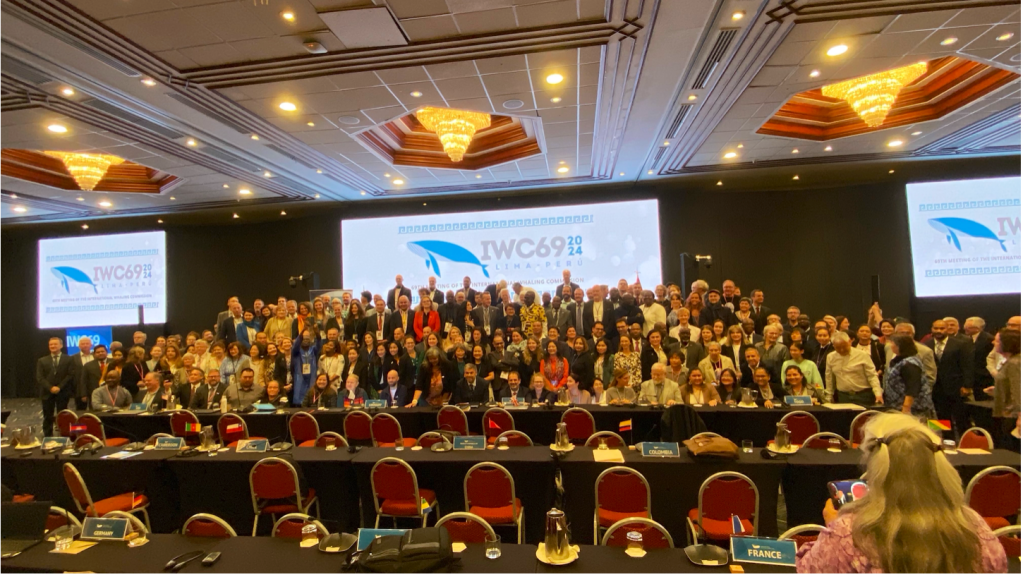
IWC69 provided a revealing snapshot of the ongoing tensions and complexities surrounding global whale management. The outcomes have significant implications for sustainable use, conservation, and the human rights of communities reliant on whales for their livelihoods and cultural practices. From the perspective of Sellheim Environmental, participating as part of the IWMC-World Conservation Trust delegation, the meeting both reinforced the importance of sustainable use principles and exposed the enduring polarisation within the IWC.
One of the most important outcomes was the renewal of quotas for Aboriginal Subsistence Whaling (ASW) through 2031. This decision recognised the sustainability of current strike and catch limits and validated the role of scientific evidence in guiding such determinations. Indigenous communities in the United States, Russia, Greenland and the Caribbean, who rely on whaling as a cultural cornerstone and vital food source, have long argued for their rights to sustainably use whale resources. This outcome is a win not only for these communities but also for the principle that conservation frameworks can—and should—accommodate cultural and subsistence needs without compromising ecological stability. However, the discussions on ASW also revealed a growing discomfort with terminology; nations such as Antigua & Barbuda and St Vincent & the Grenadines challenged the use of “aboriginal” as discriminatory, while others, including Brazil and the United States, defended its legal significance. This divergence underscores the need for culturally sensitive yet legally robust language in future agreements.
In stark contrast to the consensus on ASW, the proposal to establish a South Atlantic Whale Sanctuary (SAWS) was narrowly defeated. SAWS, championed by Brazil and co-sponsored by multiple Latin American and African nations, sought to create a vast no-whaling zone to protect critical breeding and calving grounds. Its rejection—falling just short of the three-quarters majority needed—exposed deep fault lines within the Commission. Proponents highlighted the sanctuary’s potential to bolster whale conservation, contribute to biodiversity goals, and support eco-tourism initiatives as non-lethal alternatives to whaling. However, opponents such as Norway and Antigua & Barbuda argued that the sanctuary was redundant given the global moratorium on commercial whaling and failed to address other threats to whales, including ship strikes, bycatch, and pollution. Furthermore, the opponents viewed SAWS as emblematic of a broader attempt to restrict sustainable use under the guise of conservation. The debate encapsulated the enduring divide between countries prioritising strict conservation and those advocating for sustainable use.
The rejection of SAWS reaffirms the importance of balancing ecological concerns with economic and cultural realities. Sanctuaries that focus solely on preservation without considering the socioeconomic impacts on coastal communities and the broader marine economy risk alienating stakeholders and deepening divisions. For sustainable conservation measures to gain broader acceptance, they must integrate holistic approaches that address threats to whales beyond whaling while respecting the rights of nations and communities to utilise marine resources sustainably.
The introduction of a resolution on food security by Ghana, with support from Côte d’Ivoire, Togo, and Antigua & Barbuda, further demonstrated the increasing prominence of socio-economic considerations within IWC debates. The resolution sought to position whales within the broader context of food security for developing nations, recognising the reliance of small coastal states on marine resources. Although it was withdrawn due to a lack of consensus, the resolution marks a significant moment in the IWC’s history. It called attention to the necessity of incorporating human needs into conservation decisions, particularly for nations facing food insecurity exacerbated by climate change and global political instability. While detractors argued that food security should be addressed in other forums, the very discussion within the IWC represents a paradigm shift towards recognising the interconnectedness of ecological and human well-being. Sellheim Environmental strongly supports continued work on this resolution in the intersessional period, as it represents a critical opportunity to elevate the voices of developing nations and promote equitable resource use.
The resolution for the implementation of a Conservation and Management Programme for Whale Stocks, introduced by Antigua & Barbuda and co-sponsored by St Lucia, was another contentious issue at IWC69. The resolution proposed reopening discussions on the Revised Management Procedure (RMP) and the Revised Management Scheme (RMS), which aim to establish scientifically grounded frameworks for sustainable whaling. While the proponents argued that the global moratorium on commercial whaling, established in 1986, was intended to be temporary and that certain whale populations have since recovered sufficiently to allow for sustainable use, the resolution faced strong opposition. Critics, including Australia, the United Kingdom, and several EU member states, contended that lifting the moratorium would undermine decades of conservation progress and exacerbate the polarisation within the IWC.
From Sellheim Environmental’s perspective, the withdrawal of this resolution highlights the ongoing resistance within the IWC to even discussing the possibility of sustainable commercial whaling — an issue the IWC was founded to regulate in the first place. This resistance substantiates the ideological divide between nations advocating for the sustainable use of marine resources and those promoting strict conservationist approaches. The failure to advance this resolution is a missed opportunity to develop scientifically based, enforceable frameworks that could regulate whaling in a way that ensures ecological stability while respecting the economic and cultural and (potential) dietary needs of coastal communities. The intersessional period offers a critical window for revisiting this issue with an emphasis on bridging these divides, promoting dialogue, and ensuring that conservation policies are not driven solely by preservationist ideologies but grounded in the principles of equity, human rights, sustainability, and science-based management.
The broader discussions on the IWC’s operational and procedural challenges also revealed significant barriers to effective governance. Quorum issues, visa delays, and financial arrears disproportionately affected developing nations, highlighting systemic inequities that undermine their participation in decision-making. These structural challenges have direct implications for the legitimacy of IWC decisions and the ability of the Commission to address diverse perspectives on whale management. The Vice Chair’s proposal to form an informal group to address these issues is a welcome step, but it must lead to concrete reforms that ensure equal representation and voice for all member states.
On the scientific front, the reports presented by the Scientific Committee (SC) and Conservation Committee (CC) underscored the dual imperatives of conservation and sustainable use. Positive trends in some whale populations, such as North Pacific humpback whales, were celebrated, but concerns about budget cuts limiting research and conservation efforts were also raised. Notably, several nations criticised the SC for focusing too heavily on conservation without adequately considering sustainable use impacts. This tension reflects a broader challenge within the IWC: aligning the work of its technical bodies with the diverse values and priorities of its member states. The progress reported by the CC on initiatives such as the Bycatch Mitigation Initiative and vessel strike prevention highlights the potential for targeted conservation measures to address specific threats to whales without undermining sustainable use practices.
Looking ahead, the outcomes of IWC69 suggest a pivotal moment for the future direction of the Commission. The tensions between conservation and sustainable use remain at the forefront, with clear evidence that member states must find common ground to ensure that both whales and the communities that depend on them can thrive. The intersessional period provides an opportunity to address unresolved issues, such as the withdrawn resolutions on food security and the Conservation and Management Programme for Whale Stocks. These initiatives, if revisited with greater inclusivity and pragmatism, could lay the groundwork for a more balanced approach that respects the ecological needs of whale populations while supporting human livelihoods and cultural practices.
The systemic inequities highlighted during IWC69, including barriers to participation for developing nations, must also be urgently addressed to uphold the legitimacy of the Commission as a global governance body. By reforming procedural and structural shortcomings, the IWC can foster a more equitable and representative decision-making process. For Sellheim Environmental, the meeting reaffirmed the importance of promoting sustainable use as a principle that bridges conservation with human rights. The path forward requires collaboration, dialogue, and science-driven solutions to ensure that the IWC evolves into an institution capable of meeting the dual imperatives of conserving whales and safeguarding the rights and well-being of human communities.
OPINION
Outlook for the application of the sustainable use principle in light of IWC69 and the upcoming CITES CoP20
By Eugene Lapointe, IWMC-World Conservation Trust
The recent 69th meeting of the International Whaling Commission (IWC69) provided a sobering reminder of the challenges and opportunities facing the Sustainable Use Community. Though I was unable to attend in person—a first since 1994—it was clear, even from afar, that the spirit of cooperation and determination among like-minded nations remains resilient.
Reflecting on IWC69 which I followed online, I experienced a spectrum of emotions that mirrors the broader struggle for sustainable use. The frustration of witnessing a persistent disconnect between evidence-based policy and political posturing was palpable. The incomprehension of seeing an essential proposal on food security, so harmoniously aligned with human rights, dismissed by those who ought to champion such principles, was profound. Yet, amidst these challenges, admiration grew for the small yet steadfast coalition of nations—Antigua and Barbuda, Ghana, and others—that stood resolutely for their basic rights.
Their resilience underscores a crucial lesson: the power of unity and coordination, even among a “marginalised” minority, to shape the outcomes of international deliberations. While the results of IWC69 fell short of our aspirations, the commitment and integrity displayed by these nations deserve the highest respect. This unity, combined with the unwavering support of allies like Japan, sets a benchmark for how we approach the upcoming CITES CoP20.
The struggles witnessed at IWC69 are not isolated; they resonate across other forums, including CITES. During the same week, the Southern African Development Community (SADC) pro-use bloc held firm against the African Elephant Coalition in a Dialogue meeting in Botswana. While the outcomes of that meeting are still unfolding, the pro-use community demonstrated its ability to achieve incremental progress, exemplified by the updating of Annotation 10. These victories, however modest, reaffirm the value of persistence and strategy.
Looking ahead to CITES CoP20, the Sustainable Use Community has a profound opportunity to build on these experiences. We must strengthen our alliances, refine our messaging, and focus on delivering outcomes that bridge the gap between conservation and the legitimate needs of people. The lessons of IWC69 remind us that, while we often face overwhelming opposition, success is possible when nations work together with determination and clarity of purpose.
For the Sustainable Use Community, this could herald a new era. The solidarity displayed at IWC69 and in Botswana reveals a growing recognition of our shared goals across regions and treaties. With this momentum, we have the potential to redefine the narrative of sustainable use—shifting it from a defensive posture to a proactive, forward-looking agenda. By championing policies that integrate human needs with biodiversity conservation, we can position sustainable use as a solution to global challenges like food security, equity, and sustainable development.
Moreover, CITES CoP20 offers an opportunity to elevate our vision on a global stage. As we advocate for scientifically sound decisions we can demonstrate how sustainable use aligns with modern conservation principles and human rights. This approach not only supports biodiversity but also empowers communities, safeguards cultural heritage, and ensures the fair distribution of natural resources.
The road ahead will not be easy, but it is full of promise. If we seize this moment to deepen our cooperation, amplify our voices, and remain steadfast in our commitment to evidence-based conservation, the Sustainable Use Community can emerge stronger than ever. Let us embrace this outlook with confidence and a renewed sense of purpose. Together, we can turn the challenges of today into the successes of tomorrow.
ARTICLE
From the underground to the Olympics — Environmental advocacy in the lyrics of Earth Crisis and Gojira
Introduction
From mosh pits to global arenas, music has long served as a platform for societal reflection and rebellion. In the world of metal, this role has often taken on a visceral intensity, tackling issues ranging from personal struggles to global crises. Among the many causes championed by the genre, environmentalism stands out for its passion, urgency, and evolution. Two bands, Earth Crisis and Gojira, embody this trajectory, using their music to channel environmental concerns from the depths of the underground to the bright lights of international recognition.
Earth Crisis, American pioneers of the militant vegan straight-edge movement, rooted their lyrics in uncompromising activism, railing against environmental destruction and animal exploitation (Granholm, 2012). Their raw, confrontational style encapsulates the spirit of grassroots movements often operating on the fringes of society. In stark contrast, Gojira, a French progressive metal band, has brought environmentalism to the mainstream, addressing ecological themes with poetic lyricism and technical brilliance. Their rise from cult status to performing at globally significant events like the Olympics marks a significant cultural shift in how metal music intersects with activism.
This article examines the environmental extremism present in the lyrics of Earth Crisis and Gojira, exploring how their messages resonate with their respective audiences. By tracing their journey from the subversive to the celebrated, we uncover how the genre reflects the growing importance of environmentalism in cultural and political discourse. In doing so, we also consider whether music’s power to inspire change is amplified or diluted as it transitions from underground rebellion to mainstream acceptance.
The evolution of environmental messaging in metal
Metal has always thrived on its ability to challenge norms, channel dissent, and give a voice to the voiceless. From its inception, the genre has served as a platform for activism, addressing issues ranging from social injustice to existential despair. Within this tapestry of rebellion, environmentalism has emerged as a recurring theme, reflecting humanity’s fraught relationship with the natural world. Rooted in metal’s countercultural origins, this messaging often confronts environmental destruction with a blend of anger, urgency, and hope (e.g. Sellheim, 2016).
Subgenres have played a pivotal role in shaping how environmental themes are articulated within metal. Hardcore, the genre from which Earth Crisis emerged, is known for its raw intensity and direct messaging. In the 1990s, Earth Crisis harnessed this energy to champion environmental and animal rights with a militant edge. Their lyrics called for radical action, often aligning with the ethos of groups like the Earth First!. Their hardcore roots allowed them to connect deeply with underground communities that valued direct confrontation and unwavering commitment to activism.

Gojira, a progressive metal band, approaches environmentalism through a broader, more introspective lens. The progressive metal genre, with its emphasis on technical mastery and complex compositions, provides a framework for lyrical depth and nuance. Gojira’s songs, such as “Global Warming” and “The Art of Dying,” explore the environmental crisis with poetic imagery, blending rage with a sense of spiritual awakening. Their approach positions them as global citizens appealing to a wide audience, bridging the gap between art and advocacy.
Ideologically, Earth Crisis and Gojira reflect two ends of the activist spectrum. Earth Crisis represents a purist, grassroots approach, where environmentalism is intertwined with personal lifestyle choices like veganism and straight-edge living. Their message is uncompromising, aimed at inciting immediate and transformative action. Gojira, on the other hand, adopts a more inclusive and reflective stance. Their lyrics acknowledge the complexity of environmental challenges, appealing to collective responsibility rather than individual radicalism.
Together, these bands illustrate the evolution of environmental messaging in metal, from the visceral urgency of the underground to the sophisticated resonance of mainstream platforms. Their contrasting approaches demonstrate the adaptability of metal as a vehicle for activism, capable of inspiring both defiance and dialogue in its listeners.
Earth Crisis: radical environmentalism
Earth Crisis emerged in the early 1990s as a pioneering force in the hardcore scene, blending aggressive music with a message of uncompromising activism. Formed in Syracuse, New York, the band quickly became known for their militant vegan straight-edge philosophy, which advocates for abstinence from drugs, alcohol, and animal products as a form of resistance against societal exploitation and environmental destruction. Led by vocalist Karl Buechner, Earth Crisis infused their music with political urgency, making them a driving force in hardcore’s evolution as a platform for social and environmental advocacy.
Their track “Ecocide” encapsulates the band’s stance on environmental destruction with its unrelenting intensity and searing critique of industrial exploitation. The song mourns the destruction of ecosystems and condemns humanity’s role in prioritising profit over preservation. Lines such as “Profit motives drape the Earth in shrouds” and “Generations will inherit nothing” capture a sense of irreversible loss and moral outrage. The song serves not only as a call to awareness but also as a rallying cry for immediate action against the forces driving environmental collapse.
Earth Crisis’s ideological alignment with groups like Earth First! is evident in their lyrical themes and public persona. These organisations, known for their direct action tactics, resonate with the band’s belief in challenging systems of oppression through radical means. While Earth Crisis stops short of outright endorsement, tracks like “Destroy the Machines” echo the rhetoric of these movements, portraying resistance as a moral imperative to prevent ecological and ethical collapse.
The band’s underground ethos and their roots in the hardcore scene have profoundly shaped the genre’s environmental rhetoric. Hardcore, with its emphasis on community, activism, and DIY ethics, provided Earth Crisis with a platform to inspire a subculture of committed fans. Their shows became spaces for activism as much as music, with vegan outreach and environmental literature often accompanying their performances. By linking their message to personal accountability, they cultivated a following of listeners who embraced veganism and straight-edge lifestyles as extensions of their commitment to environmental and animal rights.
Biographically, Earth Crisis’s persistence and consistency have cemented their legacy within both the hardcore and metal worlds. Albums like “Destroy the Machines” (1995) and “Gomorrah’s Season Ends” (1996) are milestones, not just for their sound but for their unapologetically radical content. Despite facing criticism for their militant approach, the band remains influential, demonstrating the enduring power of music to challenge norms and inspire activism.
In their relentless advocacy for environmental and ethical causes, Earth Crisis has pushed the boundaries of hardcore, proving that music can be a formidable tool for social change. Their work continues to inspire a new generation of activists and artists to confront the ecological crises of today with the same intensity and conviction.
Gojira: global reach and Olympic performance
Hailing from Bayonne, France, Gojira has risen from the underground metal scene to become one of the most influential bands in modern metal. Formed in 1996 by brothers Joe and Mario Duplantier, alongside guitarist Christian Andreu and bassist Jean-Michel Labadie, the band initially gained attention for their technical prowess and deeply introspective lyrics. Over time, Gojira’s themes expanded to encompass broader global issues, with environmentalism becoming a cornerstone of their identity. Their evolution from a cult favourite to performing at prestigious platforms like the Paris Olympics demonstrates their ability to merge artistic integrity with mainstream appeal.

Songs like “Toxic Garbage Island” highlight Gojira’s unflinching commitment to environmental advocacy. This track, from their 2008 album The Way of All Flesh, addresses the devastating impact of plastic pollution on marine ecosystems. With lines such as “A tiny world, a tiny scar, leaving us scarred forever,” the song juxtaposes the monumental scale of environmental damage with humanity’s seemingly small but catastrophic contributions. The ferocity of the music mirrors the urgency of the message, creating a visceral call to action for listeners to rethink their relationship with waste and the planet.
Similarly, “Global Warming” from their 2005 album From Mars to Sirius offers a poignant exploration of climate change. The song blends despair and hope, urging humanity to acknowledge its role in the planet’s degradation while advocating for a collective awakening. Lyrics like “It’s time to think and make things right” encapsulate Gojira’s message of shared responsibility, positioning environmentalism as both a personal and societal obligation.
Gojira’s journey from underground innovators to global icons reflects their ability to balance accessibility with depth. Initially known for their technical, groove-laden sound and progressive compositions, the band gained recognition for albums like The Link and From Mars to Sirius, which showcased their unique blend of heaviness and melody. As their profile grew, so did their platform, culminating in their performance at the Paris 2024 Olympics opening ceremony. This global stage not only amplified their music but also their environmental message, reinforcing their role as cultural ambassadors for ecological awareness.
Unlike the confrontational radicalism of bands like Earth Crisis, Gojira’s approach to environmentalism is more inclusive and reflective of mainstream societal concerns. Their lyrics often adopt a tone of introspection and collective accountability, appealing to a diverse audience that extends beyond traditional metal fans. By incorporating themes of spirituality and interconnectedness, they offer a hopeful perspective on humanity’s potential to reverse ecological damage. This universal appeal has allowed Gojira to inspire environmental consciousness on a scale few other metal bands have achieved.
Gojira’s rise to prominence is a testament to the power of music to transcend boundaries and foster dialogue on critical global issues. By weaving environmental themes into their art, they have transformed metal from a genre often associated with rebellion into a platform for advocacy and awareness. Gojira is an “Artist for Sea Shepherd”, has recorded an album to support the organisation and its founding member Joe Duplantier participated in a protest to avoid extradition Sea Shepherd’s founder Paul Watson from Greenland to Japan (Kennelty, 2024; see also Collinson, 2022).
Comparison
The environmental messaging of Earth Crisis and Gojira showcases two distinct but equally vital approaches to advocacy. By examining the songs “Destroy the Machines” (Earth Crisis, 1995) and “Amazonia” (Gojira, 2021), we can delve deeper into the ways these bands embody their unique philosophies. Both tracks highlight humanity’s destructive impact on the environment but differ in tone, language, and calls to action, reflecting their broader approaches to activism. “Destroy the Machines” and “Amazonia” showcase the complementary roles of militant and mainstream approaches in environmental advocacy. Earth Crisis provides the fire and urgency needed to mobilise committed activists, while Gojira fosters widespread awareness and dialogue through emotional resonance.
Tone: militant action vs. mournful reflection
Earth Crisis’s tone is unrelenting, embodying the defiance and urgency of the hardcore punk ethos. Their music is a sonic battleground, where listeners are confronted with the stark realities of environmental destruction and moral decay. Earth Crisis’s “Destroy the Machines” epitomises the band’s militant defiance. The lyrics are a rallying cry for immediate and radical action, declaring that when reasoning fails, “direct action is the only choice.” The tone is uncompromising, portraying a battle against industrial greed as a moral imperative. The song positions the listener as part of an urgent, existential struggle, where action is not only necessary but also inevitable. Words like “counter-aggression” and “to halt the insanity” reinforce a sense of righteous confrontation, urging listeners to draw a definitive line in defence of nature.
In contrast, Gojira’s tone is more contemplative, reflective of their progressive metal background. Their lyrics often blend poetic imagery with a sense of existential wonder, presenting environmental issues as both a tragedy and an opportunity for spiritual growth. Their song “Amazonia” conveys a mournful urgency. While it retains the energy of activism, the tone is more reflective, focusing on the devastating loss of the Amazon rainforest as “the greatest miracle is burning to the ground.” Rather than framing the issue as a battle to be won, the lyrics lament the destruction, invoking both awe and sorrow for what is being lost. Lines such as “embedded in these walls of green is the curse that we follow” suggest humanity’s complicity and shared responsibility, urging introspection rather than direct confrontation.
Language: direct and prescriptive vs. poetic and symbolic
The language of Earth Crisis is deliberately blunt and uncompromising. It thus does not come as a surprise that the lyrics of “Destroy the Machines” are direct and prescriptive, aligning with Earth Crisis’s hardcore roots. Phrases like “destroy the machines that kill the forests” and “Direct action is the only choice when wild lands are faced with destruction” leave no ambiguity about the band’s stance. The song employs vivid, almost militaristic imagery—”counter-aggression,” “halt the insanity,” “ecotage”—to mobilise listeners into action. The focus is on tangible resistance, urging individuals to adopt a proactive role in combating environmental destruction.
Gojira’s “Amazonia, on the other hand, employs symbolic and evocative language. The repetition of “Godly Amazonia, Bloody Amazonia” juxtaposes the rainforest’s sacred significance with the violence it endures, creating a stark emotional resonance. The song uses metaphorical phrases like “a scar, a line has been drawn in the sand” and “the source of our sorrow” to frame the environmental crisis as both a tragedy and a collective failing. This poetic style invites reflection and appeals to a broader, more diverse audience by connecting on an emotional rather than purely ideological level.
Calls to action: radicalism vs. gradualism
Earth Crisis’s calls to action are explicit, demanding radical lifestyle changes and immediate intervention. Their advocacy for veganism, straight-edge living, and direct action aligns closely with the ethos of groups like the Earth Liberation Front (ELF) and the Animal Liberation Front (ALF). By positioning these choices as moral imperatives, Earth Crisis appeals to listeners who are already ideologically aligned or seeking a more radical path. However, this rigidity can limit their reach, as those unwilling or unable to embrace such extremes may feel excluded from the conversation
In “Destroy the Machines”, the call to action is radical and immediate. The lyrics explicitly advocate for “ecotage”—sabotage of industrial activities harming the environment—when other efforts fail. This militant approach leaves no room for passive participation, demanding active resistance from its audience. The song assumes an audience already ideologically aligned, ready to embrace direct action as a moral and practical necessity.
Gojira’s calls to action, in contrast, are less prescriptive and more suggestive. Rather than advocating for specific practices, their lyrics encourage listeners to engage with environmental issues on their own terms. This approach broadens their appeal, making their music a gateway for environmental awareness rather than a manifesto for radical change. By fostering dialogue and reflection, Gojira creates a space for incremental progress, allowing their message to resonate across cultural and ideological divides.
Thus, “Amazonia” lacks explicit instructions, instead encouraging awareness and emotional engagement. By highlighting the Amazon as a “miracle” and mourning its loss, the song appeals to the listener’s sense of wonder and responsibility. While less radical, this approach is more accessible, inviting a broader audience to consider their role in addressing environmental destruction.
Effectiveness: mobilising a niche vs. inspiring a movement
The effectiveness of these approaches hinges on their target audiences and the scale of their influence. Earth Crisis excels at mobilising a committed core of activists, providing a soundtrack for grassroots movements and fostering a sense of solidarity within the hardcore community. Their influence is deeply felt in the subcultural spaces where radical environmentalism thrives, inspiring direct action and ethical living among their followers.
The militant urgency of Earth Crisis’s “Destroy the Machines” is highly effective within the hardcore community, where radical action and ethical living are core values. The song galvanises listeners who are already predisposed to activism, providing them with a soundtrack and a manifesto for their efforts. However, its confrontational tone and prescriptive language may alienate those outside this niche, limiting its broader appeal.
Gojira, on the other hand, achieves impact through mass outreach. Their mainstream success, bolstered by events like their performance at the Paris Olympics, has brought environmental issues to audiences that might never encounter them otherwise. While their messaging may lack the urgency and specificity of Earth Crisis, their ability to inspire widespread awareness and engagement arguably has a broader long-term impact. “Amazonia”engages a global audience through its emotional depth and universal themes. The song’s mournful tone and symbolic language resonate across cultural and ideological divides, inspiring a wide range of listeners to reflect on environmental issues. Its accessibility ensures that the message reaches far beyond the confines of the metal scene.
Cultural and political implications
The intersection of music, activism, and policy finds a compelling case study in the environmental themes championed by Earth Crisis and Gojira. Both bands illustrate how music can transcend entertainment to become a powerful medium for shaping cultural attitudes and inspiring action. Their influence, while differing in method and scale, reflects the ways music can engage with urgent ecological issues and foster real-world awareness and change.
Earth Crisis, with their militant stance and direct-action ethos, channels the urgency of grassroots activism into their lyrics. Songs like “Destroy the Machines” encourage listeners to take an uncompromising stand against environmental destruction, often framing resistance as a moral duty. This approach resonates particularly with young audiences within the hardcore and straight-edge communities, inspiring them to adopt vegan lifestyles, reject consumerism, and engage in direct activism. While the impact of such radical messaging is most apparent within niche subcultures, the ripple effects are significant, as these listeners often go on to influence others through their advocacy and ethical commitments. Earth Crisis thus exemplifies how music can galvanise a tightly knit community to effect change on a local and personal level.
Gojira, by contrast, takes a more nuanced and global approach. Their song “Amazonia” not only raises awareness about the destruction of the Amazon rainforest but also directly supports indigenous communities through fundraising efforts. This reflects a broader strategy of leveraging their international platform to amplify ecological issues to a mainstream audience. Their messaging is less confrontational and more reflective, inviting listeners to consider their interconnectedness with the natural world and their shared responsibility for its preservation. While this approach lacks the immediacy and intensity of Earth Crisis, it engages a far wider audience, making environmental concerns accessible to listeners who may not identify with radical activism.
Both bands have significantly influenced youth movements, albeit in different ways. Earth Crisis’s uncompromising stance aligns with the ethos of grassroots organisations like Extinction Rebellion, where direct action and localised efforts form the backbone of activism. Their lyrics encourage a sense of urgency and agency, providing a soundtrack for those who view resistance as a moral imperative. Gojira’s approach, on the other hand, aligns more closely with global movements like Fridays for Future, where the focus is on raising collective awareness and fostering systemic change. Their reflective and inclusive tone broadens the scope of environmental advocacy, bridging the gap between niche activism and mainstream dialogue.
While the direct influence of music on policy is difficult to measure, the cultural impact of bands like Earth Crisis and Gojira cannot be understated. Earth Crisis’s alignment with ideologies espoused by groups like the Earth First! has brought radical environmentalism into the public discourse, highlighting the destructive consequences of industrial greed. Meanwhile, Gojira’s collaborations with non-profits and their advocacy for indigenous rights demonstrate a model of activism that directly supports policy-related initiatives, from conservation efforts to the protection of vulnerable communities.
The real-world impact of these bands can be seen in the ways they mobilise their audiences. For Earth Crisis, the focus is on cultivating a core group of dedicated activists who embrace personal transformation and direct resistance. Their influence may be more concentrated but is deeply transformative for those within their sphere. Gojira’s broader reach creates a different kind of impact, raising awareness among listeners who may not traditionally engage with ecological issues. Their ability to perform on global stages, such as the Paris Olympics, underscores their role in amplifying environmental themes to a mainstream audience, where their message contributes to a growing cultural awareness that can shape public opinion and policy over time.
Ultimately, the cultural and political implications of these bands’ work lie in their ability to connect listeners with environmental issues in meaningful ways. Whether through the militant urgency of Earth Crisis or the reflective inclusivity of Gojira, their music underscores the power of art to inspire both individual and collective action. Together, they demonstrate that music is not only a mirror of societal concerns but also a catalyst for change, capable of fostering dialogue, awareness, and resistance in the face of ecological crises.
Conclusion
The environmental messaging of Earth Crisis and Gojira reflects the evolving role of metal music in addressing ecological crises, but a closer examination reveals both the strengths and limitations of their approaches. While these bands have undeniably contributed to raising awareness and mobilising action, their methods are not without flaws or contradictions.
Earth Crisis’s militant advocacy for direct action and radical lifestyle changes resonates with a committed niche audience, but its confrontational tone risks alienating those outside the hardcore community. By framing resistance as a moral imperative and portraying industrial systems as enemies to be defeated, their message lacks nuance and pragmatism. While this approach effectively energises those already aligned with their values, it struggles to engage a broader audience or foster systemic change. Their ideological rigidity also raises questions about the feasibility and inclusivity of their calls to action, particularly in addressing complex global issues like climate change.
Gojira, on the other hand, adopts a more mainstream and reflective stance, leveraging their global platform to promote environmental awareness. However, their focus on emotional resonance and poetic imagery, as seen in songs like “Amazonia,” can feel detached from the urgency of the crises they depict. While their efforts to fundraise for indigenous communities and amplify ecological issues are commendable, their messaging often stops short of offering concrete solutions or addressing the structural drivers of environmental destruction. Their reliance on symbolic language and broad appeals risks diluting the critical edge needed to confront entrenched industrial and political systems.
Both bands also highlight the tension between cultural advocacy and tangible impact. While their music contributes to a growing awareness of environmental issues, the direct influence of these messages on policy or large-scale behavioural change remains unclear. Earth Crisis’s radicalism may inspire individual transformations, but its polarising tone limits its reach. Gojira’s more inclusive approach has brought ecological concerns to mainstream platforms like the Olympics, but its effectiveness in driving long-term change is difficult to measure, particularly when their messaging remains largely symbolic rather than prescriptive.
In critiquing these bands, it is essential to acknowledge the broader challenges of using music as a tool for environmental advocacy. Art can inspire and provoke, but it operates within a cultural sphere that often struggles to translate emotional resonance into sustained action. The contrasting methods of Earth Crisis and Gojira reflect this dilemma: the former’s militancy risks insularity, while the latter’s universality risks superficiality.
The environmental extremism in their lyrics serves as a microcosm of the broader struggles within ecological activism. Earth Crisis and Gojira expose the limitations of both radical and mainstream approaches, reminding us that awareness alone is insufficient in the face of escalating environmental crises. Their work underscores the need for more integrative strategies that bridge the gap between grassroots resistance and systemic reform, using art not only to depict crises but to engage audiences in meaningful and actionable ways. While their contributions to the discourse are valuable, they also illustrate the need for a deeper, more critical examination of how cultural advocacy can truly influence a world in peril.
References
Collinson, I. (2022). ‘A message etched on broken ships’. Radical environmentalism and extreme ecometal. In: Hoad, C., G. Stahl & O. Wilson (Eds.). Mixing Pop and Politics. Political Dimensions of Popular Music in the 21st Century. Abingdon: Routledge.
Granholm, K. (2012). Metal, the end of the world, and radical environmentalism: Ecological apocalypse in the lyrics of earth crisis. In: Partridge, C. (Ed.) Anthems of apocalypse: Popular music and apocalyptic thought (pp. 27—44). Sheffield: Sheffield Phoenix Press Ltd.
Kennelty, P. (2024). Gojira’s Joe Duplantier to take part in peaceful protest against Paul Watson’s arrest. Metal Injection, 5 August 2024, https://metalinjection.net/news/gojiras-joe-duplantier-to-take-part-in-a-peaceful-protest-against-paul-watsons-arrest.
Sellheim, N. (2016). Black and Viking metal: how two extreme music genres depict, construct and transfigure the (sub-)Arctic. Polar Record 52(5): 509–517. doi:10.1017/S0032247416000280.
REVIEW ARTICLE
Rather science than miracle: the Feeding of the 5,000
John 6:9-11:
There is a lad here, which hath five barley loaves, and two small fishes: but what are they among so many?
And Jesus said, Make the men sit down. Now there was much grass in the place. So the men sat down, in number about five thousand.
And Jesus took the loaves; and when he had given thanks, he distributed to the disciples, and the disciples to them that were set down; and likewise of the fishes as much as they would.
Luke 5:4-7:
Now when he had left speaking, he said unto Simon, Launch out into the deep, and let down your nets for a draught.
And Simon answering said unto him, Master, we have toiled all the night, and have taken nothing: nevertheless at thy word I will let down the net.
And when they had this done, they inclosed a great multitude of fishes: and their net brake.
And they beckoned unto their partners, which were in the other ship, that they should come and help them. And they came, and filled both the ships, so that they began to sink.
Introduction
The Bible is a treasure trove of narratives describing miraculous events that have inspired faith and wonder for millennia. These stories often intertwine human experience with divine intervention, offering both moral lessons and demonstrations of God’s power. Among the most compelling are those that take place around the Sea of Galilee (Lake Kinneret), a focal point of Jesus’ ministry. This freshwater lake, situated in northern Israel, serves as the backdrop for numerous events in the New Testament, where its geography and ecology are woven into narratives of spiritual significance. Two of these miracles stand out in their impact and symbolism: the Feeding of the 5,000 and the Miraculous Catch of Fish.
The Feeding of the 5,000, recorded in all four Gospels, depicts a moment when Jesus, faced with a hungry crowd, multiplied five loaves of bread and two fish to feed thousands, with baskets of food left over. This miracle is often interpreted as a testament to divine providence, demonstrating that faith in God can lead to abundance even in situations of scarcity. Similarly, the Miraculous Catch of Fish, detailed in Luke and John, tells the story of the apostles’ failed fishing attempts until Jesus instructs them to cast their nets again. The resulting haul is so great that it nearly breaks their nets, symbolising the rewards of faith and obedience.

These stories, though steeped in spiritual meaning, have also raised questions about their origins. Were they purely supernatural events, as described, or could they have been inspired by extraordinary natural phenomena? This inquiry forms the basis of a recent study by Amitai et al. (2024), which explores how the dynamics of Lake Kinneret might offer a scientific explanation for the sudden appearance of abundant fish in these accounts. By examining the hydrodynamic processes of the lake, the study sheds light on the ways in which nature and faith can intersect.
The miracles of the Sea of Galilee are part of a broader Biblical tradition where natural events are often imbued with spiritual significance. The parting of the Red Sea, for example, has been linked to a meteorological phenomenon called wind setdown, where sustained winds expose submerged land. Similarly, the ten plagues of Egypt, including the Nile turning to “blood” and swarms of frogs and locusts, have been examined through ecological frameworks, suggesting a chain reaction of natural events triggered by climatic disturbances (Sivertsen, 2009). Even the Star of Bethlehem, which guided the Magi, has been analysed in terms of astronomical phenomena such as planetary conjunctions or the appearance of a supernova (e.g. Hagar, 1918).
These efforts to contextualise miracles within natural processes do not diminish their significance. Instead, they enrich our understanding of the historical and environmental conditions in which these stories emerged. By exploring how extraordinary natural events could inspire accounts of divine intervention, we gain insight into the interplay between faith, culture, and the natural world. In this paper, we focus on the findings of Amitai et al. (2024), who propose that seiche-induced upwelling events in Lake Kinneret may provide a plausible natural explanation for the Feeding of the 5,000 and the Miraculous Catch of Fish. In doing so, we situate these miracles within a broader framework of natural phenomena shaping religious narratives, offering a bridge between the spiritual and the scientific.
The concept of ‘seiche’
To understand how natural processes might underpin the Biblical miracles associated with Lake Kinneret, it is essential to first grasp the concept of a seiche (pronounced /seɪʒ/, rhyming with “rage”). A seiche is a standing wave that oscillates in a confined or semi-enclosed body of water, such as a lake, bay, or reservoir. Unlike waves caused by tides or currents, which travel across the water surface, a seiche involves the entire water column, moving rhythmically back and forth between opposite ends of the water body.
Seiches are typically triggered by external forces, including strong winds, atmospheric pressure changes, or seismic activity. These forces create an imbalance in the water’s equilibrium, displacing the surface layer and establishing a horizontal pressure gradient. Once the external force diminishes, the displaced water returns toward equilibrium, oscillating in a see-saw motion. The oscillation is governed by the dimensions of the water body and its depth, with larger bodies like Lake Kinneret exhibiting longer periods of oscillation.
Seiches exhibit several important properties that can profoundly impact the lake’s ecosystem. The amplitude of the oscillation, or the extent of vertical displacement, can vary significantly depending on the lake’s size and shape. Larger seiches may lift deep, cold, and anoxic water from the hypolimnion to the surface in a process known as upwelling. This has critical ecological consequences, particularly in stratified lakes like Kinneret, where the anoxic water is inhospitable to aquatic life. Fish caught in the upwelled water can become disoriented or die, leading to large-scale fish kills (Rabinovich, 2009).
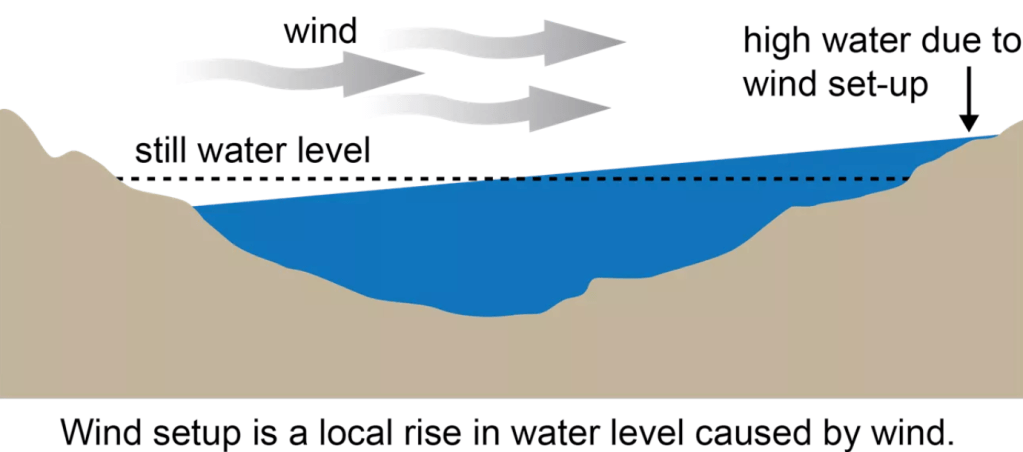
The visibility of a seiche’s effects is often most pronounced near the lake’s shorelines, where the oscillatory motion reaches its peak. Observers might notice abrupt changes in water temperature, an unusual clustering of fish near the surface, or even mass fish deaths along the shoreline. In Lake Kinneret, these effects are frequently observed during late spring and early summer when the thermal stratification is shallow, and seiches can bring anoxic water closer to the surface.
In the study by Amitai et al. (2024), the role of seiches in generating fish kills near the shorelines of Lake Kinneret is explored as a potential explanation for the miraculous events described in the Gospels. The natural dynamics of seiches, driven by westerly winds, offer a plausible mechanism for the sudden availability of fish, reinforcing the idea that extraordinary natural phenomena could inspire deeply significant religious narratives. By understanding seiches, we gain insight not only into the physical processes of Lake Kinneret but also into the interplay between nature and human perception that shapes our interpretation of miraculous events.
The biblical, historical and ecological significance of Lake Kinneret
Lake Kinneret, widely known as the Sea of Galilee, is a freshwater jewel nestled in northern Israel, carrying a tapestry of ecological, historical, and spiritual significance. This lake, the Earth’s lowest freshwater body, lies about 200 metres below sea level and has been pivotal to the sustenance and livelihood of surrounding populations for millennia. While its waters have been a source of life, its shores have also been the backdrop for Biblical narratives that resonate with religious and cultural richness. The intertwining of these two dimensions—ecological and spiritual—reveals the deep interdependence between the lake’s natural rhythms and human existence.
Historically, the lake’s importance as a hub of livelihood is well-documented. Archaeological records from the Late Bronze Age, as noted in the Karnak Temple’s town lists from Thutmosis III’s reign, identify Kinneret as a prominent settlement, crucial to trade routes like the Via Maris that connected the Levant to Egypt and Mesopotamia Later, Biblical texts such as the Gospel accounts of Jesus’ ministry further underline the lake’s centrality. In the New Testament, fishermen like Peter and Andrew worked its waters, their livelihoods depending on its resources. Fishing was not merely a profession but a way of life, connecting human survival to the lake’s bounty. The Biblical imagery of nets bursting with fish is as much a spiritual metaphor as a reflection of the economic reliance on the lake (see also Zwickel, 2024).
The physical structure of Lake Kinneret plays a crucial role in the formation of seiches. During warmer months, the lake becomes stratified into three distinct layers: the warm, oxygen-rich epilimnion at the surface; the cooler metalimnion, where temperature changes sharply with depth; and the cold, oxygen-depleted hypolimnion at the bottom. These layers are separated by the thermocline, a boundary defined by temperature gradients. When strong westerly winds blow across the lake, they push surface water toward one end of the basin, tilting the thermocline. This displacement initiates the oscillatory motion characteristic of seiches. These layers govern the life cycles of aquatic organisms and underpin the ecosystem services that the lake provides. Phytoplankton blooms dominate the spring, with the dinoflagellate Peridinium gatunense once a hallmark of this productivity, though recent decades have seen its decline, replaced by cyanobacteria as nitrogen availability has waned (Gophen, 2012).
The fish population in Lake Kinneret reflects the lake’s ecological balance. Key species such as the Kinneret bleak (Mirogrex terraesanctae) aggregate in schools and play a vital role in the food web, feeding on plankton while being prey for larger fish and birds. These fish also form the backbone of the lake’s fisheries. However, environmental changes, including shifts in water nutrient dynamics and human impacts such as overfishing and invasive species introductions, have reshaped the lake’s ichthyofauna. Exotic species like silver carp and tilapia have been introduced to support fisheries and water quality, but these measures have had mixed success (Gophen, 2018).
The lake’s fisheries have long been central to local economies, providing employment and sustenance. Historical records indicate active fishing as early as the Bronze Age, with detailed data available from the 20th century onward. However, declining fish stocks, driven by factors like reduced inflows, habitat changes, and altered stocking policies, have strained this traditional livelihood. For instance, the sharp reduction in bleak landings—from over 1,000 tonnes annually in the mid-20th century to negligible levels by the 2010s—illustrates the pressures facing the fishery. This decline not only affects the economic well-being of fishermen but also disrupts the intricate ecological balance of the lake.
The lake’s modern role has evolved in response to ecological and socio-political changes. Once a critical source of drinking water, Lake Kinneret now supports tourism, recreation, and fisheries as its primary uses, with water supply increasingly supplemented by desalination. The shifting priorities reflect a broader trend of redefining the lake’s ecological services to balance human needs with environmental sustainability.
Linking the lake’s ecology with biblical events
To explain the biblical feeding of the 5,000 and the miraculous catch of fish, Amitai et al. (2024), investigated two fish kill events that occurred in 2012 along the northwestern shore of Lake Kinneret, near Tabgha, a site with strong Biblical associations. By employing a combination of field observations, historical data, and advanced computational modelling, the study sought to link the dynamics of the lake’s internal processes to these extraordinary phenomena.
The research began with an analysis of the 2012 fish kills, during which thousands of fish were found dead or gasping along a narrow stretch of the shoreline. Most of the affected fish were of the species Mirogrex terraesanctae (Kinneret bleak), a schooling fish common to the lake. Observations during these events indicated that the fish were victims of hypoxia, a condition caused by critically low oxygen levels in the water. The fish showed no evidence of disease or physical injury, ruling out typical causes such as pathogens or predation. This led the research to focus on the hydrodynamic and ecological processes in Lake Kinneret as the likely cause of these fish kills.
The research utilised water temperature and dissolved oxygen measurements collected through fixed thermistor chains and profile samples taken during and after the fish kill events. These measurements revealed that strong westerly winds had initiated internal waves, known as seiches, within the lake. These waves displaced cold, oxygen-depleted water from the hypolimnion—the bottom layer of the lake—forcing it upward along the lake’s western shoreline. This process, known as upwelling, replaced the warmer, oxygenated surface water with anoxic water from the lake’s depths. As a result, fish near the shoreline were suddenly exposed to inhospitable conditions, leading to mass mortality.
The research did not stop at field observations. To gain a deeper understanding of the physical mechanisms driving these events, Amitai et al. (2024) implemented a high-resolution, three-dimensional coupled atmosphere-lake model. This computational model simulated the lake’s response to the environmental conditions during the 2012 events, particularly the strong westerly winds that had been recorded. The simulations confirmed that these winds were capable of tilting the thermocline—the boundary layer between the oxygenated surface water and the anoxic bottom water—thereby facilitating the upwelling of anoxic water along the lake’s western edge.
Through the modelling, the research identified several critical conditions that needed to align for such events to occur. First, the lake had to be in a state of thermal stratification, where the warmer surface layer is distinct from the colder bottom layer. This stratification is most pronounced in late spring and early summer, when the thermocline is shallow and the hypolimnion is completely devoid of oxygen due to the decomposition of organic matter. Second, the strong westerly winds that drove the seiche must persist long enough to displace the thermocline significantly. Finally, the lake’s physical morphology, with its relatively narrow and shallow western shoreline, plays a crucial role in concentrating the effects of upwelling in specific locations, such as Tabgha.
The results of the research demonstrated that seiche-induced upwelling events, though infrequent, could lead to large-scale fish kills or clustering near the shore. Such phenomena would have significant implications for the lake’s ecology and for the livelihoods of local fishermen, who might have experienced sudden and seemingly miraculous surges in fish availability. The research further highlighted that these hydrodynamic processes are not unique to modern times. Sediment analyses and historical data suggest that similar ecological conditions existed in Lake Kinneret two millennia ago, making it plausible that such events could have inspired the Biblical narratives.
Amitai et al. (2024) proposed that the fish kill events of 2012 provide a window into understanding the natural processes that might underlie the miracles described in the Gospels. In the Feeding of the 5,000, for instance, a sudden abundance of fish could have been the result of a seiche-induced fish kill, with the fish washing ashore or clustering in shallow waters where they could be easily collected. Similarly, the Miraculous Catch of Fish might reflect a historical upwelling event, during which disoriented or dying fish were driven to the surface or congregated near the shoreline, making them particularly accessible to fishermen.
Linking science and scripture
The findings of Amitai et al. (2024) offer a compelling intersection between science, scripture, livelihoods, and conservation. The study delves into the ecological processes in Lake Kinneret, specifically seiche-induced fish kills, and presents a naturalistic explanation for the Biblical miracles of the Feeding of the 5,000 and the Miraculous Catch of Fish. These findings illuminate not only the physical mechanisms behind sudden fish abundance but also the broader implications for livelihoods and environmental stewardship, connecting the spiritual narratives of scripture with the ecological realities of the natural world.
The implications of Amitai et al.’s findings extend beyond the naturalistic explanation of the miracles. Lake Kinneret has been central to the livelihoods of communities for millennia, particularly for fishers who relied on its waters for sustenance and trade. The sudden availability of fish, whether through natural events or perceived miracles, would have been both an economic windfall and a spiritual sign. For fishermen like Peter and Andrew, who feature prominently in the Gospel stories, an extraordinary catch symbolised not only divine favour but also the sustaining power of the natural world. These connections between the lake’s ecological rhythms and its role in supporting livelihoods underline the profound dependence of human communities on their environment.
Scripture often reflects this dependence, framing it within a theological context that emphasises stewardship and gratitude. In the Feeding of the 5,000, the act of collecting leftovers to avoid waste mirrors modern principles of sustainability, highlighting the ethical responsibility to manage resources wisely. Similarly, conservation efforts today aim to balance ecological health with the needs of human communities. Lake Kinneret’s fisheries, which have faced challenges such as declining stocks and environmental changes, exemplify this delicate balance. The insights from Amitai et al. (2024) provide valuable lessons for managing such resources, demonstrating how an understanding of natural processes can guide conservation strategies that honour both ecological systems and the people who depend on them.
The interplay between science and scripture revealed by this research invites a deeper reflection on humanity’s role within the natural world. The miracles associated with Lake Kinneret, whether viewed as acts of divine intervention or as extraordinary natural events, speak to the interconnectedness of human life and the environment. The narratives of sudden abundance are not merely theological statements but also reflections of ecological realities that continue to shape human experience. By bridging these realms, Amitai et al. (2024) show how ancient stories rooted in specific places and times can inspire contemporary approaches to sustainability and conservation. This synthesis of science and scripture enriches our understanding of both, offering a vision of the natural world as a source of wonder, sustenance, and responsibility. In doing so, it reminds us that the lessons of the past, whether in the form of miracles or ecological phenomena, remain profoundly relevant in addressing the challenges of the present.
Conclusion
The findings of Amitai et al. (2024) exemplify the intersection of natural phenomena, historical livelihoods, and spiritual narratives, offering a rich lens through which we can interpret the relationship between scripture and science. Their exploration of seiche-induced fish kills in Lake Kinneret provides a scientifically grounded explanation for the sudden abundance of fish described in the miracles of the Feeding of the 5,000 and the Miraculous Catch of Fish. These natural events, marked by the upwelling of anoxic waters that trap or displace fish, may well have inspired the Biblical accounts that have resonated for centuries.
At its core, the research situates these miracles within the ecological dynamics of the Sea of Galilee, an essential resource for ancient communities whose livelihoods revolved around fishing and agriculture. These natural cycles of abundance and scarcity reflected in the lake’s ecology mirror the rhythms of human dependence on the environment. Such events, perceived as miraculous in their time, would have carried profound spiritual significance, linking the tangible provision of food with divine favour and care. For fishermen like Peter and Andrew, such occurrences might have reaffirmed both their faith and their connection to the lake as a life-giving resource.
From a conservation perspective, the lessons from Amitai et al. (2024) are equally significant. The Biblical narratives encourage mindful consumption and the avoidance of waste, principles that align closely with contemporary environmental ethics. Similarly, the study underscores the importance of understanding natural processes to inform resource management, as the health of Lake Kinneret continues to be a vital concern for modern conservation efforts. By highlighting the fragile interplay between ecological stability and human livelihoods, the research draws attention to the ongoing need for stewardship, both of natural resources and the communities that rely on them.
Ultimately, this study demonstrates the enduring relevance of scripture in addressing contemporary environmental challenges. By exploring how natural phenomena might underlie the stories of miraculous provision, Amitai et al. (2024) illuminate the interconnectedness of faith, ecology, and sustainability. These findings remind us that the natural world, with all its wonder and complexity, continues to inspire and sustain humanity. Through this synthesis of science and scripture, we are invited to view both the past and the present with a sense of awe and responsibility, ensuring that the lessons of history guide us toward a future where both nature and livelihoods can thrive in harmony.
References
Amitai, Y., Strobach, E., Hamilton, D. P., Assouline, S., Nishri, A., & Zohary, T. (2024). Seiche‐induced fish kills in the Sea of Galilee—a possible explanation for biblical miracles? Water Resources Research, 60, e2024WR037894. https:// doi.org/10.1029/2024WR037894.
Gophen, M. (2012). The ecology of Keratella cochlearis in Lake Kinneret (Israel). Open Journal of Modern Hydrology, doi:10.4236/ojmh.2012.21001.
Gophen, M. (2018). Fishery management in Lake Kinneret: A review. Journal of Fisheries and Aquaculture Development 1, doi: 10.29011/2577-1493. 100040.
Hagar, S. (1918). What was the star of Bethlehem. Popular Astronomy 26, 323.
Rabinovich, A.B. (2009). Seiches and harbor oscillations. In: Kim, Y.C. (Ed.). Handbook of coastal and ocean engineering (pp. 193—236). Singapore: World Scientific Publishing.
Sivertsen, B.J. (2009). The parting of the sea. How volcanoes, earthquakes, and plagues shaped the Story of Exodus. Princeton: Princeton University Press.
Zwickel, W. (2024). Kinneret in Late Bronze Age and biblical sources. In: Zwickel, W. & J. Pakkala (Eds.). Kinneret II. Results of the excavations at Tell el-ʽOrēme, 1994–2008 (pp. 45—56. Münster: Zaphon.
ARTICLE
Has precipitation in Europe increased?
Climate change has spurred interest in understanding how precipitation patterns have evolved across Europe. In particular, scientists are keen to determine whether rainfall has increased, decreased, or simply become more erratic. The answer is complex, as regional variations and extreme weather events complicate the overall picture. However, evidence gathered from various studies suggests that precipitation patterns in Europe are indeed shifting, with some regions experiencing more rainfall, while others face prolonged droughts. This article synthesises the latest research to provide a clearer understanding of whether precipitation in Europe has increased over recent decades.
Long-term trends and regional differences
The general trend across Europe over the past century shows an increase in overall precipitation, especially in the northern and central parts of the continent. According to a briefing by the European Environment Agency (EEA), Northern Europe has seen a significant rise in annual precipitation by as much as 10% to 40% during the 20th century, while southern Europe has experienced a decline of up to 20% in some regions. These changes are largely consistent with projections of climate change, which predict wetter conditions in the north and drier conditions in the south.
Recent studies, such as those by Berényi et al. (2023), have confirmed the intensification of extreme precipitation events in many parts of Europe. Their analysis of climatic data from 1950 to 2022 using indices recommended by the Expert Team on Climate Change and Indices (ETCCDI) found that 11 out of 14 plain regions in Europe show a significant increase in the intensity of extreme precipitation events. This increase in heavy rainfall is consistent with the well-established principle that warmer air holds more moisture, leading to more intense rainstorms.
However, not all regions follow the same pattern. In southern Europe, particularly in the Mediterranean basin, total annual precipitation has decreased even as extreme rainfall events have become more common. This pattern suggests that while the region is receiving less rain overall, when it does rain, the events tend to be more intense.
Extreme precipitation events become more frequent and more intense
One of the most concerning trends in Europe is the rise in extreme weather events, including heavy rainfall and prolonged droughts. The Clausius-Clapeyron relationship, which describes how the water-holding capacity of the atmosphere increases with temperature, helps explain why extreme rainfall events have become more frequent. According to Huo et al.’s study, the majority of Europe, except for southern regions, is likely to experience increases in both extreme and mean precipitation in the future under both moderate and high greenhouse gas emission scenarios (Huo et al., 2020).
The intensification of short-duration extreme precipitation events, particularly in northern and central Europe, has already resulted in a number of high-profile floods, such as those in central Europe in 2002 and 2013. Meanwhile, southern Europe faces a paradox of fewer overall rainfall events combined with heightened risks of flash floods due to the increased intensity of those fewer storms.
In addition to heavy rainfall, the increase in the number of dry days in southern Europe is another significant trend. Long dry spells followed by extreme rainfall events exacerbate the risks of flash floods and landslides, further straining water management systems. These changes suggest that southern Europe is transitioning toward a climate characterised by greater extremes—less frequent but more intense rain coupled with longer, more severe droughts.
Northern Europe: a marked increase in precipitation
In northern Europe, the story is somewhat different. Countries such as Norway, Sweden, and Finland have seen a marked increase in annual precipitation. This is particularly true in the winter months, when rainfall has increased as part of a broader trend of wetter, milder winters across the region. Berényi et al. (2023) found that precipitation has increased across large parts of northern Europe, including in Finland, Sweden, and Estonia.
One of the most striking changes in northern Europe is the rise in extreme precipitation events, which has been linked to the increased frequency of mid-latitude cyclones. These cyclones, which transport moist air from the Atlantic, are expected to continue delivering more frequent and intense rainfall as global temperatures rise. Some studies, including those by Berényi et al., also highlight the increased river flows and flood risks in northern Europe, where higher rainfall is contributing to greater volumes of runoff during extreme weather events (e.g. Paprotny et al., 2018).
Southern Europe: drier Overall, but with extreme rainfall
Southern Europe presents a stark contrast to the wetter conditions seen in the north. The Mediterranean region has experienced a significant decline in total annual precipitation, and this trend is expected to continue. A broefing by the European Environmental Agency (EEA) highlights that the Mediterranean is becoming more vulnerable to desertification, with reduced water availability impacting agriculture, forestry, and other water-dependent sectors (EEA, 2008).
Despite this overall decline in rainfall, extreme rainfall events are becoming more frequent and severe. Researchers have noted that while the total number of rainy days in southern Europe has decreased, the intensity of rainfall during those events has increased. This trend poses serious challenges for water management, as infrastructure in many parts of southern Europe is ill-equipped to handle the dual risks of drought and flash flooding.
Projecting a continental shift toward extremes
Looking ahead, the future of precipitation in Europe will likely be characterised by an intensification of current trends. Under high-emission scenarios, northern and central Europe are projected to see continued increases in annual and extreme precipitation. According to Huo et al. (2020), the magnitude of extreme rainfall events, particularly those with short durations, is expected to increase significantly in northern and western Europe by the end of the 21st century.
In contrast, southern Europe will continue to experience more frequent and intense droughts, coupled with occasional extreme rainfall events that could lead to catastrophic flash floods. Climate models predict that this region will see the greatest increase in the length of dry spells, particularly during the summer months.
Conclusion
Has precipitation in Europe increased? The answer depends on where you are. While northern Europe has experienced a clear increase in both total and extreme rainfall, southern Europe faces a more complicated scenario of decreasing total precipitation but more intense storms when they do occur. The evidence suggests that climate change is driving a continental shift toward more extreme weather patterns—more rain in the north, less in the south, but with both regions facing an increase in the intensity of extreme events. As Europe braces for the future, adaptation strategies must account for these diverging trends to mitigate the risks posed by floods and droughts alike.
References
Berényi, A., J. Bartholy & R. Pongrácz.(2023). Analysis of precipitation-related climatic conditions in European plain regions. Weather and Climate Extremes 42, https://doi.org/10.1016/j.wace.2023.100610.
EEA. (2008). EEA Briefing — Impacts of Europe’s changing climate. https://www.eea.europa.eu/publications/briefing_2008_3/download
Huo, R., L. Li, H. Chen, CY Xu, J. Chen & S. Guo. (2020). Extreme Precipitation Changes in Europe from the Last Millennium to the End of the Twenty-First Century. Journal of Climate 34(2): 567—588.
Paprotny, D., A. Sebastian, O. Morales-Nápoles & SN Jonkman. (2018). Trends in flood losses in Europe over the past 150 years. Nature communications 9, https://doi.org/10.1038/s41467-018-04253-1.
ARTICLE
On the potential collapse of the Gulf Stream
Introduction
The Atlantic Meridional Overturning Circulation (AMOC) represents a cornerstone of Earth’s climate system, playing a pivotal role in distributing heat, regulating weather patterns, and maintaining the delicate balance of oceanic ecosystems. Commonly associated with the Gulf Stream, this intricate network of currents carries warm, salty water from the tropics to the North Atlantic, where it cools, sinks, and drives deep ocean currents back toward the equator. The AMOC’s collapse would not only destabilise this vital system but also trigger a cascade of severe climate disruptions worldwide.
In recent decades, mounting scientific evidence has pointed to a progressive weakening of the AMOC, a phenomenon attributed to increasing freshwater inputs from melting glaciers, rising precipitation, and runoff into the North Atlantic. This influx of freshwater disrupts the circulation’s delicate density-driven balance, sparking widespread concern among scientists and policymakers alike. Predictions of an impending collapse range from immediate to distant, with studies offering varying timelines and degrees of certainty. Despite these discrepancies, the growing consensus is that the AMOC’s stability is under serious threat.
Understanding the potential collapse of the AMOC requires grappling with the complexities of oceanic and atmospheric systems. Recent studies have employed innovative models, paleoclimate reconstructions, and direct observations to detect signs of critical slowing down, a key indicator of reduced system resilience. Yet, the timing and exact mechanisms of this possible tipping point remain shrouded in uncertainty. As researchers delve deeper into the AMOC’s dynamics, the question looms large: is the Gulf Stream on the brink of an irreversible transformation, and what does this mean for our climate future?
The AMOC: a crucial climate regulator
The Atlantic Meridional Overturning Circulation (AMOC) serves as a vital component of Earth’s climate machinery, acting as a vast conveyor belt that redistributes heat and sustains the planet’s climate equilibrium. This immense system operates through the movement of warm, salty water from the tropics toward the North Atlantic, where it cools, becomes denser, and sinks to drive deep-water currents. These currents loop back toward the equator and eventually connect to the broader global thermohaline circulation.
The AMOC’s influence extends far beyond its oceanic pathways. It underpins the relatively mild climates of Western Europe, stabilises tropical weather systems, and shapes monsoon patterns in Africa and Asia. This circulation also governs regional sea levels and helps sequester atmospheric carbon by promoting nutrient mixing in the deep ocean, indirectly supporting marine life.
Despite its resilience over millennia, the AMOC is strikingly sensitive to disruptions. Freshwater input—via ice melt from Greenland, increased precipitation, or river runoff into the North Atlantic—poses the most immediate threat. These influxes reduce the salinity and density of surface waters, weakening the downwelling that drives the AMOC. The process, known as “freshwater forcing,” directly interferes with the system’s delicate balance and raises the spectre of a potential tipping point.
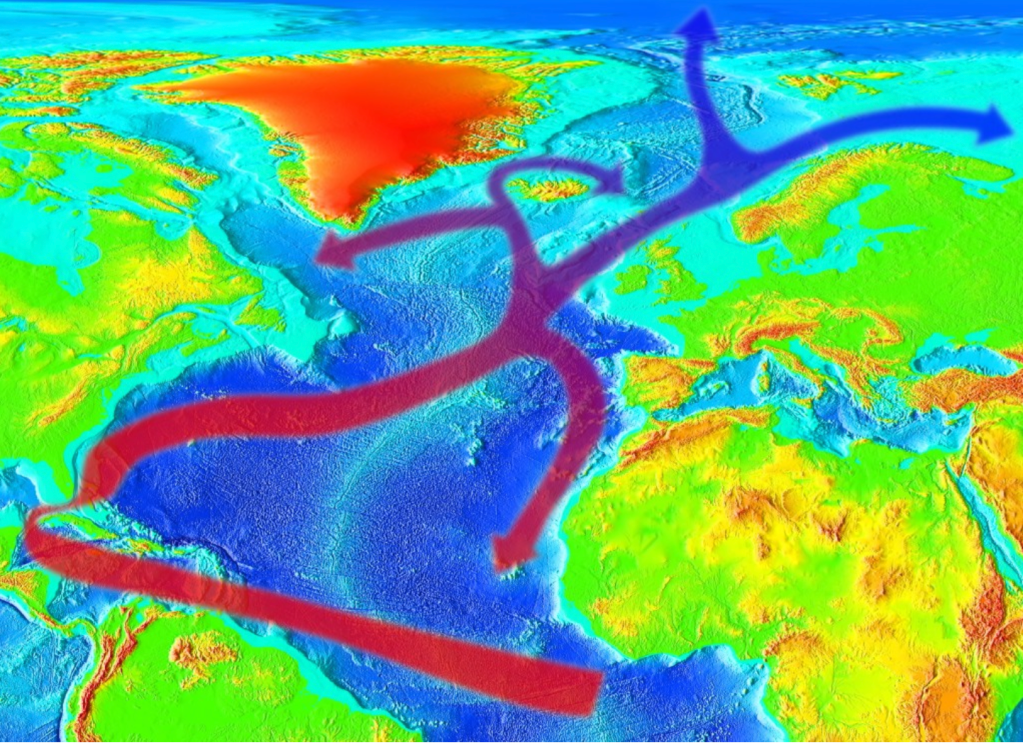
Evidence of weakening
The evidence pointing to a weakening Atlantic Meridional Overturning Circulation (AMOC) has grown steadily over the past several decades, prompting widespread concern among scientists. Reconstructions based on sea surface temperature (SST) “fingerprints” and proxy data suggest that the AMOC is currently at its weakest point in over 1,000 years. These reconstructions align with historical accounts of climate anomalies that were likely linked to past AMOC fluctuations, reinforcing the view that today’s observed trends are not trivial deviations but potential signs of systemic change.
Direct observations, particularly those from the RAPID-MOCHA array, which has monitored the AMOC since 2004, provide more detailed insights. These measurements reveal fluctuations in the AMOC’s strength, with a general trend of weakening. However, the brevity of this dataset compared to the AMOC’s timescales limits its utility in discerning long-term patterns. Still, these observations corroborate longer-term reconstructions and align with model predictions of decline under contemporary climate conditions.
Crucially, early warning signals (EWSs) have been detected in the AMOC system. Increased variance and autocorrelation, two hallmarks of critical slowing down, indicate that the system’s resilience is diminishing. Critical slowing down occurs as a complex system nears a tipping point, where its ability to recover from perturbations becomes progressively weaker. These signals are evident in SST data, which reveals increased instability in regions closely tied to AMOC dynamics (Ditlevsen & Ditlevsen, 2023).
Studies employing sophisticated models, such as those by van Westen et al. (2024), support these observations. They find that under scenarios of continued greenhouse gas emissions, the AMOC could weaken further or even collapse by the end of the 21st century. Others, however, caution against over-reliance on these predictive methods due to inherent uncertainties (Ben-Yami et al., 2024). Nevertheless, the convergence of evidence from proxies, direct measurements, and models strengthens the case for viewing AMOC weakening as a genuine and potentially irreversible trend.
Implications of an AMOC collapse
The collapse of the Atlantic Meridional Overturning Circulation (AMOC) would profoundly reshape global climate systems, triggering cascading effects across continents and oceans. Its potential ramifications span from regional climate anomalies to widespread ecosystem disruptions and societal challenges.
Europe: a sudden freeze
One of the most immediate impacts of an AMOC collapse would be felt in Europe, where temperatures could plummet by as much as 15°C during winter in some regions. This would effectively reverse the warming influence of the AMOC, which currently keeps Western Europe’s climate milder than other regions at similar latitudes. The sudden cooling would devastate agriculture, energy systems, and infrastructure ill-equipped for such extreme conditions. Additionally, it could increase reliance on heating resources, further compounding energy crises.
Global weather: rainfall and droughts
The AMOC’s influence extends into the tropics, where it modulates the position of the Intertropical Convergence Zone (ITCZ). Its collapse would likely drive the ITCZ southward, altering global rainfall patterns. This shift could exacerbate drought conditions in the Sahel, a region already vulnerable to water scarcity, while disrupting monsoon systems critical for agriculture in South Asia and West Africa. In the Americas, changes in atmospheric circulation could intensify hurricanes and destabilise weather patterns, leading to prolonged periods of extreme precipitation or drought.
Sea level rise
An AMOC collapse would drive a dynamic rise in sea levels along the eastern seaboard of the United States, with increases exceeding 70 cm in some areas. This is driven by changes in ocean circulation that redistribute water masses and exacerbate local sea level rise. The resulting inundation would threaten coastal cities such as New York, Boston, and Miami, endangering lives, economies, and infrastructure. Combined with storm surges and extreme weather, the risk of catastrophic flooding would escalate significantly.
Ecosystem disruptions
The oceans would bear the brunt of an AMOC collapse, with dramatic changes in temperature and salinity disrupting marine ecosystems. The North Atlantic would cool substantially, reducing the habitat range of many commercially important fish species, such as cod, and triggering biodiversity losses. In contrast, the South Atlantic would warm, further unbalancing ecosystems. Coral reefs, already stressed by warming and acidification, could face additional challenges, while altered nutrient cycles would impact ocean productivity.
On land, the Amazon rainforest—a critical carbon sink—might experience significant rainfall reductions, potentially transforming vast areas into savannah. This “cascading tipping” effect would accelerate carbon emissions, intensify global warming, and destabilise ecosystems dependent on the rainforest’s climatic stability.
Global socioeconomic impacts
Beyond physical and ecological consequences, an AMOC collapse would severely disrupt global food systems, trade routes, and economic stability. Changes in climate could devastate agricultural yields in multiple regions simultaneously, leading to food shortages and price volatility. Fisheries, which sustain millions of livelihoods, would face collapse in many Atlantic-dependent regions, further straining economies and food supplies.
Broader climate feedback loops
An AMOC collapse would likely initiate feedback loops, amplifying global warming. For instance, reduced heat transport to the poles could accelerate Arctic ice melt, which, in turn, would introduce more freshwater into the North Atlantic, further destabilising the climate system. The interaction of these feedbacks could make the effects of a collapse far more severe and harder to predict.
The road ahead
The debate over the Atlantic Meridional Overturning Circulation (AMOC) reflects the immense challenges of predicting tipping points within complex systems. As a central component of Earth’s climate regulation, the AMOC’s potential collapse carries consequences so profound that inaction is not an option. While the exact timing and probability of such a collapse remain uncertain, the risks demand a proactive and multifaceted response.
Strengthened monitoring systems are crucial for reducing uncertainties about the AMOC’s current state and trajectory. Existing observation networks, like the RAPID array, provide valuable insights but lack the longevity and geographic breadth required to fully understand this vast system. Expanding these efforts with autonomous sensors, improved satellite technologies, and high-resolution data integration can significantly enhance the ability to detect early warning signals of instability. Combined with insights from paleoclimate data, this approach will allow scientists to better understand the AMOC’s long-term behaviour and vulnerability.
Climate models remain indispensable tools for projecting the future of the AMOC, yet their limitations underscore the need for continuous refinement. Current models must evolve to incorporate nonlinear feedbacks, accurately simulate freshwater forcing, and capture interactions between oceanic and atmospheric systems. Collaborative international efforts to develop these models will be essential for improving the precision of predictions and guiding evidence-based policy decisions.
The ultimate driver of AMOC destabilisation is global warming, making the mitigation of greenhouse gas emissions an urgent priority. Immediate and sustained action to reduce emissions—through transitions to renewable energy, reforestation initiatives, and advancements in carbon capture technologies—can alleviate pressure on the AMOC. Stabilising global temperatures and minimising further disruptions to the hydrological cycle are critical steps to reduce the risk of crossing tipping points. Every effort to curb emissions strengthens the resilience of this vital system.
Adaptation strategies must also play a key role in addressing the potential fallout from AMOC-related disruptions. Coastal regions vulnerable to sea level rise and extreme weather need resilient infrastructure and robust disaster preparedness plans. Changes in fisheries and agriculture due to shifting ecosystems will require adaptive management practices to maintain food security. These measures will be especially critical for communities in regions most directly affected by the AMOC’s instability.
Global collaboration is the foundation for meaningful progress. The AMOC’s future is a shared concern that transcends borders, demanding unified efforts from governments, researchers, and international organisations. Frameworks like the Paris Agreement provide essential platforms for collective action, while data-sharing, joint research initiatives, and coordinated policy responses enhance global capacity to tackle these challenges. Only through cooperation can the necessary resources and expertise be mobilised to protect the systems that sustain life on Earth.
The AMOC’s future hangs in a delicate balance, embodying the intricate interconnectedness of Earth’s climate system. Its stability represents both a warning and an opportunity—a reminder of the pressing need to address the drivers of climate change and a chance to act decisively to mitigate its impacts. Whether humanity can stabilise this vital ocean conveyor or face its collapse will depend on the collective actions taken today. As the consequences of inaction grow ever clearer, the need for swift and united efforts to protect this cornerstone of our planet’s climate becomes undeniable.
References
Ben-Yami, M., A. Morr, S. Bathiany & N. Boers. (2024). Uncertainties too large to predict tipping times of major Earth system components from historical data. Science advances 10, doi: 10.1126/sciadv.adl4841.
Ditlevsen, P. & S. Ditlevsen. (2023). Warning of a forthcoming collapse of the Atlantic meridional overturning circulation. Nature communications 14, https://doi.org/10.1038/s41467-023-39810-w.
van Westen, RM, M. Kliphuis & HA Dijkstra. (2024). Physics-based early warning signal shows that AMOC is on tipping course. Science advances 10, doi: 10.1126/sciadv.adk1189.
ARTICLE
Communal climate action in Germany bridges the gap between local efforts and global goals
Introduction
Germany stands at the forefront of the global fight against climate change. As one of the world’s largest economies and a leader in industrial innovation, the country has set an ambitious goal: to achieve greenhouse gas (GHG) neutrality by 2045. This commitment aligns with the Paris Agreement’s targets of limiting global temperature rise to well below 2°C, ideally 1.5°C. While these objectives are championed at the federal level and embedded in international agreements, they rely heavily on local implementation and innovation to succeed.
The significance of communal, or local-level, climate action in Germany’s climate strategy cannot be overstated. The nation emits approximately 600 million tons of CO₂ equivalents annually, a figure that underscores the scale of the challenge. However, within this daunting figure lies a key opportunity. Municipalities—spanning cities, towns, and rural communities—possess the capacity to mitigate an estimated 101 million tons of emissions. This contribution, amounting to roughly 17% of the national total, highlights the critical role of communes in achieving Germany’s climate neutrality target.
Unlike federal or state initiatives, which often operate at a macro level, communal climate action is rooted in the specific needs and characteristics of local communities. Municipalities directly influence essential areas such as energy supply, transportation systems, urban planning, and waste management. Their unique position allows them to implement tailored strategies that address the immediate concerns of their citizens while aligning with broader national objectives.
The strategic role of communes in climate governance
Germany’s governance system is built on a foundation of decentralisation, where communes—encompassing cities, towns, and rural municipalities—serve as the level of government most directly connected to citizens. This proximity to the population, local businesses, and infrastructure grants municipalities unique leverage in addressing climate challenges. Far from being passive implementers of federal policies, German communes play a proactive and dynamic role as innovators and drivers of change. Their ability to tailor solutions to the specific social, economic, and environmental conditions of their regions makes them indispensable actors in the pursuit of climate neutrality.
Communes influence climate outcomes across several critical domains, each offering unique opportunities to reduce greenhouse gas emissions and foster sustainable practices.
One of the most direct ways municipalities contribute to climate action is by managing their own assets. These include public buildings, transportation fleets, and utilities, all of which can be optimised to reduce emissions. For example, many German communes have implemented ambitious programmes to retrofit public buildings with energy-efficient systems. By upgrading insulation, heating, and lighting systems, these buildings significantly cut energy consumption and associated emissions. Similarly, transitioning municipal vehicle fleets to electric or hybrid models demonstrates the potential for direct and measurable emission reductions. These actions not only lower emissions but also set an example for businesses and private citizens to follow.
Municipalities are responsible for some of the most critical infrastructure affecting emissions, such as district heating systems, public transportation, and waste management. These systems present opportunities for systemic, high-impact transformations. For instance, district heating systems powered by renewable energy, such as biomass or geothermal sources, can replace fossil fuel-based heating, delivering significant emission reductions while providing reliable energy to residents. Enhancing public transportation networks—such as expanding rail systems or improving bus fleets with electric or hydrogen-powered vehicles—can shift commuter behaviour away from carbon-intensive car travel. Likewise, optimising waste management processes, including increasing recycling rates and capturing methane emissions from landfills, offers additional avenues for communal climate action.
The regulatory authority of communes is another area where their role in climate governance is evident. Urban planning and land-use decisions are powerful tools that municipalities wield to influence emissions. For example, mandating energy efficiency standards for new construction projects ensures that buildings meet high sustainability criteria. Zoning policies that prioritise renewable energy installations, such as solar farms or wind turbines, demonstrate how communes can directly influence the carbon footprint of their territories. These regulatory measures not only reduce emissions but also lay the groundwork for long-term sustainable development.
Communes also play a pivotal role in fostering behavioural change and public support for climate action. Through advisory services and public engagement initiatives, municipalities can encourage citizens to adopt more sustainable lifestyles. For instance, offering subsidies for residential solar panel installations or organising workshops on energy efficiency empowers individuals to contribute to local and national climate goals. Public campaigns that highlight the benefits of sustainable practices—such as reduced energy costs and improved air quality—can galvanise support and drive widespread participation in communal initiatives.
Why communal action matters
The importance of communal climate action in Germany goes far beyond the direct reduction of greenhouse gas emissions. At its core, it serves as a crucial link between the overarching objectives set at the national level and their tangible implementation in local contexts. Policies such as Germany’s *Klimaschutzgesetz* (Climate Protection Act) establish ambitious targets for emission reductions and energy transitions. However, their realisation depends significantly on local governments, which are responsible for translating broad policy frameworks into effective, context-specific actions. Without the active participation and ingenuity of communes, these national goals risk remaining aspirational rather than achievable.
Communal initiatives are also indispensable for building public trust and fostering widespread engagement with climate efforts. Unlike the often abstract nature of national policies, local projects directly impact daily life, making their benefits visible and relatable to citizens. The positive effects of these initiatives can be immediate, such as improved air quality, reduced traffic congestion, and lower household energy costs. This tangible nature not only validates the need for sustainable practices but also motivates community involvement. For many citizens, these visible improvements offer a compelling argument for supporting more extensive climate policies, bridging the gap between personal behaviour and collective responsibility.
Moreover, Germany’s communes play a pivotal role as laboratories for innovation in climate governance. The local level allows for the testing of novel approaches, technologies, and policy instruments that may later inform broader national strategies. Hamburg’s smart-city projects, for instance, demonstrate how digital technologies can optimise energy use and urban mobility, while Freiburg’s car-free neighbourhoods showcase the potential of sustainable urban planning to transform how people live and work. These experimental projects provide valuable lessons, proving that ambitious climate goals are not only feasible but can also enhance the quality of life. By succeeding on a smaller scale, such initiatives create blueprints that other regions can adapt, enabling scalable solutions to climate challenges.
The interplay of these factors—bridging national policies and local implementation, engaging citizens, and fostering innovation—underscores the indispensable role of communal action in climate governance. In the context of Germany’s ambitious 2045 neutrality goal, the contributions of local governments are not supplementary but foundational, ensuring that the transition to a low-carbon future is both effective and inclusive.
Navigating constraints, realising potential
Communal climate action in Germany, while pivotal, is not without its difficulties. Municipalities often operate within the confines of limited financial and human resources, a constraint felt most acutely by smaller and rural communities. This imbalance is compounded by an uneven distribution of technical expertise and funding, creating disparities in the capacity to plan and implement effective climate initiatives. Urban centres may have access to advanced technologies and larger budgets, whereas rural municipalities, despite often possessing significant renewable energy potential, may lack the resources to harness it. These challenges are further complicated by the need to balance competing priorities. Local governments are frequently tasked with fostering economic growth and meeting social needs, all while advancing environmental sustainability. Such conflicts can hinder decisive action, particularly in areas where traditional industries remain significant drivers of local economies.
Yet, these challenges are counterbalanced by substantial opportunities that highlight the transformative potential of communal climate action. Programmes like the Nationale Klimaschutzinitiative (National Climate Initiative) exemplify how financial support and technical assistance can empower municipalities to embark on ambitious climate projects. By offering targeted funding for initiatives such as energy-efficient building renovations, renewable energy systems, and sustainable mobility solutions, these programmes address some of the key barriers faced by local governments.
Collaboration across governance levels also provides a pathway to overcome limitations. When communes, states, and the federal government work in concert, they can leverage shared resources, exchange best practices, and align local actions with national strategies. Such cooperation ensures that even smaller municipalities can access the expertise and funding needed to contribute meaningfully to climate goals.
The ripple effects of local climate action
The impacts of communal climate action reach far beyond their direct contributions to emissions reductions, embedding themselves in the social, economic, and environmental fabric of local communities. One of the most immediate benefits lies in enhancing local resilience to the growing challenges posed by climate change. Cities like Stuttgart have demonstrated how targeted initiatives can address climate vulnerabilities while improving quality of life. The city’s extensive green-space projects not only reduce the intensity of urban heat islands, mitigating the effects of increasingly frequent heatwaves, but also provide accessible recreational areas that enhance urban living.
Local climate action also generates tangible co-benefits that extend well beyond its environmental goals. Investments in energy-efficient infrastructure, such as retrofitted public buildings or optimised street lighting, lead to reduced operational costs for municipalities, freeing up resources for other public services. Similarly, the promotion of sustainable transport systems yields multifaceted rewards. By encouraging active modes of transport like cycling and walking, and by improving public transit options, municipalities can significantly reduce air pollution, lower noise levels, and promote healthier lifestyles among their populations. These improvements are not just practical; they actively enhance public well-being and reinforce the social value of climate-focused investments.
The leadership exhibited by German municipalities in implementing such initiatives also amplifies their influence on a global scale. Local successes provide compelling evidence that ambitious climate mitigation efforts are not only achievable but also beneficial in ways that resonate with both citizens and policymakers. This credibility strengthens Germany’s position in international climate negotiations, showcasing how bottom-up initiatives can effectively complement top-down commitments. By setting examples of innovation and determination, German municipalities inspire other countries to adopt similar measures, building the momentum needed for stronger collective action against climate change.
Against the backdrop of the above, it becomes clear that the broader impacts of communal climate mitigation underscore its integral role in creating resilient, sustainable, and healthier communities. These efforts extend their reach from the local to the global, demonstrating how individual municipalities can shape the narrative of climate action through tangible results and forward-thinking leadership.
Conclusion
Communal climate action in Germany represents a cornerstone of the nation’s efforts to achieve greenhouse gas neutrality by 2045. The challenges posed by climate change are complex, requiring coordinated efforts across all levels of governance. Yet it is at the local level—within Germany’s municipalities—that these policies take tangible form, directly influencing the lives of citizens, reshaping urban and rural landscapes, and fostering meaningful behavioural change.
The role of communes transcends the reduction of emissions. Local governments bridge the gap between national climate goals and their real-world implementation, transforming abstract targets into actionable measures tailored to the specific needs of their regions. Through innovative projects, regulatory initiatives, and public engagement, German municipalities are not merely reacting to climate imperatives but actively shaping the future of sustainability. Their efforts provide replicable models that inspire action both nationally and globally, demonstrating that ambitious mitigation is not only feasible but also beneficial to communities in myriad ways.
While the contribution of smaller communes to national emission reductions may appear modest, their collective impact is significant. When viewed in concert, the efforts of numerous municipalities form a crucial foundation for achieving Germany’s climate goals. This distributed approach ensures that every corner of the country participates in and benefits from the transition to a low-carbon future. By harnessing the aggregated potential of smaller communities, Germany can amplify its overall impact and create a resilient, decentralised system of climate governance.
However, the success of communal climate action depends on addressing the resource disparities and competing priorities that challenge many municipalities. Programmes like the Nationale Klimaschutzinitiative offer valuable support, but greater alignment between local, state, and federal policies is essential to fully unlock the potential of Germany’s communes. This collaborative framework will ensure that even smaller and resource-constrained municipalities can contribute effectively to the broader climate effort.
The ripple effects of communal action—enhanced resilience, co-benefits for health and well-being, and strengthened international leadership—highlight its indispensability. As Germany strives to honour its climate commitments, the work of its municipalities will not only determine the success of its national strategy but also shape the global narrative on climate governance. Local actions, backed by strong national support, will define Germany’s legacy as a climate leader, showcasing how empowered communities, regardless of size, can lead the charge towards a sustainable and equitable future.
FILM REVIEW
Captain Paul Watson: the grand illusion
– By Gil Thériault, Director, Intra-Quebec Sealers Association (IQSA)
Lately, I forced myself to watch the quite popular 2019-documentary Paul Watson: A Life for the Oceans (original French title: Paul Watson — Une vie pour les océans), broadcast on ARTE and directed by Lesley Chilcott. After I learned I appeared in it, I sort of had no other choice but checking it out, right? Full disclosure: I don’t like Watson, and you’ll quickly understand why.
The advertising film (because that’s what it really is) tries to ennoble the pseudo captain, a fake title that suits his equally fake character very well.
Because if the “captain” has neither title nor official certification, he is part of a short list of characters who have managed, like other guys of the genre (Rael, Brian Davis, Joel Osteen…) to make a living with others’ money, and that, before the advent of web influencers. Applying a well tested recipe, these characters have all experienced a “moment of awakening”. One was contacted by the aliens, the other by God… for Watson, the epiphany came from the eye of a dying sperm whale. In the narrative, it looks chic.
One can, of course, romanticise Watson’s life, as ARTE has done so well. Other can also see it for what it really is. Like hundreds of thousands of young people, especially in the 1970s, Watson wanted to change the world and participated in protests of all kind. Environment issues were starting to get traction around that era. He joined Greenpeace, which quickly kicked him out in 1977 because of his instability and violent temperament. As he relates in the long ARTE commercial, his father was violent, and his mother died when he was still young. Any human being remains marked by this kind of childhood.
A year later, he gave an interview to the Canadian Broadcasting Corporation (CBC) where, in an attempt to take revenge on his former colleagues, he revealed the true motivations and financial tactics of these activist groups (here). Decades later, their tactics stayed the same: using charismatic species to get donation from people. Truly endangered species, if non-charismatic, rarely get attention.
When Watson realised that his strategy did nothing to diminish donations to Greenpeace, he created the Sea Shepherd Conservation Society (SSCS) and used the same tactics, with the same animal that filled the coffers of Greenpeace and the International Fund for Animal Welfare (IFAW): seal.
It was during this period that I met Watson in the Magdalen Islands. You can see me for a few seconds in his commercial… without my permission, of course. I am the only one who speaks in this excerpt (being French, in approximative English), but not the only one whose images have been used without permission and who would refuse to be associated with such a criminal.
Because that’s what Paul Watson is, a criminal.
He and his minions would like the world to believe that the Magdalen Islanders expelled him (too politely, by the way) from their archipelago because they were drunk and hated him for wanting to “save the baby seals,” but that’s obviously very far from the truth.
As he did very regularly during his career, Watson and his crews have, on several occasions, carried out maneuvers endangering the lives of sailors, fishermen, hunters, husbands, fathers, and friends. The sailors of the Magdalen Islands have not escaped his intimidation techniques and they hated him for his scatterbrained and dangerous behaviour.
In the few minutes that this section lasts, Watson tells more lies than I can relate here, but the funniest is when he claims to have “knocked out three of them with my stun gun”. Even today, thirty years later, if you were to run into one of these sturdy guys, you’d quickly realise that the “captain” was no match for anyone in the group, even with the stun gun he invented to make it look more Hollywood like.
More precisely, when the dozen hunters entered the room, he crashed to the floor, livid, fear having sawed off his legs.
He knew what he was doing by coming to taunt them on their own territory with his wacky proposal. As usual, he came to collect media images that he would use in fundraising activities. Efficient deceptions still require some effort and investment.
Since he was born not far from the Magdalen Islands, in New Brunswick, he is well aware of the affable character of the people of the Maritimes. He certainly wouldn’t have benefited from the same leniency in several other areas, and he knew it very well.
Paul Watson has built his entire career on provocation. In 2008, when four Magdalen Island sealers lost their lives at sea, Watson couldn’t resist shining a spotlight on himself by sullying their memory. His comments enraged all sailors worthy of the name and, in solidarity, fishermen from the French territory of Saint-Pierre-et-Miquelon cut the moorings of his boat while docked on their archipelago. “He can return, but at his own risk,” their representative said at the time.
In truth, Watson is a troubled, megalomaniacal and dangerous being. Not in great physical shape, he had no choice but to calm down with age, but that does not forgive his past actions.
It’s nothing short of a miracle nobody died because of its reckless action. But then again, lots of alcoholics drink and drive their whole life without killing anyone. That doesn’t mean they shouldn’t be taken out of the circulation for everyone’s sake.
Watson only shifted to the whale saving business because the funds intended for the rescue of the “baby seals” went for the most part to other organisations similar to his own, but more effective in their propaganda and disinformation campaigns since they used media stars to reach people’s pockets. At the SSCS, he was the star, and he couldn’t stand sharing the spotlight.
He says it himself in his interview with CBC “There are thousands of animals on the endangered species list… the harp seal is not there.” And neither does the whale because there is no such thing as “the whale”. There are almost a hundred cetaceans. Some populations are doing well, others less so, but Watson does not trade in subtlety, it would become too complex for his generous admirers.
It was more valuable to create “THE whale”. The majestic, singing, intelligent, protective, wise one… The charismatic one. The one that brings in money for its valiant defender.
Watson went all-in with the bad boy persona (as his logo proclaims loud and clear) and he naturally had the personality to match: the one who decides right and wrong, who doesn’t have to follow the laws of inferior beings, i.e., all those who think otherwise. An interesting marketing strategy.
To simplify things further, Watson decides alone who’s poaching. Not the competent authorities, the scientists or the sovereign nations. And whoever contradicts him obviously becomes the villain in his narrative. Sometimes in a Hollywood movie, the one who defies authority becomes the hero, but, unfortunately for him, in reality, that’s also what defines a criminal.
The empathic hunter
For decades now, I’ve been wondering why even seemingly brilliant minds sometimes fall for such devious characters and their masquerade.
Religious gurus have been around since the dawn of humanity and the phenomena is well documented, but environmental ones (environment being sort of the new religion) operate on new parameters.
When I discovered the fascinating work of the French ethnologist Charles Stepanoff, I found some clarity as a couple of our species’ particularities caught my attention. Cooperative parenting, as an example, incites us to take care of offsprings other than our own. And trans-species empathy allows deep feelings for otherness. The plethora of interaction between humans and other species, mixing ownership, companionship, domestication and sometimes even a form of family love, presents a complexity that is, indeed, difficult to match elsewhere in nature.
Most of the time, people living in natural settings (rural people) weave complex links with animal otherness. For example, a farmer can consider a dog or cat as a family member, spend nights watching over a sick cow and slaughter pigs. The entanglement of those forms of relationship are common and widespread. These people usually see themselves as an integral part of nature. Stepanoff qualifies their interspecies relationship as “dense network”. They love nature so much that they choose to live in it.
On the other hand, urban fauna maintains much simpler links with nature and other animal species. In the city, plants are potted, birds are caged, and cats are neutered. They visit a countryside they would prefer virgin and wild like the ones they observed on National Geographic channel. They observe nature from afar and want to protect it, while removing any sign of it from their sterile environment. For the ethnologist, they maintain “spread network” with animal otherness. Their lack of closeness with nature makes them vulnerable to animalist groups’ simplified rhetoric.
Besides, from a young age, we’re all comforted by plushies, humanised critters and Walt Disney’s cartoons. Some simply never really grow out of it.
On top of that, our world is increasingly urbanised, and those dense pockets of voters hold the balance of power in most democratic society. In other words, the most nature disconnected among us are the ones calling the shots for us all, which explains in large part why our environment is deteriorating.
Paradoxically, urbanites believe they are part of the solution, not the problem. At best, letting them decide what’s ecologically sound is counterproductive. Most of the time, it is eco-colonialism in its purest form.
Stepanoff speaks of Homo sapiens as an “empathetic predator”. His ability to imagine himself in his prey’s position makes him an excellent hunter, but, without discernment, his empathy also questions him about the morality of taking lives. Prey’s fate is rarely sought-after.
Some groups and individuals have turned this human duality into a business and prey on those of us who don’t maintain a dense network of relations with animal otherness. I don’t give them credit for that finding. Brian Davis, founder of IFAW, was one of the first to uncover the immense economic potential of this human singularity with seal in the 1970s, but that was a total fluke.
Most of those groups are disembodied ideological organisations such as the International Fund for Animal Welfare (IFAW), People for the Ethical Treatment of Animal (PETA) or Greenpeace. Others, such as the Sea Shepherd Conservation Society (SSCS) rely heavily on a single persona. In this case, “Captain” Paul Watson.
His feat is to have succeeded in convincing an impressive number of people of his act. Many have tried to apply the formula: “A lie repeated a thousand times becomes the truth”, but before internet, few have succeeded on a large scale. It’s also true that the lone ranger fighting against the evil corporation story fits well in the now popular “conspiracy theories”. It’s all very poetic and everybody loves bedtime stories.
Logo, slogans, shocking images, charismatic species, good vs evil… the man knows how to manipulate media and masses, I’ll give him that much.
Does he now believe himself in any of it? Of course. He’s adored for it by many, and all is surrounding identifies him that way. A couple of years of that regime and there was no turning back. He became the character he created, and it served him well too. I’m sure it’s the same with Rael and all other gurus.
Here, I would like to make a distinction. Most followers of these activist groups are sincerely hoping to do some good for the environment. Because of their urban living and natural disposition for otherness empathy, they just don’t know any better. Leaders of those movements don’t have such excuses. Being fatly paid full-time to improve their knowledge on those issues, they either should know better and are being dishonest about it or suffer from intellectual deficiency which, to that extend, is unlikely.
Beyond lying, individuals who take advantage of other humans’ weaknesses to enrich themselves leave negative impacts in their wake. Watson is no different.
By helping to overprotect seals, he has also contributed to weakening the Gulf of St. Lawrence’s ecosystem in Eastern Canada. Since the debacle of the seal industry, the over predation of this pinniped has had a huge negative impact on the marine biodiversity of the region. Hunters and fishermen predicted that much as early as the 80s, but today, it is scientists who have no choice but to admit it. Grey seal population in Eastern Canada went from about 5 000 in the 70s to 400 000 today. Multiply any top predator population by 80 in any given ecosystem and, of course, you’re going to create havoc.
Yes, you’ve read it well. Captain Watson is also an ecological criminal. Isn’t is the ultimate irony. Animalist groups have created the perfect loop: the more you give them money, the worst the environment. And the worst the environment, the more people are giving them money.
Of course, the society needs someone who takes care of biodiversity, but not just anybody. Ecosystems are complex, more so than, let’s say, air trafficking. Would you let someone without any proper training or credential direct plane landings? Of course not. So why trust a fake captain with it? If we’re not happy with ecosystem managements, we need to better train the ones in charge of it, not follow the first self-appointed guru.
There it is. The grand illusion. People who give support those groups thinks they’re contributing to a better planet while doing exactly the opposite.
Now you know. The disappearance of Atlantic cod, yellowtail flounder, white hake and many other fish species does not bother the noble captain in the slightest.
It is not he who will have to go bankrupt, it is the evil fisherman in his 17 meters boat. He is not the one who will have nothing left to feed his children since his fortune is assured. It is not his community that will decline since he now lives in France. Who cares about uncharismatic species that are not even good for a small fundraising activity? Biodiversity? Bah… who cares?
Not ARTE’s hero captain, in any case.
 sellheimenvironmental.org